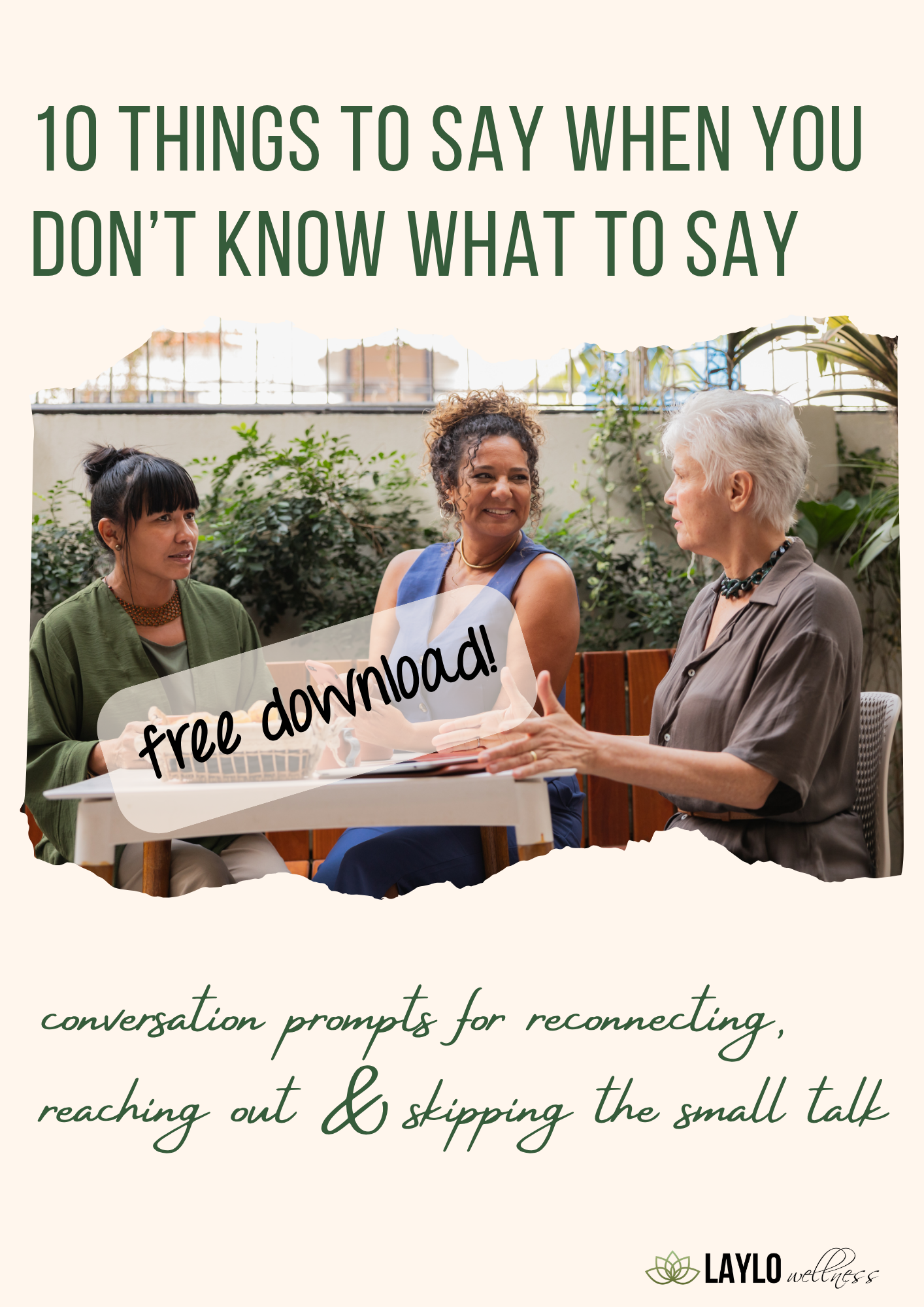
We often talk about mental wellness in terms of stress management, mindfulness, or self-care routines.
But there is a quieter, more insidious factor affecting mental health, especially for women in midlife: disconnection.
Disconnection disrupts emotional balance, clouds thinking, and erodes confidence, all while flying under the radar of daily awareness.
How Disconnection Disrupts Mental Health
For many people, especially those in the sandwich generation or navigating midlife, the competing demands of career, caregiving, and personal growth can allow social disconnection to quietly take hold. It doesn’t show up all at once, but gradually. It surfaces as decreased emotional resilience, trouble concentrating, irritability, or a dulling of joy. And the underlying cause can be surprisingly simple: a lack of consistent, meaningful connection.
According to a meta-analysis published in PLOS Medicine, weak social relationships increase the risk of early mortality by 50% — a rate comparable to smoking 15 cigarettes a day. While much of the conversation centers around physical health, the psychological burden is just as pressing. Disconnection impacts mood regulation, executive function, and stress hormone levels. Over time, this toll can manifest in ways that disrupt both mental clarity and emotional stability.
The Biological Toll of Disconnection
One 2023 study in the Journal of Health Psychology found that middle-aged women who reported low levels of social integration experienced significantly higher levels of cortisol, the body’s primary stress hormone. Elevated cortisol levels are linked with anxiety, memory lapses, and increased vulnerability to depression. This isn’t about a lack of social activity. It’s about the quality of connection.
Further research published in the American Journal of Psychiatry has shown that individuals who feel socially disconnected have a 60% higher risk of developing clinical depression. The authors note, “The absence of meaningful social bonds creates a vacuum where psychological distress thrives.” This is particularly significant for women in their 40s and 50s, who often juggle invisible labor and emotional caregiving roles, leaving little room for self-nourishing relationships.
Why Disconnection Grows in Midlife
As we age, maintaining high-quality relationships becomes both more vital and more complex. According to data from the Survey Center on American Life, 56% of women over 40 say their circle of close friends has shrunk in the past decade. Life transitions—moves, job changes, health challenges—can shrink our social networks without us even realizing it. The result is a growing sense of mental fatigue that many simply learn to live with.
This fatigue is not benign. Mental fatigue from disconnection can reduce motivation, increase emotional reactivity, and undermine confidence. It quietly conditions people to pull back, engage less, and accept a level of isolation that would have been unthinkable years earlier. This creates a feedback loop: the less connected someone feels, the harder it becomes to reach out.
The Physical and Cognitive Effects of Being Disconnected
Loneliness and social isolation have also been linked to increased inflammation, a known risk factor for many chronic conditions including heart disease, diabetes, and cognitive decline. A report from the National Institutes of Health highlights that “social isolation activates the body’s stress response, leading to systemic inflammation and long-term wear and tear on the body and brain.”
Interestingly, researchers at the University of Chicago found that social disconnection alters gene expression in immune cells, making people more susceptible to inflammation and disease. The study emphasized, “Social connection isn’t just a pleasant addition to life; it is a biological imperative.”
Moreover, disconnection has cognitive consequences. A 2021 study in Frontiers in Psychology observed that participants with fewer meaningful interactions showed declines in memory recall and decision-making speed. These aren’t just signs of aging—they are symptoms of social undernourishment.
Reversing the Mental Strain of Disconnection
The good news? This cycle can be interrupted—deliberately, and with grace.
Building emotional resilience in midlife isn’t about adding more to an already full plate. It’s about prioritizing what nourishes the mind and spirit.
That begins with reconnecting.

Intentional reconnection may start with small shifts: a deeper question asked over coffee, a weekly walk with someone who “gets you,” or saying yes to an event designed to foster real connection. These aren’t indulgences. They are essentials.
Programs designed for reconnection aren’t just social experiences—they are mental wellness interventions. When someone participates in a space that emphasizes true connection, the brain benefits. Oxytocin, the neurochemical linked with trust and bonding, increases. So does serotonin, enhancing mood and emotional balance. A retreat or structured conversation series isn’t a luxury; it’s a recalibration.
Choose Connection to Support Mental Wellness
As a leader in social wellness, I see firsthand the quiet transformation that occurs when people invest in meaningful connection. They don’t just “feel better.” They think more clearly, make better decisions, and recover emotional energy that has long been depleted.
Reclaiming connection isn’t about chasing friendships of the past. It’s about intentionally shaping relationships that align with who we are now. And with the right tools and spaces, no one has to do it alone.
The hidden mental strain of feeling disconnected is real. But so is the relief and renewal that come from re-engaging with others in a way that is authentic, affirming, and enduring.
Connection is not a reward for having it all together. It’s the foundation that helps us hold everything else up.

You don’t have to choose between success and well-being. Step away from the chaos, reset your mind and body, and realign with what truly matters. Our wellness retreats, online courses, and free resources give you the space to breathe, reflect, and design a life that feels fulfilling—without guilt, without compromise.
Be the first to know about upcoming retreats—join the info list for dates and details.
Let’s stay connected! Follow us on Instagram, Facebook, YouTube, LinkedIn, and Pinterest, and join the LAYLO Shala for exclusive updates and insights.