
7 Smart Ways to Navigate Big Life Transitions

Big life transitions don’t arrive quietly.

A relationship ends. You move across the country. Someone you love is no longer here. A career that defined your days comes to a close.

Even the changes you chose, the ones you worked toward for years, can feel unsteady once you’re inside them.

You expect change. You might not expect how much disappears with it.

Routines fall away. Familiar faces are no longer part of your day. Places that once felt automatic now require effort. Even small decisions take more energy than they used to.

That’s where vulnerability starts to show up.

Your energy feels inconsistent. You spend more time alone than you meant to. There’s a quiet sense that something is off, even if you can’t immediately name it.

This pattern runs through most major transitions. One of the biggest – retirement – amplifies it.

Because retirement doesn’t only shift your schedule. It removes a structure that shaped how you spent your time for most of your adult life, who you interacted with, and how you measured your value.

Few people are prepared for that part.

Research shows the first year after retirement often brings a drop in mental well-being, especially when social interaction declines. At the same time, strong relationships remain one of the most reliable predictors of long-term health. Social isolation increases the risk of early death by nearly 30%.

When your focus is tied up in adjusting, your social and mental stability can slip without much warning.

That’s where people lose their footing.

This next phase requires more than filling time. It asks for intention.

Create Structure Before the Drift Sets In

When structure disappears, most people assume they’ll naturally find a new rhythm.

That rarely happens.

Open space feels good at first. Then days start to blur. You delay decisions. You tell yourself you’ll get organized once things feel more settled.

That delay stretches longer than expected.

Retirement brings this into sharp focus. Without built-in commitments, it becomes easy to move through the day without direction.

Structure brings shape back to your time.

Set anchors. A morning walk you don’t skip. A standing plan with someone else. A commitment that gets you out of your own head.

Consistency matters more than intensity here.

Reevaluate Your Relationships Without Holding Onto Old Versions

Transitions reveal which relationships were built on convenience.

Shared schedules, proximity, overlapping responsibilities—remove those, and some connections fade quickly.

That shift can feel personal, but usually it isn’t.

Many people at this stage notice their circle getting smaller. At the same time, meaningful relationships become more important for emotional stability and cognitive health.

This is where discernment comes in.

Notice who still feels easy to be around. Pay attention to who shows up without needing to be chased. Be honest about who no longer fits your life as it is now.

Let some relationships go without overanalyzing them.

Then make space for new ones that reflect who you’ve become.

Stop Waiting for Connection to Happen

Connection used to be built into your day.

Now it isn’t.

That shift requires a different level of effort. Not constant effort, just willingness to act.

Hesitation tends to creep in here. You think about reaching out, then talk yourself out of it. You assume people are busy, thinking, “I don’t want to feel like I am coming out of left field”.

So nothing happens.

Days pass. Then weeks. Connection shrinks quietly when it isn’t maintained.

Take the lead. Send the message. Suggest the plan. Follow up.

If that feels unfamiliar, that’s normal. Most people are out of practice. Tools like “10 Things to Say When You Don’t Know What to Say” help remove that initial friction so you can move forward without overthinking.

Relationships require movement. Without it, they stall.

Stay Engaged in Work That Uses Your Experience

Work provided you with more than income.

It gave structure, relevance, and a place where your input mattered.

When that disappears, something feels off, even if you can’t immediately explain why.

Staying engaged fills that gap in a meaningful way.

Mentoring, consulting, contributing to projects where your experience has weight—these keep you connected to a sense of usefulness.

Research links this kind of engagement to better mental health and longer life expectancy.

You don’t need a packed schedule. You need something that reminds you your experience still matters.

Keep Your Mind and Body Challenged

It’s easy to slide into comfort when demands drop.

Less movement. Fewer new experiences. Lower expectations. That shift adds up.

Cognitive function declines faster without stimulation. Physical strength follows a similar pattern, especially after 50.

Staying active requires intention.

Learn something unfamiliar. Revisit an old interest with fresh focus. Move your body in ways that demand effort.

Challenge keeps you engaged with yourself.

Expand Your Environment

A smaller routine often leads to a smaller world.

Same places, same conversations, same patterns on repeat.

Changing your environment interrupts that cycle.

Travel works, but it doesn’t need to be elaborate. A short trip, a new setting, even a different part of your own city can shift your perspective.

New environments stimulate the brain and increase overall satisfaction with life.

Movement changes how you think.

Decide What This Next Phase Looks Like

Some people move through transitions by default.

They fill time where they can. They react to what’s in front of them. Maybe even avoid making clear decisions about what they actually want.

That approach creates a low-level dissatisfaction that lingers.

This phase gives you space. What you do with it matters.

Think about how you want your days to feel. Consider who you want around you. Be honest about what no longer fits.

Clarity changes how you move.

Without it, you fall into patterns that don’t serve you. With it, you begin to shape something that does.

When Everything Changed, This Is What Made the Difference

There was a period in my own life where everything shifted at once. Relationship, location, identity. Nothing familiar to lean on.

What stood out wasn’t the big decisions. It was the small moments where nothing felt automatic.

I remember standing in a grocery store in a new city, staring at the shelves longer than necessary. Not confusion, just a lack of familiarity. Even basic routines were gone.

That loss of autopilot is part of every major transition.

What helped was deciding, deliberately, what stayed and what changed. Who I kept close. Where I put my energy. What I allowed into my life moving forward.

Those little decisions rebuilt stability over time and actually opened a new career path for me.

The same approach applies here.

And when it comes to rebuilding your social world, “Friendship After 40: The Blueprint to Finding Your People” offers a clear way to create connections that actually fit your life now.

Because the people around you will shape how this next phase feels.

LAYLO wellness centers social wellness—supported by mental clarity and movement—to help you live and work with more steadiness, connection, and longevity.

The LAYLO Editis where I share thoughtful, practical insight for real life.
Join for updates on upcoming experiences, including The LAYLO Collective, a small-group social wellness experience designed for real life, and Wellness Retreats.

Follow along on Instagram, Facebook, YouTube, LinkedIn, and Pinterest.
What You Lose When You Never Let Anyone Support You

You are known as the strong one. The one who keeps things moving, who figures things out, who steps in before anything falls apart.

It’s a role you didn’t exactly apply for, but somewhere along the way, it became yours.

And to be fair, it’s worked. You’ve created stability, earned respect, and proven to yourself more times than you can count that you can handle what comes your way.

But here’s where we need to get a little more honest.

As with anything, there is also a cost to you. It’s not always obvious. It’s often in quieter ways that are easier to overlook. Relationships feel a bit flatter. Conversations stay safe. You’re surrounded by people, yet there’s a subtle sense that there is some sort of expectation on you.

When you never let anyone support you, you don’t just avoid needing help. You slowly lose connection.

Strength Is Valuable. Constant Strength Has a Cost

Being the strong one gets reinforced everywhere. In your career, it signals competence. Within your family, it creates stability. In friendships, it makes you the one people trust.

For someone who has spent decades building a full life, that identity feels natural. It’s part of how you operate. It’s also part of why people rely on you.

The problem is, over time, people start to assume you don’t need anything back.

They stop checking in. They stop offering. Not because they don’t care, but because you’ve shown them, consistently, that you’ve got it handled.

And when that pattern holds for long enough, something important starts to fade. You lose the feeling of being known in real time. The ease of being able to show up without everything already figured out is gone. You lose the small, meaningful moments where someone steps in for you without being asked.

It doesn’t happen overnight, which is exactly why it’s so easy to normalize.

What You Lose When You Don’t Let Anyone Support You

The loss isn’t obvious. It builds slowly, and that’s what makes it easy to miss.

You lose emotional closeness because people can only connect with what you share. If you’re always presenting the version of yourself that has it handled, that’s the version they respond to.

You lose the natural rhythm that makes relationships feel alive. Support is meant to move in both directions. When it only flows one way, things can start to feel steady but flat.

You also lose energy. Being the one who always has it together requires effort. It shows up as fatigue that doesn’t quite go away, or a sense that you’re always “on,” even in spaces where you should be able to relax.

And then there’s something most people don’t realize until much later. You lose the chance to see who would actually show up for you. When you don’t give people the opportunity, you never find out who’s capable of meeting you in a real way.

That matters, especially as we get older. Research continues to show that strong, supportive relationships are directly tied to longevity, with some studies suggesting they can increase survival rates by up to 50 percent. On the other side, a lack of meaningful connection is associated with higher risks of heart disease, depression, and cognitive decline.

It’s not just about having people in your life. It’s about whether those relationships actually support you.

Hyper Independence: The Habit That Looks Like Strength

There’s a name for this pattern, and it tends to land especially hard for women in this stage of life.

It’s called hyper independence.

It’s the belief that you should be able to handle everything on your own. That needing support is optional at best and inconvenient at worst. That being self-sufficient is the standard you hold yourself to, no matter what’s going on.

For many women in their 50s, this didn’t come out of nowhere. It was shaped over decades. You were taught to figure things out, to not rely too heavily on others, to be capable and composed no matter what.

There’s a lot of good in that. Independence builds confidence. It creates resilience. It allows you to move through life with a strong sense of self.

But taken too far, it starts to work against you.

Because independence works best when it’s paired with support. Without that balance, relationships lose depth, and life starts to feel heavier than it needs to.

Interdependence Versus Codependence

This is where things can get a little misunderstood.

Letting people support you doesn’t mean becoming dependent on them in a way that takes over your identity. That’s where codependence comes in, and it’s a very different dynamic.

Codependence often shows up as losing yourself in someone else’s needs or tying your sense of worth to being needed by someone.

Interdependence is much more grounded.

It’s two people who are fully capable on their own and still choose to support each other. There’s independence, and there’s connection. You can stand on your own, and you can also let someone stand with you.

For someone used to hyper independence, this can feel unfamiliar at first. There’s a bit of a learning curve in allowing support without feeling like you’re giving something up.

You’re not. You’re adding something that’s been missing.

Being Supportive Isn’t the Same as Being the Strong One

This is an important distinction because many women pride themselves on being great friends, and they are.

Being supportive means you listen, you show up, you care about what’s happening in someone else’s life. You’re present when it matters.

Being the strong one all the time is something different. It means you rarely let anyone see you without a solution in hand. You default to managing, fixing, or smoothing things over, even in your closest relationships.

That pattern creates a quiet distance.

There’s also a piece of personal responsibility here that’s worth paying attention to. Mutual relationships require both people to stay engaged. That includes noticing how you respond when someone else needs you.

Can you sit with someone without immediately trying to solve the problem? Are you able to stay present without taking over? Can you allow space for their experience to unfold?

That balance is what keeps relationships steady and meaningful over time.

Why Vulnerability Feels So Unnatural

If this all sounds simple but not easy, that’s because it is.

Opening up before you have everything figured out can feel uncomfortable. It can feel inefficient. It can even feel unnecessary, especially if you’ve spent years being the one others rely on.

The work of Brené Brown makes this clear. Vulnerability is what creates trust and real connection. Without it, people can respect you, rely on you, even admire you. They just won’t fully connect with you.

That distinction changes everything.

Vulnerability doesn’t mean sharing everything with everyone. It looks much simpler than that. It’s letting someone see a real moment. Saying you’re unsure. Admitting something feels harder than you expected.

For someone who has spent a lifetime being capable, that can feel like unfamiliar territory. It also tends to shift relationships quickly in a way that feels more real.

What Changes When You Loosen Your Grip on Always Being Strong

When you step out of that role, even slightly, the tone of your relationships starts to shift.

Conversations open up. There’s more range, more honesty, more room for something unexpected to happen.

You stop being the automatic problem-solver in every interaction, which is a relief you may not realize you needed.

You also start to see people more clearly. Some will meet you in that space right away. Others may struggle because they’re used to you handling everything.

That clarity is useful.

Because the goal isn’t to maintain every relationship exactly as it is. The goal is to have relationships that feel engaging, supportive, and real over time.

When I Stopped Doing It All Alone

There was a point where I thought being strong meant handling everything quietly and efficiently. If something was difficult, I waited until I had it sorted before I shared it – if I ever shared it at all. If I needed help, I found a way around it.

It worked, especially when I was surrounded by unreliable people. Eventually, though, it started to feel limiting in a way I couldn’t ignore.

The shift didn’t happen all at once. It showed up in smaller moments. Letting someone in before I had a clean answer. Saying something felt uncertain instead of waiting until it was resolved. In my professional life, that meant collaborating with my peers and my team rather than dictating what we were going to do after I had it all worked out.

What stood out wasn’t the discomfort. That part was expected.

It was how quickly certain relationships deepened. Trust was built. And how clear it became which ones couldn’t meet me there.

How You Start Letting Support In

If you’ve been the strong one for most of your life, remind yourself that you aren’t losing that strength. You’re expanding it.

You still get to be capable. You still get to be independent. That doesn’t go anywhere.

You also allow space for support.

You become someone who can lead and receive, who can handle what’s needed and still let someone else contribute when it matters. That’s what keeps relationships working over time and what supports a full, connected life.

This is a big part of the focus at LAYLO wellness. The intention is to help women build relationships where support moves both ways, creating connection that lasts and a life that feels rich, engaging, and fully lived.

Warmly, Laura

LAYLO wellness centers social wellness—supported by mental clarity and movement—to help you live and work with more steadiness, connection, and longevity.

The LAYLO Editis where I share thoughtful, practical insight for real life.
Join for updates on upcoming experiences, including The LAYLO Collective, a small-group social wellness experience designed for real life, and Wellness Retreats.

Follow along on Instagram, Facebook, YouTube, LinkedIn, and Pinterest.

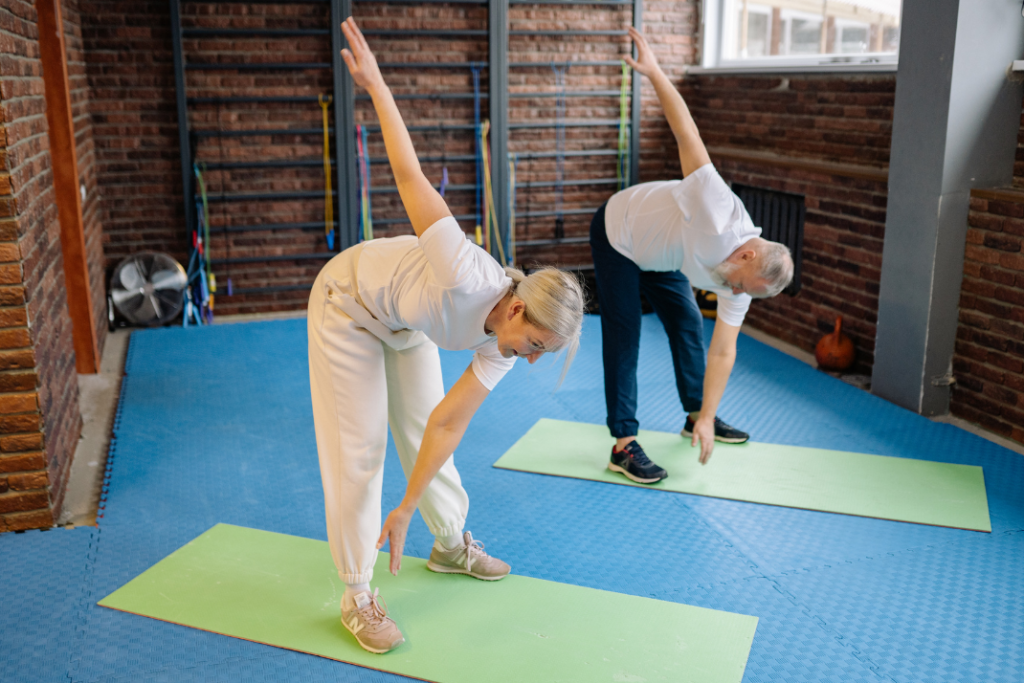
7 Powerful Movement Habits That Strengthen Your Brain, Body, and Friendships

You already know movement matters. That part isn’t new.

What tends to get missed is how closely movement ties into how you think, how steady you feel day to day, and how connected you stay to other people. These don’t operate separately. They influence each other more than most people realize.

At this stage of life, you’re managing a lot. Work, family, responsibilities that don’t leave much room for trial and error. Your body may not feel as cooperative as it once did either. Still, the goal remains the same.

You want to stay sharp. You want to stay capable. You want relationships that feel easy, not forced.

Movement supports all of that in a very real, practical way.

1. Lift Heavy Things. Yes, You Still Need To.

Strength training changes the trajectory of how you age, both physically and cognitively. It supports memory, focus, and overall brain function. It also keeps you capable in your everyday life, which becomes more important with each passing year.

And this is where many people start negotiating.

They switch to lighter weights. They avoid anything that feels challenging. They tell themselves they’ll get back to it later.

That’s usually when strength starts to decline.

Your body needs resistance. Not reckless intensity, but enough load to signal that strength still matters. That signal carries through your muscles, your bones, and your brain.

Work with where you are. That part is non-negotiable.

I have osteoarthritis in my back, hips, feet, and hands, and it’s moving into my knees. I still lift three times a week. I teach yoga three times a week. I walk most days. Some days I move slower. Some days I scale things back.

I don’t stop.

Because once you stop, it gets harder to start again. Strength fades, then confidence follows. That’s a cycle you want to interrupt early.

Of course, pay attention to sharp or unfamiliar pain. That’s your body asking for adjustment, not stubbornness. At the same time, general aches are part of having a body that has been used. You work with that, not against it.

2. Keep Your Movement Predictable Enough to Stick

There’s a tendency to overcomplicate fitness, especially when motivation dips. New plans, new classes, new goals every few weeks.

That approach usually burns out quickly.

Your brain responds better to patterns it can rely on. When movement becomes predictable, it lowers the mental effort required to keep going. You don’t debate it. You just do it.

That might look like a regular walking route most days of the week, strength training on set days, or a class you attend without having to convince yourself first.

Consistency builds a rhythm your body and mind both recognize. That rhythm supports focus, reduces stress, and makes the habit easier to maintain long term.

Of course, you want to mix things up occasionally. Trying something new is a good thing. It’s just that you want to find what you like, what you will keep doing consistently, and then mix it up within that framework. The goal is to keep yourself moving.

3. Put Yourself in Rooms Where Movement and People Overlap

Connection often feels harder now than it did years ago. Not because you’ve changed, but because your environment has.

Work is demanding. Social circles shift. Free time shrinks.

Movement solves part of that problem by creating built-in opportunities to be around other people without pressure.

You don’t need to walk into a room and make instant friendships. You need repeated exposure. Familiar faces. Small interactions that gradually become something more.

A group class. A gym where you recognize people. A weekly walk with someone who lives nearby.

Those moments seem small, but they compound.

Strong social ties are directly linked to better brain health and longer life expectancy. On the other side, a lack of meaningful connection increases the risk of cognitive decline and chronic health issues.

That’s not abstract. That shows up in how you feel and function over time.

4. Use Movement as a Reset, Not a Reward

A lot of people treat movement as something they earn once everything else is done.

That mindset doesn’t hold up when life gets busy.

Movement works better as a reset button you use throughout your week. It helps regulate stress, clear mental buildup, and improve your ability to focus.

You don’t need a perfect mood to start. You just need to begin. Motivation is not part of this equation. Waiting for the motivation fairy to sprinkle you with “I can’t wait to work out” energy is not going to happen. Schedule it in. Then do it.

A walk after a long day can shift your energy more effectively than sitting and replaying everything that went wrong. A strength session can cut through mental fog that’s been hanging around for hours.

This is one of the simplest ways to support your mental state without overthinking it.

5. Train for the Life You Actually Live

It’s easy to get pulled into workouts that look good but don’t translate into anything useful.

What matters more is whether your training supports your real life.

Can you carry what you need without hesitation? Can you move through your day without feeling fragile or limited? Do you trust your body to handle what’s in front of you?

Muscle plays a central role in all of that. After 40, muscle mass declines steadily if you don’t actively maintain it. Bone density follows a similar pattern, increasing the risk of injury over time.

Strength training helps counter both.

We aren’t talking about getting extreme. We are aiming to stay capable in ways that keep your life open and flexible.

6. Combine Movement and Social Time So It Actually Happens

One of the biggest barriers to maintaining friendships is time. Not lack of interest, just lack of space in the calendar.

You can solve that by overlapping movement with connection.

Walk with a friend instead of meeting for coffee. Take a class together. Set a recurring plan so you’re not constantly coordinating schedules.

This removes friction. It also creates consistency, which is where most friendships either grow or fade.

Many women at this stage report having fewer than three close friends they can rely on. That number doesn’t drop because people stop caring. It drops because connection isn’t built into daily life anymore.

Movement gives you a way to rebuild that structure without adding more pressure.

7. Stay in Motion, Even When It’s Not Your Best Day

There will be days when your body feels off. Days when your energy is low, or your motivation is nowhere to be found. See motivation fairy above.

Those days matter more than the easy ones.

You don’t need to push through at full intensity. You do need to stay in motion.

Shorten the workout. Lighten the load. Change what you’re doing.

Keep the habit intact.

That consistency supports your brain, your physical strength, and your ability to stay engaged with your life. When the habit disappears, it becomes hard to rebuild.

Where This Starts to Shift Things

When movement becomes part of your routine, you will experience changes beyond the physical. Take the time to really notice it.

Your thinking feels clearer. Your reactions soften. You have more capacity for the people around you.

You also find it easier to stay connected because you’re already placing yourself in environments where connection can happen naturally.

And if you’re out of practice socially, you’re not alone in that. It’s a skill that fades when you don’t use it. Tools like 10 Things to Say When You Don’t Know What to Say help remove that initial friction so you’re not second-guessing every interaction.

Staying sharp, strong, and connected doesn’t happen by accident.

It comes from what you do consistently.

Warmly, Laura

LAYLO wellness centers social wellness—supported by mental clarity and movement—to help you live and work with more steadiness, connection, and longevity.

The LAYLO Editis where I share thoughtful, practical insight for real life.
Join for updates on upcoming experiences, including The LAYLO Collective, a small-group social wellness experience designed for real life, and Wellness Retreats.

Follow along on Instagram, Facebook, YouTube, LinkedIn, and Pinterest.

The Networking Myth: Why Access to People Doesn’t Create Connection

Networking Was Never Supposed to Feel Like This

Somewhere along the way, networking lost the plot.

The original purpose was simple. You met people. You learned what they cared about, what they were working on, and how they got there.

Over time, you figured out where your interests overlapped and where collaboration might make sense.

That process required curiosity.

Now walk into most networking events and watch what happens.

Two minutes of small talk.
A quick scan of name tags.
Then someone pivots into a sales pitch before the other person has even finished their drink.

Networking has quietly turned into speed-selling.

You can feel the shift almost immediately when it happens. The conversation stops being about people and starts being about transactions.

The strange thing is that everyone knows it feels uncomfortable. Yet it keeps happening.

It’s unfortunate because when networking works the way it was intended, it can lead to extraordinary professional relationships.

The problem is that meaningful relationships do not start with a pitch.

They start with curiosity.

Professional Alignment Matters More Than Contact Lists

Early in my career I noticed something interesting about the most successful professionals I worked with. They were rarely the people with the largest contact lists.

They were the people who had strong alignment with the people they worked with.

Similar values. Similar work ethic. A shared way of thinking about problems.

When that kind of alignment exists, collaboration becomes easy. Business opportunities appear naturally. Trust builds quickly because both people operate in similar ways.

When alignment is missing, no amount of networking fixes it.

You can know hundreds of people and still struggle to build partnerships that actually work.

That is one reason the “collect as many contacts as possible” approach to networking tends to fall flat. It focuses on volume rather than fit.

A handful of aligned relationships will outperform a thousand casual contacts every time.

Deposits in the Relationship Bank

There is another concept that rarely gets discussed in professional circles: the relationship bank.

Every meaningful relationship operates on some version of this principle. You make deposits long before you ask for a withdrawal. You:

  • Show interest in someone’s work.
  • Introduce them to someone helpful.
  • Offer an idea or resource that could make their life easier.

Over time those small deposits accumulate.

Trust builds quietly in the background.

Then when an opportunity appears, the relationship already has enough goodwill to support it.

Compare that with the common networking approach where someone meets you and immediately asks for something. A referral. A sale. A partnership. A meeting with your boss.

No deposits.

Just a withdrawal attempt.

It rarely works.

Professional relationships, like personal ones, respond well to generosity and patience. A little goodwill invested early creates enormous opportunity later.

The Conversations That Actually Build Connection

Most networking advice focuses on how to introduce yourself.

Far fewer people talk about how to get genuinely interested in the person standing in front of you.

Curiosity is the skill that changes everything.

Instead of launching into a summary of your work, try learning more about the other person’s story.

  • How did you end up doing this work?
  • What part of your job do you enjoy most?
  • Is there a particular project you are excited about right now?
  • What originally pulled you into this field?

These questions sound simple, yet they do something powerful. They shift the conversation away from self-promotion and toward discovery.

People light up when they talk about work that actually matters to them. You start hearing the real story behind the job title.

You learn where someone came from, what shaped their career, and what motivates them today.

That information tells you far more about potential alignment than any elevator pitch ever could.

And once someone feels seen and understood, the conversation becomes far more memorable.

That is the beginning of connection.

Why This Skill Matters Beyond Work

Interestingly, the same conversational habits that create stronger professional relationships also improve personal ones.

Many adults move through daily life having dozens of surface-level conversations that never go anywhere. Everyone is busy. People stay polite and somewhat guarded.

The easiest way to break that pattern is curiosity. Ask:

  • How did you arrive at the work you do?
  • What do you enjoy doing when you are not working?
  • What has been interesting or challenging lately?

These questions are simple, yet they open doors that small talk rarely touches.

That realization became very clear to me years ago during an unexpected moment in my personal life.

At my first wedding reception, I remember looking around a room full of people who had gathered to celebrate with us. Friends, family, acquaintances, people we cared about.

It should have felt like the most connected moment imaginable.

And yet I remember noticing a strange sense of distance while standing in the middle of the room.

I was the bride, for pete’s sake!

Still, I felt slightly outside the room.

That moment stayed with me because it revealed something that many people eventually notice.

Being surrounded by people does not automatically create connection.

The same principle applies in professional environments and personal life. Proximity is not enough. Access is not enough.

Connection grows when curiosity enters the conversation.

Relationships Still Matter More Than We Admit

Research continues to reinforce what most people already sense from experience.

Strong relationships influence mental health, physical health, and even career satisfaction. Studies show that people with close friendships at work report higher engagement and stronger job performance. Other large population studies have found that social isolation can increase the risk of early mortality at levels comparable to major health risks.

Simply put, human beings function better when they feel connected to other people.

Yet modern life quietly pushes us in the opposite direction. Work becomes busier. Schedules fill up. Social circles shrink without anyone noticing until the distance becomes obvious.

That is one reason I focus so much of my work on social wellness today.

People often arrive thinking they need better networking skills. What they usually need is something simpler.

Better conversations.

More genuine curiosity.

And environments where people have enough time to actually get to know each other.

Just thoughtful people getting to know each other.

Which, ironically, is exactly what networking was supposed to be all along.

Warmly, Laura

LAYLO wellness centers social wellness—supported by mental clarity and movement—to help you live and work with more steadiness, connection, and longevity.

The LAYLO Editis where I share thoughtful, practical insight for real life.
Join for updates on upcoming experiences, including The LAYLO Collective, a small-group social wellness experience designed for real life, and Wellness Retreats.

Follow along on Instagram, Facebook, YouTube, LinkedIn, and Pinterest.

Are You Too Good For Your Own Good?

Have you ever noticed that the more capable you are, the more people seem to rely on you to solve things they could probably handle themselves?

Nobody announces this arrangement. It doesn’t arrive as a formal agreement. The shift happens quietly over time. You step in once because you’re helpful. You take responsibility another time because it seems efficient. Before long, you’re the unofficial solution department for half the people in your orbit.

At first it feels flattering. Being dependable earns respect. People trust you. Managers rely on you. Friends call when things fall apart. For someone raised to be responsible and capable, that role can feel natural.

Eventually a different realization creeps in.

You’re exhausted, slightly irritated, and wondering how everyone else managed to outsource so much of their responsibility to you.

That’s the moment when the phrase “no good deed goes unpunished” starts sounding less like sarcasm and more like a life strategy you accidentally adopted.

Helping once becomes helping always. Taking on a task becomes permanent ownership. Nobody holds a meeting to assign this role to you, yet everyone adjusts to it remarkably quickly.

I know this pattern well because I spent years living inside it.

Where the Habit Begins

For many capable adults, the instinct to accommodate others didn’t start at work. It started much earlier.

Some of us learned young that life ran smoother when we behaved, complied, and kept things calm. Questioning expectations created tension. Meeting them kept the peace. Becoming the responsible one felt like the smartest move in the room.

Growing up in a tightly controlled religious environment reinforced that lesson for me in a very direct way. Obedience carried real consequences, and pushing against expectations risked losing connection with people you loved. When belonging depends on compliance, most people become very skilled at meeting expectations.

That environment creates adults who are extremely capable.

It also creates adults who become experts at accommodating everyone else.

The habit doesn’t disappear when you grow up. It simply changes settings. Instead of keeping peace in a family structure, you begin smoothing situations at work, organizing social plans, fixing problems for friends, and stepping in whenever something feels inefficient or unresolved.

At the time it seems responsible.

Looking back, it also explains why so many capable adults quietly end up doing far more than their fair share.

When Being the Reliable One Follows You Into Your Career

Workplaces reward competence, which meant this habit slid neatly into my professional life.

Give me the complicated project nobody wants. Ask me to step into the messy situation that needs organizing. Tight deadline? Let’s make it happen.

Being capable helped me advance. It opened opportunities and allowed me to build a career I genuinely valued.

Yet there was a downside I didn’t fully understand for years.

People benefit enormously from the presence of someone reliable. Life becomes easier when there’s a person willing to step in and fix things quickly. Over time, appreciation can quietly morph into expectation without anyone intentionally deciding that’s what’s happening.

Managers route complicated work your way because you deliver results. Colleagues know you’ll handle details. Friends assume you’ll coordinate plans because you’re “so good at that.”

And if you’ve built your identity around being dependable, pushing back can feel like you’re betraying your own character.

So you keep saying yes.

You solve more problems. You accept more responsibility. You keep things moving.

The uncomfortable truth arrives later.

Many of the people benefiting from your effort aren’t particularly appreciative. They simply prefer the arrangement because it works well for them.

The Appreciation Myth

There’s a quiet belief many responsible adults carry.

“If I keep showing up for people, they’ll recognize it.”

Sometimes they do.

Often they do not.

In many situations, the response is surprisingly simple. People adapt to whatever system makes their life easier.

If someone consistently solves problems, others naturally stop solving those problems themselves.

A workplace study published in the Journal of Applied Psychology found that employees who frequently accept additional responsibilities outside their role are significantly more likely to receive even more unassigned tasks in the future.

That doesn’t happen because colleagues are malicious.

It happens because people adapt to patterns.

Once you become the person who handles everything, the system quietly reorganizes around that assumption.

The Identity Trap

Here’s the tricky part.

Walking away from this pattern feels strange because reliability often becomes part of how we define ourselves.

You’re the organized one. The capable one. The person who follows through when others don’t.

There’s pride in that identity.

There’s also pressure.

Research from the American Association of Retired Persons shows that nearly half of adults over forty feel responsible for maintaining most of the effort inside their friendships. Planning gatherings, checking in, smoothing tension, keeping the connection alive.

When one person carries that level of responsibility long enough, relationships begin to feel more like management than connection.

And that eventually wears people down.

What Resetting the Pattern Looks Like at Work

Most people know they need limits.

What they don’t know is how to express them without damaging professional relationships.

Blunt refusal rarely works in a workplace environment. A smarter approach shifts the conversation toward priorities.

If a new task lands on your desk, try this:

“I’m glad to help with this. Can we look at my current priorities together and decide which project should move so I can focus on this properly?”

That statement does two things at once. It shows cooperation while making the workload visible.

Another useful response:

“Happy to take this on. Which existing project would you like me to pause while I focus here?”

Now the responsibility for prioritization moves back to leadership where it belongs.

A third option works well when tasks drift toward the most capable person in the room:

“Who currently owns that area?”

Sometimes responsibility lands with you simply because nobody questioned the assignment.

That single question can redirect the conversation immediately.

How to Adjust Personal Relationships Without Creating Drama

Personal life requires a slightly different approach.

Reliable people often step in too quickly when someone mentions a problem. The instinct to help activates before the other person has even decided what they plan to do.

A simple pause can change that dynamic.

Let the silence sit for a moment.

Instead of solving the problem, try asking:

“What do you think you’ll do about it?”

That response keeps the conversation supportive while allowing the other person to handle their own responsibility.

You remain caring.

You simply stop taking over everyone else’s responsibilities.

A Question Worth Asking Yourself

This conversation also works in reverse.

Think about your friendships or family.

Is there someone who organizes the plans, remembers the details, checks in regularly, and smooths over problems when things get tense?

If someone comes to mind, it’s worth asking a couple of honest questions.

  • Have I come to expect that person will handle things because they always have?
  • When was the last time I stepped forward before they did?

Healthy friendships grow stronger when effort flows both directions.

The Bigger Picture

Connection matters more than most people realize.

The Harvard Study of Adult Development has tracked participants for more than eighty years and consistently finds that strong relationships are one of the most powerful contributors to long-term health and life satisfaction.

Balanced relationships create that benefit.

When one person constantly accommodates everyone else, connection eventually starts to feel one-sided.

That dynamic doesn’t serve anyone well.

The Good News

If you’ve spent years being too good for your own good, the solution isn’t to become a different person.

Reliability is still a strength.

The shift comes from choosing where that strength goes rather than offering it automatically to every request that appears.

Protect your time. Let other people handle their own responsibilities. Give your energy to relationships that return the same effort.

Life gets a lot more interesting when the capable person in the room stops volunteering for everything.

And when that change happens, friendships often become stronger because everyone finally shows up.

Not just the reliable one.

Warmly, Laura

LAYLO wellness centers social wellness—supported by mental clarity and movement—to help you live and work with more steadiness, connection, and longevity.

The LAYLO Editis where I share thoughtful, practical insight for real life.
Join for updates on upcoming experiences, including The LAYLO Collective, a small-group social wellness experience designed for real life, and Wellness Retreats.

Follow along on Instagram, Facebook, YouTube, LinkedIn, and Pinterest.

How to Outgrow a Friendship Without Burning It Down

If I put you on a stage and handed you a microphone and asked, “Who here feels fully supported by all their friendships right now?” a lot of you would shift in your seats.

You have a full life. A good life. You’ve done the work. Career. Marriage. Kids. Parents. Health. You show up. You deliver.

But when it comes to friendships? It’s murkier.

Here’s what nobody says out loud: sometimes you outgrow people. And it doesn’t make you a bad person.

It makes you honest.

Friendship After 40 Hits Different

In your twenties, proximity did a lot of the heavy lifting. Coworkers, neighbors, playgroups, carpools. You didn’t have to think about alignment. You just showed up, and the friendship formed.

Now? Time is tighter. Energy is finite. Your tolerance for nonsense has dropped dramatically.

Research backs up what you’re feeling. Nearly half of adults report having three or fewer close friends. Social circles shrink as we age. At the same time, decades of data from the Harvard Study of Adult Development show that the quality of our relationships predicts how well and how long we live.

That’s not a small detail.

Connection affects blood pressure. It affects immune health. It affects cognitive decline. Social strain raises stress hormones and disrupts sleep. We obsess over strength training and protein intake, and we that’s not a bad thing. It’s just not the whole thing. Relational stress quietly chips away at longevity.

So yes, the conversation about friendship is also a conversation about health.

When a Friendship Starts to Feel Off

You know the feeling.

You leave lunch slightly irritated.
Maybe you brace before seeing her name pop up on your phone.
Or You edit yourself more than you used to.

Nothing dramatic happened. There was no explosion. Just a slow drift.

Maybe you’ve grown. Or she hasn’t. Maybe you both have, just in different directions.

For a woman who prides herself on loyalty, this feels uncomfortable. You don’t quit on people or create unnecessary conflict. You handle your life.

So you do what “responsible” women do: You get busy. Cancel more often. Keep it surface-level.

That works for a while.

But avoidance has a cost. Unspoken frustration sits in your body. It shows up as tension, low-grade resentment, fatigue after interactions that used to energize you.

Over time, that drains more than you realize.

Discernment Is Not Drama

Let’s get something straight. Outgrowing a friendship does not require a confrontation scene.

It does require clarity.

Ask yourself Do:

  • Our values still line up?
  • I feel respected?
  • I feel like I have to shrink around her?
  • Am I staying because of history rather than current connection?

Every friendship hits seasons. Stress happens. Life gets messy. That’s normal.

What’s different is chronic misalignment.

In my earlier life, I learned the hard way what conditional relationships look like. When connection depends on compliance, you lose yourself quickly. Rebuilding my life meant choosing friendships differently. Shared values. Mutual respect. Emotional safety. That changed everything.

You don’t need a dramatic exit. You need self-respect.

Three Ways to Handle It Like a Grown Woman

Adjust the frequency.
You don’t need a speech. Move from weekly to quarterly. Shift from one-on-one dinners to group settings. Let the cadence reflect reality.

Tell the truth when asked.
If she notices and asks what’s going on, keep it simple. “I’m focusing on a few priorities right now.” That’s enough. You don’t owe a dissertation.

Reinvest your energy wisely.
When you loosen one tie, tighten another. Reach out to someone you admire. Text the woman you keep meaning to know better. Initiate. Yes, it feels awkward. Do it anyway.

Most women over 40 are out of practice initiating friendships. We got used to reacting to what our kids needed, what work demanded, what family required. Starting a new connection can feel clumsy.

That’s exactly why language matters. When you know what to say, you move. When you move, connection follows.

Longevity Loves Aligned Relationships

A 2010 meta-analysis found that strong social relationships increase survival odds by about 50 percent. That’s on par with quitting smoking.

Read that again.

Quality friendships protect your brain, your heart, and your emotional steadiness. They buffer stress, keep you engaged, and challenge you to grow.

This stage of life calls for fewer but better.

Women who age well socially don’t cling to every relationship out of guilt. They refine. They choose. Find ways to nurture what fits and respectfully release what doesn’t.

That’s grit and grace.

The Goal Is Respect, Not Ruins

You can appreciate what a friendship was and still admit it no longer fits who you are now.

Reduce access without hostility.
You can protect your energy without announcing it to the room.
Grow without burning anything down.

And if you find yourself in a quieter social season, that’s not failure. It’s recalibration.

This is where intentional spaces matter. Real conversations. Practical scripts. Women who are also refining their circles. Whether that’s learning what to say when conversations stall, following a clear path to finding your people after 40, or stepping into a retreat where connection happens naturally, structure helps.

You’ve evolved. Your friendships are allowed to evolve too.

No drama required. Just maturity, discernment, and a long view on your health and your life.

Warmly, Laura

LAYLO wellness centers social wellness—supported by mental clarity and movement—to help you live and work with more steadiness, connection, and longevity.

The LAYLO Editis where I share thoughtful, practical insight for real life.
Join for updates on upcoming experiences, including The LAYLO Collective, a small-group social wellness experience designed for real life, and Wellness Retreats.

Follow along on Instagram, Facebook, YouTube, LinkedIn, and Pinterest.