The One Essential Mindset Shift That Deepens Relationships Instantly

When the world moves too fast, clarity and connections become a luxury.

For women navigating midlife’s complexity—career leadership, caregiving demands, and evolving identity—mental clutter can silently crowd out connection. It’s not always obvious. But when the mind is overloaded, relationships start to suffer.

Let’s pause and ask: What would happen if we cleared the digital and mental noise long enough to truly see and hear each other?

The High Cost of Mental Clutter

Cognitive overload isn’t just a modern nuisance; it’s a barrier to intimacy. When the brain is in constant task-switching mode—managing emails, group chats, calendar conflicts—it has less capacity for presence. Studies from Harvard University show that people spend nearly 47% of their waking hours thinking about something other than what they’re doing. The result? Disconnection, distraction, and a weakened ability to form and maintain meaningful bonds.

Unresolved mental strain is cumulative. Neuroscience confirms that chronic mental fatigue reduces empathy, increases irritability, and weakens memory—a perfect storm for eroding relationships. And after 40, our brains don’t bounce back from that strain as quickly. The risk isn’t just a foggy mind. It’s the slow loss of emotional depth in our closest connections.

Technology: A Double-Edged Sword

It’s easy to blame tech—and in some ways, we should. The average adult checks their phone over 85 times a day. Constant pings from texts, notifications, and social feeds fragment attention and create the illusion of connection while starving real-world relationships.

But the solution isn’t ditching our devices. It’s learning to use them with intention. A digital detox isn’t about abandoning tech; it’s about reclaiming attention.

Mental Space Is Relationship Space

To cultivate deeper connection, we must create internal room for it. That starts with protecting our cognitive bandwidth. Consider this: the brain needs “white space” the way muscles need recovery. Without downtime, emotional availability becomes scarce.

When mental space increases, so does relational depth. That friend who’s always been on the edge of your life? You notice her more. That partner whose stories you’ve tuned out? You hear nuance again. Stillness doesn’t just soothe the mind—it reopens the heart.

Start Small, Go Deep

For high-functioning women in midlife, silence can feel indulgent or even impossible. But depth doesn’t demand a sabbatical. It starts with micro-habits:

  • Turn off non-essential notifications for 24 hours
  • Protect one hour a week for screen-free rest
  • Practice five minutes of focused breath before a conversation
  • Designate one evening as a “no digital zone”

These aren’t productivity hacks. They’re portals back to presence.

Why It Matters Now More Than Ever

As we age, the quality of our relationships becomes a stronger predictor of health than diet or exercise.

A 2023 study published in the Journal of Social and Personal Relationships found that people over 45 who engage in meaningful in-person interactions at least twice a week report 30% lower levels of mental fatigue and 26% higher life satisfaction.

Yet, making space for these moments requires a deliberate trade: less noise for more meaning.

When the Mind Clears, the Soul Listens

Quieting the mental noise isn’t a retreat from life. It’s a return to what matters. And it’s not a solo journey.

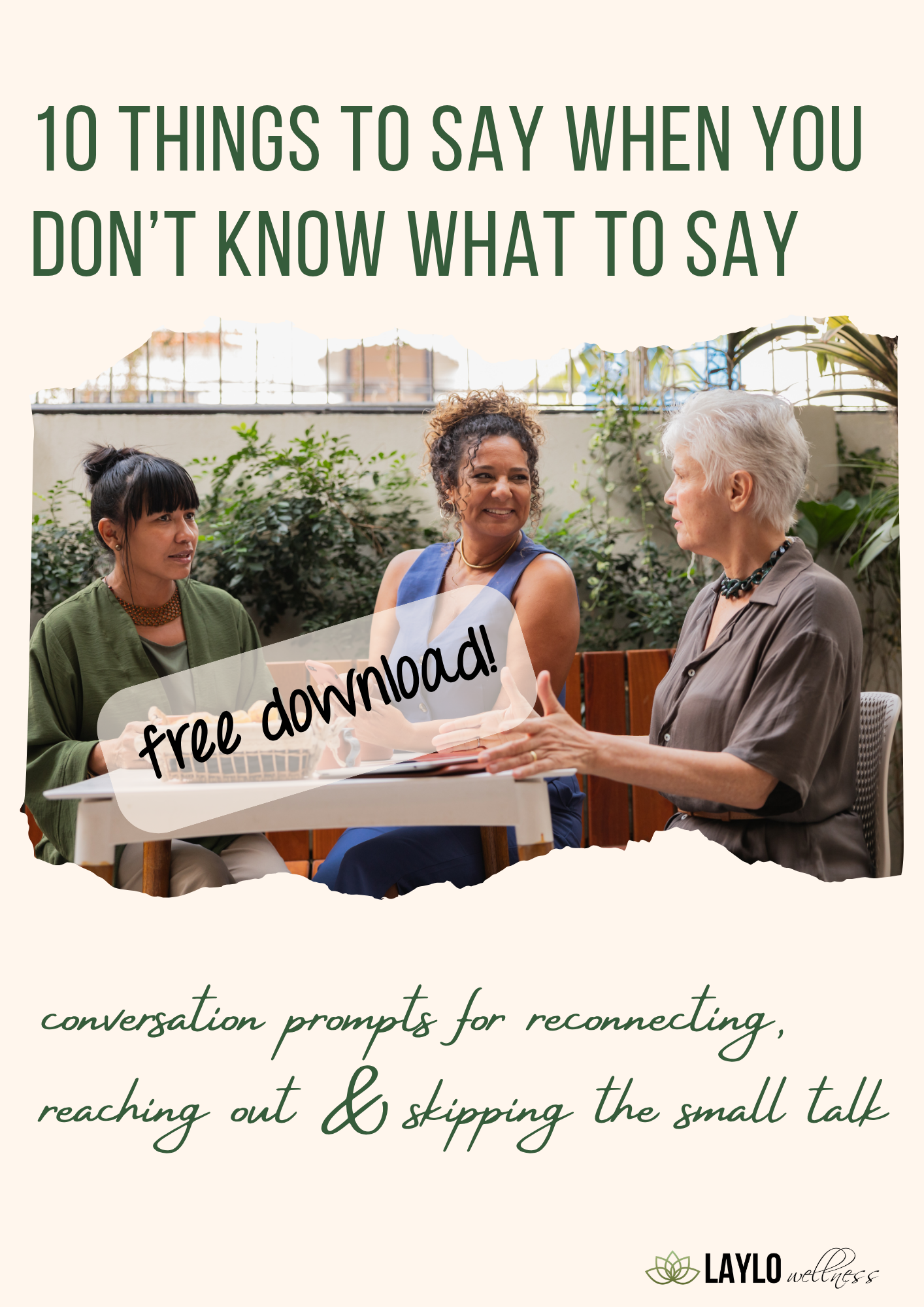
If you’re feeling overstimulated, under-connected, and unsure how to break the cycle, you’re not alone. That’s why I created:

Because when clarity returns, connection follows.

Warmly, Laura

You don’t have to choose between success and well-being. Step away from the chaos, reset your mind and body, and realign with what truly matters. Our wellness retreats, online courses, free resources give you the space to breathe, reflect, and design a life that feels fulfilling—without guilt, without compromise.

Be the first to know about upcoming retreats—join the info list for dates and details.

Let’s stay connected! Follow us on InstagramFacebookYouTubeLinkedIn, and Pinterest, and join the LAYLO Shala for exclusive updates and insights.

DIGITAL DETOX AND MINDFUL LIVING IN THE DIGITAL AGE

digital detox

In our fast-paced, digital-driven world, finding moments of tranquility and mindfulness can be a challenge.

On the one hand, the digital landscape offers unprecedented opportunities for networking, productivity, and advancement. However, the line between connectivity and digital addiction can be thin, and the repercussions on personal well-being are significant.

Nonstop connectivity to our screens poses a myriad of dangers for people aiming to excel in their careers. The constant barrage of emails, notifications, and social media updates can lead to heightened stress levels, anxiety, and burnout. As career demands intensify, the temptation to stay plugged in 24/7 becomes more pronounced, jeopardizing not only mental health but also hindering the ability to unwind and recharge.

Detaching from email, text, video games, TV, smartphones, tablets, laptops, and computers periodically allows us to regain control over our lives, fostering a healthier work-life balance.

Finding that balance in our lives is more crucial to our well-being than ever before. Let’s explore the concept of digital detox and how incorporating mindfulness into our daily routines can lead to a more fulfilling and peaceful existence.

The Digital Dilemma

In an era dominated by smartphones, social media, and constant connectivity, it’s easy to become ensnared in the web of digital distractions. While technology has undoubtedly brought convenience and efficiency into our lives, it has also given rise to a new form of addiction—digital addiction. The incessant notifications, endless scrolling, and constant exposure to screens can take a toll on our mental and physical well-being.

The Need for Digital Detox

A digital detox involves consciously and temporarily disconnecting from digital devices to recalibrate and recenter ourselves. As a yoga student, you can think of it as a mental and emotional savasana—a conscious pause to rejuvenate the mind and soul. Here are some practical steps to initiate a digital detox:

1. Set Boundaries:

Establish specific times during the day when you’ll be device-free. This could be during meals, before bedtime, or during your yoga practice. Create sacred spaces where screens are not allowed.

2. Unplug from Social Media:

Consider taking a break from social media platforms. The constant comparison and information overload can contribute to stress and anxiety. Use this time to connect with real-life experiences and relationships.

3. Tech-Free Retreats:

Participate in tech-free retreats where individuals can immerse themselves in yoga, meditation, and nature without the interference of digital devices. This can be a transformative experience, fostering a deeper connection with oneself and others.

  • Mindful Technology Usage Workshops: A digital detox yoga retreat can incorporate workshops on mindful technology usage, empowering participants to establish healthy boundaries in their digital lives.
  • Yoga and Meditation Practices: Engaging in yoga and meditation sessions can help people develop mindfulness skills, allowing them to be present in the moment and reduce reliance on digital distractions.
  • Nature Immersion: Many yoga retreats are set in serene natural environments, offering a break from the digital hustle. Connecting with nature has been proven to reduce stress and promote overall well-being.
  • Community Support: Participating in a yoga retreat fosters a sense of community. Sharing experiences and challenges related to digital detox with like-minded individuals creates a supportive network that extends beyond the retreat.

How Do I Know If I Need a Break?

You may be experiencing the need to back off from tech in a more vague way – feeling overwhelmed or anxious after checking social media. Perhaps realizing you are picking up your phone every few minutes “just to check in”. Or maybe you feel a sense of panic at the thought leaving your phone behind.

Anytime you are looking to remove or limit something in your life, you need to replace it with something else, something more positive and with greater reward. If not, your brain wants to slip back into its familiar patterns.

Nature hates a vacuum!

The Rewards Are Many!

Turn your focus on how you will feel by limiting your digital usage:

  • Improved Mental Health: Constant exposure to screens has been linked to increased stress and anxiety. A digital detox provides an opportunity to reset, reduce mental clutter, and promote overall well-being.
  • Enhanced Productivity: Paradoxically, excessive digital engagement can diminish productivity. Unplugging allows for increased focus and concentration, enabling women to approach tasks with renewed energy and efficiency.
  • Strengthened Relationships: Building and maintaining meaningful connections with friends, family, and colleagues requires genuine, offline interactions. A digital detox allows people to invest time in nurturing these relationships, fostering a sense of connection and support.
  • Increased Creativity: Continuous exposure to digital stimuli can stifle creativity. Stepping away from screens encourages the mind to wander, fostering new ideas and perspectives that might be overlooked in the constant buzz of digital engagement.
  • Better Sleep: Turning off electronic devices a few hours before bed can dramatically improve your ability to fall asleep and have quality sleep.
  • More Time: Less time buried in your screen gives you back time during the day for the things that light you up! Maybe you love to paint, hike, read, cook – whatever makes you happy. Time away from your devices can deepen your joy and satisfaction in life. You can reinvest that time in the things that are about YOU.

Mindful Living in the Digital Age

Mindfulness is at the heart of yoga philosophy, and bringing this awareness into our digital lives can have profound effects. Here’s how you can infuse mindfulness into your daily routine:

1. Conscious Consumption:

Be mindful of the content you consume online. Choose information that uplifts and inspires rather than drains your energy. Unfollow accounts that promote negativity.

2. Tech-Free Yoga Practice:

Designate a specific space for your yoga practice that is free from digital distractions. This sacred space will allow you to immerse yourself fully in the present moment, enhancing the benefits of your practice.

3. Digital Mindfulness Techniques:

Incorporate mindfulness techniques into your digital activities. Practice conscious breathing while responding to emails or take short breaks for mindful stretches during prolonged screen time.

Your Wellbeing Matters!

I encourage you to embrace the concept of digital detox and mindful living. By finding a balance between the digital world and the present moment, we can cultivate a more harmonious and fulfilling life.

Remember, it’s not about completely shunning technology but about using it consciously to enhance, rather than detract from, our overall well-being. So, unplug, unwind, and embark on a journey of digital detox and mindful living—one breath at a time.

You don’t have to choose between success and well-being. Step away from the chaos, reset your mind and body, and realign with what truly matters. Our wellness retreats, online courses, and free resources give you the space to breathe, reflect, and design a life that feels fulfilling—without guilt, without compromise.

Be the first to know about upcoming retreats—join the info list for dates and details.

Let’s stay connected! Follow us on Instagram, Facebook, YouTube, LinkedIn, and Pinterest, and join the LAYLO Shala for exclusive updates and insights.


NO HEADSTANDS, PLEASE!

I promise I am not opposed to headstands. BUT, hear me out on this. As a yoga teacher, I don’t practice headstands. Or legs behind the head pose. Or scorpion pose. Any posture that requires advanced flexibility is not for me and I don’t teach them in my classes or on my retreats.

And that’s okay.

No. Really.

I believe yoga is for everyone.

That means each person can take it where they want to go. You may wish to continuously increase your flexibility and mobility. You may want to practice in advanced movement. I am happy to refer any of my students who are interested in those things to the right teachers for them.

There are so many facets to yoga, and so many ways you can approach it.

There is a lot of controversy around this philosophy. Many yoga teachers are yoga purists who feel that the practice is part of an overall spiritual journey. They aren’t too happy about yoga being a physical practice for some people. Or a social and community bonding experience. Or basically anything other than a full spiritual experience.

If your approach focuses on the physicality of advanced movement – go for it! Conversely, if you are seeking a spiritual path and yoga is part of that; awesome! If you aren’t quite sure what your approach is, find out by taking this quick quiz.

I want to participate in and create a different experience.

For me, yoga is about enhancing your life. Yes, creating the flexibility and mobility needed to continue to do things you want to do in your everyday life. Headstands, not so much a part of daily life.

I love the physicality of yoga! The strength I feel when I practice, the challenge of movement. In addition, I am really drawn to the mind/body connection it creates.

Look, if you read the series My Journey to Yoga Retreat Specialist, you also know that my entire career has been in the fitness industry. So it is natural for me to find focus in the physical action of yoga.

Fitness, for me, also created a strong mind/body connection. A hard ride in a cycle class really let me blow off some steam! The intricate movements and high cardio output of a good old-fashioned step class helped me appreciate how my body moves through space. And boxing? Please – talk about building a feeling of mental and physical strength!

Yoga takes that mind/body connection to the next level.

Literally.

Fitness is the broad strokes: blowing off steam, building spatial awareness, and increasing mental strength.

Yoga gets down to the cellular level. Connecting your brain to your breath so you can self-regulate your nervous system. Speeding up the messages from your foot to your brain so you can maintain balance. Finding awareness of your thoughts and learning to allow them to pass on by.

This is the juicy stuff people!

Focus on making your life better.

Just to reiterate, I think advanced poses are pretty cool. Many would argue that those postures really do enhance your life – greater control, overcoming your body’s objections, and some pretty impressive flexibility/mobility. I don’t doubt it.

My personal mission, though, is to meet people where they are.

My tribe are people in the midst of juggling kids, careers, aging parents, and their own aging bodies. The crowd that resonates with my style wants to slow down, master, and enjoy each posture. They want to leave their practice feeling calmer, stronger, and accomplished.

Life is pretty crazy for a lot of us. Our schedules are packed, our laptops are always on, and we have instant knowledge, connectivity, and comparison in our purses, buzzing for attention all day long.

Personally, I don’t want to add legs behind my head to my to do list.

Calm, peace, and improved sleep and mental health mean more to me.

Studies show that participants who practiced yoga three times a week for eight weeks reported significant reductions in depression, anxiety, and neurotic symptoms, as well as mood improvements at the end of each class.

Yes, please!

Stepping into an advanced class might be a turn-off.

Part of meeting people where they are, for me, is making classes accessible. If you have never taken a yoga class before, you will be able to get through mine! I teach every class as if there is a brand-new participant in the room. I teach to them.

Those that have been practicing for a while, are able to hone their skills and dig in a little deeper with each practice.

If you have mastered advanced movement? You can still benefit from reviewing some of the more basic postures AND you will have the opportunity to level up to where you are at with a pose at any time.

I’m not everybody’s cup of tea, but I am somebody’s double martini!

Every yoga teacher has their own style, approach, and focus. That is what makes it so incredible!

It is important that you: A) understand what YOUR approach is so you know what kind of teacher will resonate with you B) aren’t afraid to hunt around for the right fit and C) realize that your approach may broaden and/or change over time.

It’s all good!

You don’t have to choose between success and well-being. Step away from the chaos, reset your mind and body, and realign with what truly matters. Our wellness retreats, online courses, and free resources give you the space to breathe, reflect, and design a life that feels fulfilling—without guilt, without compromise.

Be the first to know about upcoming retreats—join the info list for dates and details.

Let’s stay connected! Follow us on Instagram, Facebook, YouTube, LinkedIn, and Pinterest, and join the LAYLO Shala for exclusive updates and insights.