5 Simple Ways to Stay Social When Life Gets Crazy

You already know connection matters. Not in the abstract “someday I’ll make time” kind of way—but in the very real, measurable, mind-and-body kind of way.

It boosts mood, supports memory, reduces stress, and lowers your risk of everything from heart disease to cognitive decline.

And yet, when your calendar looks like a disaster drill and your energy’s scraping bottom, connection is usually the first thing to get cut.

But let’s be honest: when we keep cutting out our people, we start to feel it. We miss the laughter, the grounding, the “thank God someone else gets it” moments that only real friendships offer.

Here’s what you need to hear: staying socially well doesn’t require dinner parties or an open calendar. You don’t need more energy—you need smarter, lighter ways to weave connection into your real life.

These five moves are simple. Not easy every time, but absolutely doable. Especially for women who are high-functioning, stretched thin, and emotionally tired—but not done. Not by a long shot.

1. Use Micro-Connections Like Vitamins


Think of these as the social wellness version of taking your daily supplements. Small but powerful. Five-minute calls while you wait for carpool. A quick voice memo on a walk. A meme shared with the caption “you popped into my head.”

When your brain says, “I don’t have time to catch up,” remind yourself: it’s not about an hour-long heart-to-heart. These little reach-outs keep the line warm. They let people know they matter to you. And for women juggling multiple roles, that reminder is worth its weight in gold.

Studies have shown that even brief social interactions can improve mood and reduce feelings of stress. Think of it this way: you’re not just texting a friend. You’re buffering your nervous system.

2. Stack Connection Into What You Already Do


Multitasking gets a bad rap, but when it comes to friendship, it can be a lifesaver. Walking the dog? Call a friend while you’re at it. Headed to the grocery store? Invite someone to come along. Making dinner? Put someone on speakerphone while you chop.

Stacking connection into routines means it doesn’t compete with your schedule—it piggybacks. You’re already moving through the day. Let your friendships ride shotgun.

And let’s be honest: errands are way less soul-sucking when someone you like is along for the ride.

3. Make Your Calendar Do the Work


Your calendar already runs your life. It dictates your work calls, dental cleanings, and Pilates class. Why not let it work for your friendships too?

Schedule standing plans: a monthly hike, a quarterly dinner, a 20-minute Friday check-in. Put it in there like it’s any other non-negotiable. Because if you’re waiting for “when things settle down,” you’ll be waiting forever.

Research shows that social rhythms—like weekly or monthly get-togethers—create emotional stability. They provide something to look forward to and reduce the mental load of decision fatigue. If it’s on the calendar, you don’t have to think about it. You just go.

4. Know Your Style and Play to It


Not all social energy looks the same. Stop trying to fit into a connection mold that doesn’t work for you.

If you’re introverted, aim for depth, not frequency. One-on-one coffee dates, voice messages, shared walks. Small groups or intimate rituals are where you thrive. (And yes, texting counts when it’s thoughtful.)

Ambivert? You’ll probably benefit from a blend—some solo downtime balanced with occasional group fun. Be flexible, but notice what actually refuels you.

Extrovert? You likely need more frequent interaction, but don’t overbook to the point of burnout. Keep it casual: walking groups, book clubs, dinner parties where takeout is totally fine. Remember: the goal isn’t hosting, it’s connecting.

Knowing your style helps you create sustainable, nourishing connection—without pretending to be someone you’re not.

5. Keep the Promise to Show Up (Even When You Don’t Feel Like It)


Let’s not sugarcoat it: There will be days you want to cancel. You’re tired. You’re over it. You’d rather stay in your pajamas and scroll your phone under a blanket.

But here’s the thing—when you made those plans, you did it for a reason. You wanted connection. And unless you’re actually sick or slammed, following through is almost always worth it.

I’m an introvert, so trust me on this: the lead-up always makes me want to bail. But once I’m there? I laugh, and I talk. I remember who I am outside of my roles. And I walk away thinking, “I’m so glad I went.”

It’s not about social perfection. It’s about showing up for the life you actually want. And connection is a big part of that.

Bonus: When You’re Ready for More Than Micro


Sometimes, you need more than a text chain or a walk around the block. You need space. Laughter. Nourishment. Other women who are real, kind, and just as tired of pretending as you are.

That’s why we host things like our Wags & Wellness Mini Retreat—a relaxed day designed for women who want casual connection, good food, and the freedom to bring their dogs. It’s social wellness that doesn’t feel like a networking event or a self-help seminar. It’s real life, made better with people who get it.

Think of it as a reminder: this kind of connection is possible. And you don’t have to wait for your life to slow down before you make space for it.

The Bottom Line?
Your friendships deserve more than leftovers. Your wellness isn’t complete without real connection. And even when life gets crazy, these five simple moves can keep you in the game.

Start small. Stay consistent. And remember: you’re not too busy to care about your social wellness. You’re just ready to do it smarter.

Warmly, Laura

You don’t have to choose between success and well-being. Step away from the chaos, reset your mind and body, and realign with what truly matters. Our wellness retreats, online courses, free resources give you the space to breathe, reflect, and design a life that feels fulfilling—without guilt, without compromise.

Be the first to know about upcoming retreats—join the info list for dates and details.

Let’s stay connected! Follow us on InstagramFacebookYouTubeLinkedIn, and Pinterest, and join the LAYLO Shala for exclusive updates and insights.

The One Powerful Habit That Restores Lost Friendships Fast

You know the moment. You scroll through old messages and freeze on a name you haven’t seen in a while. It’s not that something went wrong. There was no fallout. No drama. Just…life.

Careers shifted. Parents needed help. Calendars filled. You blinked, and suddenly someone you used to talk to every day became a stranger in your phone.

It happens more often than most admit. But it doesn’t have to stay that way.

Friendships don’t usually end—they just drift. And most of us don’t know how to turn that drift around. Especially now, when initiating anything social feels like a full-time job.

What you need is something simple. Something fast. Something that works.

And you don’t need a weekend getaway or group dinner to make it happen.

You need one habit.

One Habit. Once a Week. One Message.

That’s the entire reset.

Send one message to one person once a week. That’s it.

Not a catch-up call. Not a calendar commitment. You don’t even need a coffee invitation.

Just a single, thoughtful text, voice note, or email. Short. Personal. Real.

“I heard a song we used to play on repeat and instantly thought of you.”
“I miss our ridiculous inside jokes—just had one pop into my head.”
“Was flipping through photos and saw one of our trip to Sonoma. Still one of my favorites.”

Don’t ask for anything or try to over-explain the silence. Don’t try to get it “right.”

You’re just reaching. That alone is enough.

Why This Works (Especially Now)

This habit works because it cuts through hesitation without adding pressure.

Women today are stretched. Time feels like a luxury. Energy is spent by 6 p.m. The idea of coordinating schedules, sitting through two hours of catching up, and pretending you’re not exhausted? No thanks.

But a quick message? That’s doable.

And here’s what’s surprising: consistency beats intensity. Studies from Carnegie Mellon show that regular, low-effort social contact builds emotional closeness faster than sporadic meetups—even among previously distant friends.

That’s good news. Because if you’ve been waiting for “when life slows down,” you already know how that ends.

This habit puts reconnection on your terms—without waiting for perfect conditions.

One Small Message Changed Everything

I know this firsthand. After my divorce, I moved hundreds of miles away with my son, two suitcases, and a rented room from someone I met online. Everything was new. Most of my old friends had faded. And I wasn’t sure if anyone remembered me outside of what I had survived.

But one day, I sent a short message to a woman I’d met at the gym— a kind, observant friend who once helped me through a brutal migraine on a trip. That message led to a continued connection, despite the miles between. That connection led to real talk. She became one of my first real friendships in my new life. The kind you can trust. The kind that sticks. And has continued to stick, some 20+ years later.

This habit works even when you’re starting from nothing. Especially then.

Real-Life Proof It Works

A former client, newly retired, sent a message every Sunday for one month to four different people: two friends from college, one former colleague, and her old neighbor. At first, she felt awkward. Nobody responded the first week. By week three, she had two coffee dates scheduled and a long call with the college roommate she hadn’t seen in a decade.

Another woman texted her friend every Monday morning with nothing but a meme and a “thinking of you.” After four weeks, her friend texted back: “These make my whole day. Let’s talk soon.”

That one message became a ritual. They’ve now booked a weekend away together—something they hadn’t done since their 30s.

Don’t Let Silence Mean Rejection

Not everyone will respond. And that’s okay.

Sometimes people are deep in their own mess. Maybe they don’t know what to say. They may even feel guilt for not reaching out first—and go quiet instead of vulnerable.

Don’t make it mean more than it does. You’re not chasing people. You’re opening a door.

Even when the door doesn’t swing wide, it usually doesn’t slam shut either. You’re reminding them that someone still thinks of them—and that reminder sticks.

This Isn’t About Having More Friends. It’s About Having Real Ones.

You don’t need a packed calendar. You need people who see you now—not just who you were at 25.

The right friendships feel steady, not heavy. And they don’t have to be daily to be real.

This habit isn’t about going backwards. It’s about creating forward motion with people you miss—on terms that feel like relief, not effort.

And no, it’s not “too late.”
Not for the friend from your gym days.
Or for the one who was your go-to until divorce or work or distance got in the way.
Not even for the one you’re sure has “moved on.”

People crave reconnection more than they let on.

A recent study in The Journal of Social and Personal Relationships found that people consistently underestimate how much others value being reached out to—especially when the message comes unexpectedly. The simple act of being remembered can dramatically shift how someone sees the relationship.

So if you’re wondering whether your message will matter? It will.

What If You’re Starting from Scratch?

Sometimes, there’s no one to reach back to.

Maybe your circle wasn’t built on who you are now. Maybe you’ve evolved, and your past relationships just don’t fit anymore.

You still need this habit.

text message

Only now, it’s for reaching forward—not just back.

Start the same way: message one woman you admire or feel a connection to. Send her a genuine compliment, share a relatable moment, or say you’d like to stay in touch.

You don’t need to start with depth. You start with contact.

Friendship doesn’t bloom from grand beginnings—it grows from repeated exposure and mutual care.

And no, it’s not too late to create that, either. If you want a little more guidance, try the “7-day Friendship Challenge“. It’s a quick reset. One action a day. No pressure. No big commitments. Follow these practical steps that help you reach out, talk like you mean it, and build momentum with people you care about. You’ll get a clean workbook, daily prompts, conversation starters, and a tracker that keeps things moving.

What You Can Do Today

Scroll your phone. Find the person you keep meaning to reach out to.

Don’t write a paragraph. Don’t pre-apologize for time passed.

Just send one sentence that sounds like you.

Then do it again next week—with the same person or someone new.

And if you’re ready to go beyond the text thread—to be in a room where meaningful friendships take shape in real time—consider something that fits your now.

The Friendship After 40 Blueprint is built exactly for this season: short on time, long on depth.
And the Soul Sanctuary Retreat gives you the space to connect with other women who also crave real friendship without all the pressure.

But whether you’re ready for that or not, you can start with one message.

Today.

That’s the habit. The spark. That’s the way back.

Warmly, Laura

You don’t have to choose between success and well-being. Step away from the chaos, reset your mind and body, and realign with what truly matters. Our wellness retreats, online courses, free resources give you the space to breathe, reflect, and design a life that feels fulfilling—without guilt, without compromise.

Be the first to know about upcoming retreats—join the info list for dates and details.

Let’s stay connected! Follow us on InstagramFacebookYouTubeLinkedIn, and Pinterest, and join the LAYLO Shala for exclusive updates and insights.

5 Ways to Rebuild a Friendship That Drifted Apart

It happens quietly. One day you’re texting daily, and the next, it’s been six months. Not because something went wrong, but because life accelerated and your friendship faded into the background.

Reconnection after this kind of drift feels vulnerable. What if it’s awkward? What if the timing is off? But what if it works?

Many midlife professionals carry the invisible weight of relationships left in limbo. As responsibilities grow, so does the tendency to withdraw. Yet social wellness isn’t a bonus in our 40s and 50s—it’s a cornerstone of health.

A growing body of research links strong adult friendships with improved longevity, emotional regulation, and even cognitive sharpness. Without these connections, the risks compound: a 2023 meta-analysis found that adults with weak social ties face a 29% higher risk of heart disease and a 32% increased likelihood of stroke.

The desire to reconnect isn’t just sentimental. It’s strategic.

Understanding a Friendship Drift

Midlife drift isn’t dramatic. It’s usually a slow fade. Careers evolve. Family obligations shift. Health, aging parents, and geographic changes all interfere. The result? Once-close friends become occasional “likes” on social media. For high-functioning women who excel at managing crises and multitasking, maintaining connection often falls to the bottom of the list.

Ignoring the drift doesn’t erase the longing for connection. It just masks it behind a busier calendar.

Sometimes, this disconnection also comes from unspoken assumptions. We assume they’ve moved on. We convince ourselves they’re too busy or wouldn’t want to hear from us. But often, the silence is mutual. They’re waiting, too. They’re juggling their own responsibilities, wrestling with their own quiet longing for reconnection. Someone just has to go first.

Why Reconnection Matters

Reconnecting is about reclaiming the parts of ourselves that only certain people bring out. Specific friendships hold mirrors to our truest selves—who we were, yes, but also who we still are underneath the layers of responsibility. When those mirrors are gone, self-awareness dims.

Friendship in this life stage focuses on resonance. Research from AARP shows that adults over 45 report significantly higher well-being when they maintain at least one emotionally supportive relationship. It’s more than just being social; it’s about being seen.

Quality connections buffer the stress of caregiving, career shifts, and even hormonal changes. Emotional closeness provides a type of regulation that no productivity hack can replace. This is why reconnection isn’t a luxury—it’s part of a broader commitment to wellbeing.

Approaching with Courage and Clarity

So how do you reach out after time has passed?

Clarity first. Get honest about why you want to reconnect. Is it guilt? Curiosity? Genuine affection? Nostalgia? Anchor in sincerity. The strongest reentries into friendship come from a place of grounded truth, not obligation.

Next, lead with courage. You don’t need a perfect script. A simple message can open the door:

“You’ve been on my mind. I’d love to catch up, if you’re open to it. No pressure—just wanted to reach out.”

This kind of message invites reconnection without demanding it. It leaves room for the other person to say yes, no, or not right now—and all of that is okay.

If that feels too direct, consider sending a small gesture: a thoughtful article, a shared memory, or even a compliment. These micro-signals can lower the stakes while still signaling care.

Navigating the Uncomfortable Middle

There might be some awkwardness. That’s natural. Give the conversation space to unfold. Don’t rush to fill silence. Avoid overexplaining the time gap. Instead, focus on the present:

What’s different in your life now?

What do you need in a friendship today?

What do you admire about how they show up in the world?

Meaningful reconnection happens when both people feel safe enough to be honest, even if that honesty includes uncertainty.

And remember: you’re not just resuming an old rhythm, you’re creating a new one. Your capacity, your needs, your rhythm—they’re all different now. Let the friendship evolve with you.

When It Doesn’t Rekindle

Not every attempt leads to renewal. Sometimes you reach out and realize the connection has shifted permanently. That doesn’t mean the effort was wasted. It means you honored your inner tug for wholeness. You practiced presence. You gave that chapter a conscious close.

In fact, clarity—even if it confirms distance—is still a form of connection. It frees you to invest in friendships that align with who you are now, not just who you were then.

Letting go with love is just as important as holding on with intention. And that kind of discernment builds the emotional maturity that deep, sustainable friendships require.

The Bigger Picture: Social Wellness as Strategy

Reconnection is more than relational. It’s restorative. When you reclaim meaningful ties, you reinforce your identity. You increase emotional bandwidth. You create micro-moments of joy and resonance that buffer against burnout.

One conversation can ripple into an entire season of change. When it feels right, consider spaces that support deeper community: small group dinners, a trusted women’s circle, or even a retreat designed for renewal. These aren’t indulgences. They’re infrastructure for a life that sustains you.

Some women find their way back to connection through structured support—like prompts that help open dialogue, a guided friendship blueprint, or immersive experiences that break the ice. These tools aren’t crutches. They’re bridges.

Reconnection after drift asks for courage. But the reward is clarity, community, and the quiet strength that comes from knowing you’re not alone.

Warmly, Laura

You don’t have to choose between success and well-being. Step away from the chaos, reset your mind and body, and realign with what truly matters. Our wellness retreats, online courses, free resources give you the space to breathe, reflect, and design a life that feels fulfilling—without guilt, without compromise.

Be the first to know about upcoming retreats—join the info list for dates and details.

Let’s stay connected! Follow us on InstagramFacebookYouTubeLinkedIn, and Pinterest, and join the LAYLO Shala for exclusive updates and insights.

The Hidden Health Hack That Extends Longevity

For years, we’ve been told that the pillars of wellness are exercise, clean eating, sleep, and stress management.

While those matter, there’s a critical piece most women overlook—especially in midlife. It’s not a supplement, not a fitness app, not a detox plan. It’s friendship.

Real Connection is Non-Negotiable for Your Longevity

Not the casual wave-at-the-neighbor kind. Real, nourishing, life-expanding friendship.

Social wellness isn’t soft. It’s science-backed, measurable, and essential for everything from immune function to longevity. The data is staggering: meaningful connection increases survival rates by over 50%, lowers the risk of heart disease, strengthens cognitive health, and dramatically improves emotional regulation.

It’s not optional. It’s urgent.

The Wellness Gap No One Warned You About

Somewhere between supporting aging parents, guiding grown kids, showing up for a demanding career, and trying to keep a home running—connection faded. Not because it didn’t matter, but because it didn’t scream as loudly as everything else.

But here’s what isn’t said often enough: friendship is protective – against burnout, cognitive decline, and even the quiet drift into isolation that begins not with a crisis, but with busyness.

The Research Is Clear: Connection Extends Life

You don’t need 50 friends. But you do need a few who know the real you, witness your reality, and stay.

One comprehensive meta-analysis of 148 studies found that people with strong social ties had a 50% greater chance of survival, regardless of age or health condition. That’s the same risk reduction you’d get from quitting smoking or exercising regularly.

The Harvard Study of Adult Development—the longest study on human well-being ever conducted—identified one key determinant of long-term health and happiness: close relationships. It’s not accolades. Not income. It’s not even clean living. Relationships.

What’s Making Connection So Hard (Even for Capable Women)

If you’ve ever thought, “I know I need to connect, but I don’t have the energy,” you’re not alone—and you’re not wrong. Midlife introduces very real barriers:

1. Time Scarcity
You’re overscheduled and overcommitted. Friendship becomes another thing to manage, not something that restores you.

2. Emotional Exhaustion
You’re carrying the weight of others—parents, kids, teams—and when the day ends, you’re out of bandwidth.

3. Shifting Social Circles
People move. Kids grow. Roles change. Proximity fades, and effort feels one-sided.

4. Trust Hesitation
You’ve been hurt. Betrayed. Ghosted. Or just exhausted by friendships that take more than they give. So you opt out rather than risk more strain.

These aren’t character flaws. They’re survival strategies in a world that never taught adults how to build and maintain meaningful friendships.

Quality Connection: The Hidden Multivitamin

Let’s talk benefits. Not vague inspiration—real, measurable, physiological impact. Friendship:

Regulates Stress
Consistent, emotionally safe relationships reduce cortisol, lower inflammation, and protect cardiovascular health.

Boosts Immunity
Studies show socially connected individuals recover faster from illness and show stronger immune responses to viral exposure.

Enhances Mental Health
Consistent connection helps regulate mood, reduce anxiety, and buffer emotional burnout.

Preserves Cognitive Function
Adults with regular, stimulating social contact experience slower cognitive decline and lower risk of dementia.

Increases Lifespan
Lack of connection has the same mortality risk as smoking 15 cigarettes a day. Connection, on the other hand, supports regulated nervous systems, stabilized immunity, and longer life expectancy.

What Real Friendship Looks Like (And What It Doesn’t)

You don’t need to have a massive network. In fact, smaller circles are more impactful when built with intention. A healthy friendship includes:

  • Emotional safety: You can speak honestly and be heard.
  • Consistency: It doesn’t require daily check-ins—just ongoing investment.
  • Positive regard: You believe in each other. You don’t keep score.

What it doesn’t include: one-sided effort, emotional dumping, gossip-as-bonding, ghosting, or performative loyalty.

If Friendship Is a Skill—Here’s How to Rebuild It

No one taught us how to navigate adult friendship. But that doesn’t mean you’re stuck. These micro-strategies shift your connection landscape fast.

1. Micro-engagement matters.
Quick voice note. Funny article. Two-sentence text. Small moments build big trust.

2. Extend one invitation a week.
No pressure for perfection. Coffee. Walk. Call. Something low-lift that brings you together.

3. Use your real life.
Run errands together. Meal prep together. Go to a workout class. Friendship doesn’t require extra time—it fits into life as it is.

4. Speak up early.
Say: “I value communication. If something feels off between us, I’d rather check in than avoid it.”

5. Build a diversified circle.
No one person can be everything. Aim for variety: the growth friend, the fun friend, the grounding friend.

6. Plan shared experiences.
Retreats. Hikes. Dinner parties. Shared moments build deeper emotional memory.

Treat Friendship Like Preventive Care

Most women wait until everything feels off to realize they need more connection. But social wellness works best when you build it before you need it.

Consider this your invitation to prioritize it.

You’re allowed to want more—and to build a life that includes people who see you fully.

It’s Time To Create Something Better Now

Something that fits your life, honors your growth, and actually supports your health.

When you invest in connection, everything else stabilizes—your nervous system, your immune function, your emotional bandwidth.

It’s not too late. It never was.

Connection isn’t luck.
It’s a daily choice.
And it starts with one real moment.

Warmly, Laura

You don’t have to choose between success and well-being. Step away from the chaos, reset your mind and body, and realign with what truly matters. Our wellness retreats, online courses, free resources give you the space to breathe, reflect, and design a life that feels fulfilling—without guilt, without compromise.

Be the first to know about upcoming retreats—join the info list for dates and details.

Let’s stay connected! Follow us on InstagramFacebookYouTubeLinkedIn, and Pinterest, and join the LAYLO Shala for exclusive updates and insights.

The Surprising Social Benefits of Exercising With Others

benefits of exercise with others

It often starts with good intentions. You carve out time, lace up your shoes, and promise yourself that this week, you’ll get back on track.

But by Thursday, life has stepped in—a meeting runs long, your kids/parents need something, or the energy simply isn’t there. The motivation fades quietly.

The treadmill sits untouched. Again.

This is where exercising with others can shift everything.

Shared physical activity offers more than fitness; it opens a door to meaningful social connection. For women navigating the complexity of midlife—juggling professional demands, caregiving, and an often-overlooked desire for personal fulfillment—movement becomes more sustainable and satisfying when it happens with others.

Why It Matters More After 40

As we age, maintaining physical activity becomes increasingly critical. After 40, muscle mass naturally declines by about 3-5% per decade, and bone density begins to drop, especially for women. According to the CDC, regular physical activity helps reduce the risk of chronic illnesses such as heart disease, type 2 diabetes, and osteoporosis. It also supports cognitive health, which becomes a growing concern in midlife.

But it’s not just about staying strong or staving off disease. What often gets overlooked is the profound connection between physical wellness and social health. Studies show that social connection is a critical predictor of long-term health. Adults with strong social relationships have a 50% increased likelihood of survival, according to research published in PLoS Medicine. Conversely, a lack of connection can increase risk for cardiovascular disease, cognitive decline, and even premature mortality.

And yet, for many women over 40, maintaining or forming new friendships feels harder than ever. Careers are demanding. Schedules are full. The old friend groups have drifted, and the idea of starting over feels overwhelming. But something powerful happens when you move your body alongside others: barriers drop, rhythms align, and relationships begin to form organically.

The Role of Positive Social Pressure

There’s a unique accountability that comes from showing up for someone other than yourself. When you commit to a walking group, a Pilates class, or a climbing session, you’re not just managing your own motivation—you’re part of something shared.

Positive social pressure keeps you engaged, even on the days when your energy is low or the calendar feels too full. It’s not about guilt or obligation; it’s about support. You move because others are moving too. You stay because you’re seen. Over time, this consistency builds both physical stamina and a sense of belonging.

Natural Community in Motion

Exercising with others doesn’t require deep conversations or forced bonding. It starts with a nod across the studio or a shared laugh in the parking lot. These small, repeated interactions create space for trust. Without the pressure of “catching up” or hosting coffee, movement-based meetups offer a low-maintenance way to reconnect with others and with yourself.

Whether it’s a spin class at your local gym, an early morning hike, or a casual game of pickleball, shared physical activity fosters a community of like-minded people. And for many women 40+, that’s exactly what’s missing: a circle of people who understand the mess, the beauty, and the realness of midlife.

What You Could Do (And How to Choose It)

You don’t need to go hardcore to feel connected.

What matters is choosing the kind of movement that aligns with your energy, your schedule, and your social bandwidth.

Here are a few ideas, categorized by how much social engagement they naturally invite:

High Interaction Activities:

  • Rock Climbing: This requires communication and trust. Whether you’re belaying or being belayed, you’re in constant dialogue. It builds not just strength but connection.
  • Partner Yoga: Involves physical coordination and shared intention. Often done in small, supportive groups.
  • Strength Training With a Friend: Alternating sets, spotting one another, and cheering each other on adds both safety and encouragement to the routine.

Moderate Interaction Activities:

  • Group Hikes or Walks: These provide a relaxed setting for conversation without intensity. Ideal for building rapport over time.
  • Fitness Classes (like Pilates or Barre): You share space and routine with others, offering light social exposure with the option to engage more deeply over time.

Low Interaction but Still Communal:

  • Zumba or Dance Classes: High energy, shared rhythm, and optional connection. Being in the room is often enough to feel uplifted.
  • Open Gym Sessions: Working out near others may not spark deep conversation, but it still offers a sense of shared momentum.

By choosing activities that match your current need for connection, you create a sustainable routine. Some days you may want full engagement. Others, you may just want to be near people without having to perform socially. Both are valid.

More Than a Workout

What begins as a commitment to health can quietly become a doorway to belonging. That’s the magic of shared movement. It’s physical wellness that supports emotional wellness. It’s consistency that doesn’t feel like a chore. It’s a new conversation without needing to say much at all.

And in a season where friendships have changed, roles have shifted, and space for self has shrunk, this kind of connection matters. You don’t have to force it. You just have to show up.

If finding your people through movement feels like the next right step, remember: connection doesn’t always look like deep heart-to-hearts. Sometimes, it looks like lacing up your shoes and joining someone else on the mat, the trail, or the wall.

You don’t have to go it alone. You were never meant to.

Warmly, Laura

You don’t have to choose between success and well-being. Step away from the chaos, reset your mind and body, and realign with what truly matters. Our wellness retreats, online courses, free resources give you the space to breathe, reflect, and design a life that feels fulfilling—without guilt, without compromise.

Be the first to know about upcoming retreats—join the info list for dates and details.

Let’s stay connected! Follow us on InstagramFacebookYouTubeLinkedIn, and Pinterest, and join the LAYLO Shala for exclusive updates and insights.

HOW TO ASK BETTER QUESTIONS TO BUILD BETTER FRIENDSHIPS

Unlocking Deeper Dialogue Through Better Questions

There’s an art to meaningful connection, and sometimes, all it takes is the right question to transform a brief exchange into an opportunity for genuine rapport.

Conversations don’t need to be grand to be impactful. In fact, subtle inquiries can spark vulnerability, trust, and connection—especially as we mature.

Why Better Questions Matter


Good questions serve as bridges. According to recent studies, close friendships built after age 40 tend to provide more emotional support and satisfaction—and asking the right questions is the gateway to these deeper bonds. One survey found that 82% of women over 40 report increased well-being when they nurture meaningful connections.

Meanwhile, failing to foster closeness through conversation has been linked to rising stress and depression, with adults over 45 who lack supportive communication experiencing 25% higher cortisol levels and a 30% greater incidence of depressive symptoms.

Open-Ended vs. Surface-Level


Small talk often starts with “How are you?” but that rarely opens doors. What if instead, you asked, “What’s something you recently discovered that brought you joy?” or “What part of your week are you already looking forward to?”

These open-ended prompts encourage reflection and invite others to share meaningful details. Over time, this gradual deepening builds trust—turning acquaintances into confidantes.

The Science of Connection


Research consistently shows that adults who engage in deeper conversations experience:

  • Improved cognitive health — one study found conversational engagement helped protect memory and mental agility.
  • Reduced stress and anxiety — sharing personal experiences lowers cortisol responses by 20–30%.
  • Greater emotional resilience — having at least two close confidants in midlife correlates with a 40% increase in psychological resilience.

Clearly, prompting deeper dialogue isn’t just pleasant—it supports mental and emotional vitality for adults in midlife.

Questions That Spark Connection


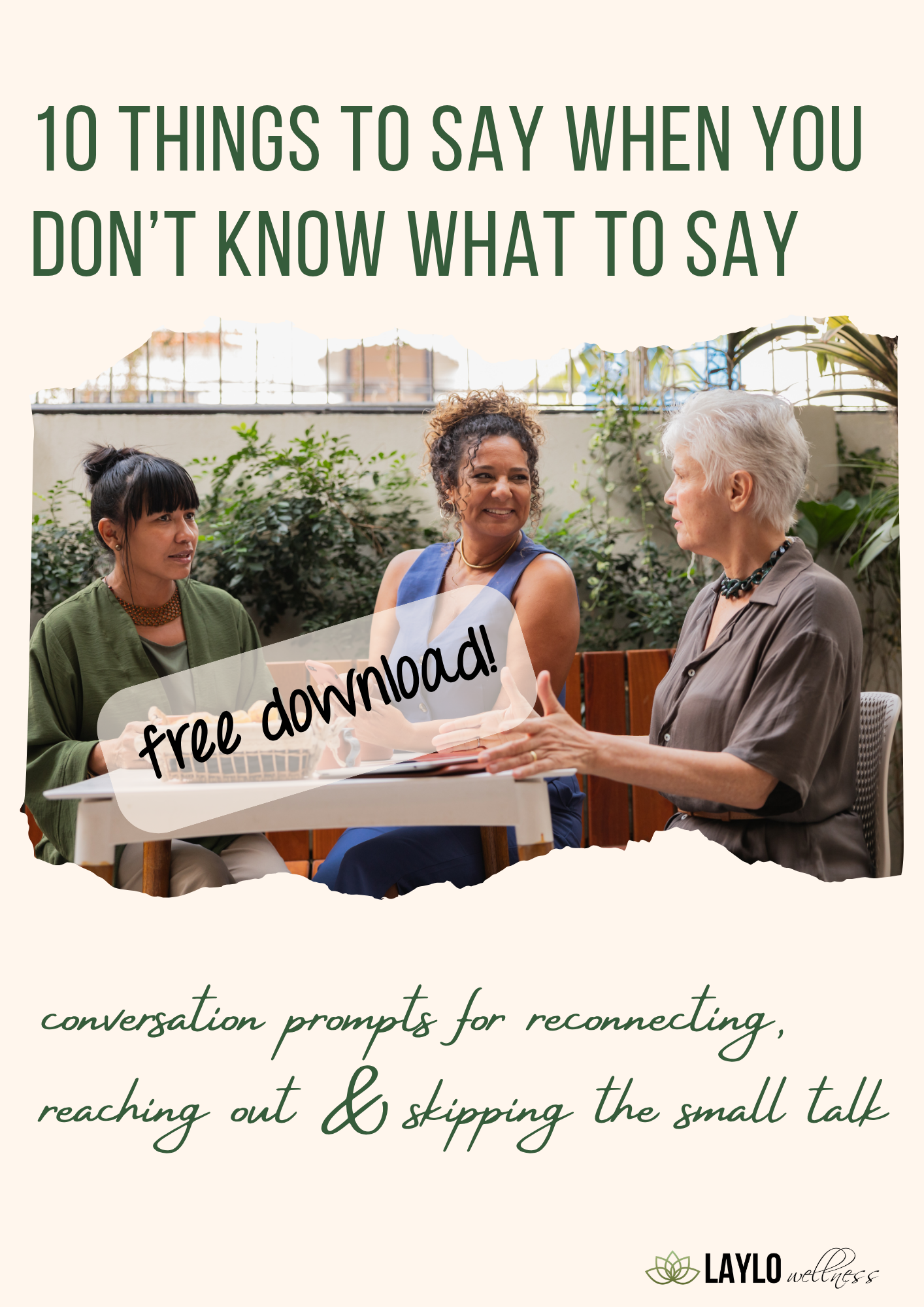
Wooden questions don’t foster warmth. That’s why we created the “10 Things to Say When You Don’t Know What to Say” cheat sheet. It’s a free guide packed with conversation starters designed for social smoothness—and built around research. A few highlights include:

  1. “What’s something that went right for you today—even if it was tiny?”
  2. “What’s been giving you a little spark lately?”
  3. “Has anything stretched you in a good way recently?”

Each of these Q’s is designed to go beyond the expected and get the A’s that get people talking. They’re short, yet powerful. And they can serve as catalysts for connection—shifting the tone from pleasant to purposeful.

How to Use Them Strategically


When meeting someone familiar—or introducing yourself to someone new—start with one of these questions. Listen fully, then respond empathetically. Follow-up is key:

  • When someone says, “I had a challenge at work,” reply, “That sounds tough—what part stretched you the most?”
  • If the response is, “I’m enjoying an art class,” ask, “What’s surprised you about exploring art at this stage?”

It’s this combination of thoughtful inquiry and engaged listening that transforms casual talk into moments of authentic exchange.

The Ripple Effect Over Time


Small questions yield big impact. Regularly engaging in deeper dialogue can cultivate friendships that withstand life’s seasons—from busy work periods to family transitions. One longitudinal study revealed that people over 40 who maintained three or more close friends experienced:

  • 50% fewer sleep disturbances
  • 35% lower rates of midlife depressive symptoms
  • 60% higher self-reported life satisfaction

In other words, richer conversations ignite friendships that support long-term wellness.

Transitioning Toward Community


A single question can ignite a friendship—but what happens next? Community-building is a natural next step. That’s why our Friendship After 40 course was designed to turn friendship sparks into lasting networks. And for those seeking immersive experience, The Soul Sanctuary Retreat offers 4 days of curated conversation, shared meals, and meaningful connection – plus a whole lot of fun and adventure!

But you don’t need to attend a retreat to begin. Grab “10 Things to Say When You Don’t Know What to Say” guide as your first step. Use the prompts in gatherings, group settings, or everyday chats. Notice how the tone shifts, how invitations open, how relationships deepen.

Putting It All Together


To recap how better questions lead to deeper connections:

  1. Purposeful prompts invite reflection beyond surface chatter.
  2. Empathic listening validates feelings and fosters reciprocity.
  3. Follow-ups show true interest and encourage further sharing.
  4. Continued use strengthens bonds and builds lasting emotional support.

By weaving these elements into daily interaction, you’ll shift small moments into meaningful progress. And for ongoing support, the Friendship After 40 program and The Soul Sanctuary Retreat offer structures to sustain and elevate your commitment to caring, mindful connection.

Final Invitation


Ready to pivot from polite greetings to purposeful conversation? Begin with the “10 Things to Say When You Don’t Know What to Say” freebie. Let those questions be your conversational compass—and watch how small conversations yield big shifts.

Your journey toward intentional social wellness begins with simple curiosity and thoughtful listening. And as each connection deepens, you enrich not only others—but your own sense of belonging and well-being.

Warmly, Laura

You don’t have to choose between success and well-being. Step away from the chaos, reset your mind and body, and realign with what truly matters. Our wellness retreats, online courses, free resources give you the space to breathe, reflect, and design a life that feels fulfilling—without guilt, without compromise.

Be the first to know about upcoming retreats—join the info list for dates and details.

Let’s stay connected! Follow us on InstagramFacebookYouTubeLinkedIn, and Pinterest, and join the LAYLO Shala for exclusive updates and insights.