5 Hidden Clues Your Body is Out of Sync

Some signs of stress are obvious. Deadlines. Family obligations. A calendar that never lets up.

But the body speaks in more subtle ways. Physical discomfort, shifts in energy, and even unexpected changes in mood can be early messages.

Sometimes, those messages have more to do with your mental health than anything else.

Other times, it’s the body itself asking for care. Hormonal shifts, particularly during perimenopause and menopause, bring real physical changes. Sleep patterns alter. Muscles feel different. Skin, joints, and digestion begin to respond to aging in ways that feel unfamiliar. This isn’t imagined; it’s biology. And it deserves attention on its own terms.

Knowing which signals point to emotional depletion and which reflect physical changes isn’t always easy. But noticing both is where real wellness begins. It’s why I start every yoga class with a few minutes of just observing how we feel, in our bodies and in our minds. Most of us have trained ourselves to ignore our bodies and our thoughts all day long. After all, we’ve got important things to do!

Your Health Isn’t Just in Your Head, But Your Emotions Live in the Body

The research is clear. A well-connected social life is linked to longer life expectancy, lower inflammation, and improved immune function. People in midlife who feel emotionally supported tend to experience fewer chronic health issues and recover faster from illness.

Yet, the inverse also holds. When your days are filled with output but empty of meaningful connection, the body absorbs the strain. The 2023 American Psychological Association found that women over 45 who report relational dissatisfaction also report significantly higher levels of fatigue, sleep disruption, and physical pain. These symptoms aren’t separate from social wellness. They often begin there.

Five Physical Clues You May Be Carrying More Than Stress

Not all somatic discomfort stems from a physical issue. Here are five signs that may point toward emotional or social imbalance:

  1. Persistent jaw or shoulder tension
    If stretching, massage, and rest don’t relieve it, that stiffness might be emotional stress finding a home in your muscles.
  2. Afternoon energy crashes
    Not caused by food or sleep, these often result from mental depletion. Extended periods of surface-level interaction or emotional suppression can drain the nervous system.
  3. Digestive inconsistency
    Stress affects the gut. If you feel off after emotionally taxing conversations or when your schedule leaves no room for real connection, your body may be reacting through digestion.
  4. Restless limbs or tight hips
    These can often be linked to unmet emotional needs or a sense of feeling stuck. Movement can help, but so can meaningful human interaction.
  5. Pervasive sense of being “off”
    Hard to describe and easy to dismiss, this physical unease often occurs when you’re functioning but not fulfilled.

Each of these signals matters. The trick is figuring out what the root cause really is, determining if it is a physical issue or an emotional one. Or if it’s a combination of both.

Is It Hormones, Aging, or Emotional Overload?

Discerning the origin of discomfort matters. If your body feels different but your emotional life feels overall grounded and supported, there’s a good chance your symptoms stem from natural shifts like menopause, perimenopause, or aging. These changes can bring on:

  • Night sweats and disrupted sleep
  • Brain fog or difficulty concentrating
  • Weight gain around the abdomen despite activity
  • Dry skin, joint pain, or muscle stiffness
  • Fluctuating moods without an emotional trigger

However, if these symptoms appear alongside irritability, a short temper, or a deep sense of disinterest in once-meaningful relationships, the emotional root might be just as strong as the hormonal one.

Start by asking a few grounded questions:

  • Do I feel seen and supported, or am I often navigating this stage in silence?
  • Are my physical symptoms consistent, or do they show up most after emotionally draining days?
  • Is my body slowing down, or is it reacting to the pace and pressure of my life?

This kind of self-inquiry often reveals that the truth is not either/or but both. A tired body and a disconnected heart often travel together.

Supporting Both Body and Emotion Without Overwhelm

Addressing physical health starts with naming what’s real. Midlife means more than maintaining the status quo. It’s a period of deep physiological change. You are going to have to change things up!

Support might include hormone evaluation, shifts in nutrition, strength training, and better rest rhythms. None of that needs to be extreme. Small, consistent choices create momentum.

At the same time, social and emotional support cannot be optional. Restorative practices like real conversation, community with peers who understand this life stage, and time for solitude aren’t luxuries. They’re essentials. When physical health is paired with emotional clarity and relational ease, the body often responds with more energy, balance, and vitality.

Wellness at this stage isn’t about perfecting anything. Most women aren’t falling apart. They’re finally tuning in and listening more closely.

Listen Now So Your Body Doesn’t Have to Shout

You’ve already pushed through more than most people know. The fatigue, the fog, the shifts in how your body feels—none of it is weakness. It’s data. And the earlier you respond to that data, the more power you reclaim.

You don’t have to solve everything at once. But you do have to notice. Start with one moment of honesty. Pay attention to one message your body keeps sending. Trust what it’s trying to tell you.

Listening is the first form of healing. And it’s always available to you.

Warmly, Laura

You don’t have to choose between success and well-being. Step away from the chaos, reset your mind and body, and realign with what truly matters. Our wellness retreats, online courses, free resources give you the space to breathe, reflect, and design a life that feels fulfilling—without guilt, without compromise.

Be the first to know about upcoming retreats—join the info list for dates and details.

Let’s stay connected! Follow us on InstagramFacebookYouTubeLinkedIn, and Pinterest, and join the LAYLO Shala for exclusive updates and insights.

7 Simple Ways to Go from Text to Table

Somewhere between voice notes and emojis, something vital has gone missing: presence.

Our digital connections have never been more frequent, yet many women in their 50s are finding themselves underwhelmed by the very platforms meant to bring them together.

It isn’t that text threads and Zoom calls have no value. It’s that they rarely meet the deeper need for authentic, embodied connection.

The shift from digital communication to in-person friendship isn’t a nostalgic wish; it’s a health imperative.

According to the American Psychological Association, in-person social interaction significantly lowers stress and improves emotional regulation. One study showed that face-to-face connection is more predictive of long-term well-being than financial security or career success.

This becomes particularly relevant as we age: after 40, friendships become fewer but more vital. Research from the AARP found that nearly 40% of women over 45 report having fewer close friends than they did a decade ago. And yet, the presence of just one deeply connected friendship correlates with improved cardiovascular health, immune function, and cognitive longevity.

For women juggling professional ambition, caregiving roles, and a full calendar, the idea of adding in-person gatherings might feel like another item on an already saturated to-do list. But what if those gatherings were the very thing that helped clear the noise?

How to Start Creating Real Connection Again

In-person friendship doesn’t demand perfection. It asks for proximity, presence, and permission to be real.

Here are seven practical ways to move from group chats to real gatherings:

1. Issue a Simple Invitation


Start with one person. Suggest coffee, a walk, or lunch. Keep it short, direct, and low-pressure. The goal isn’t to plan a full reunion—it’s to create space for genuine presence.

2. Make It a Micro-Gathering


You don’t need a big event. Invite two or three women for something easy and consistent, like a monthly dinner, backyard catch-up, or Sunday morning hike.

3. Reclaim the Calendar


Block time for connection just like you would for work. Protect it. When connection is treated as essential, not optional, it shifts your priorities and energy.

4. Turn Digital Into Physical


Take the energy from a group text and move it offline. Use a funny meme as a reason to grab lunch. Let the virtual serve as a springboard to the real.

5. Choose Conversation-Friendly Environments


Avoid noisy venues or over-planned agendas. Pick places where connection flows easily—quiet cafes, walking trails, or cozy living rooms.

6. Name the Need


It’s okay to say: “I miss being with women in real life.” Vulnerability opens doors. Others are likely craving the same thing and just need a nudge.

7. Align Gatherings with Your Life Stage


Create space for conversations that reflect your now. This isn’t about reliving your twenties. It’s about honoring who you are today and what matters most.

Women in this life stage are often the emotional anchors for everyone else. Yet they quietly carry their own unmet need for connection. Digital chats might provide quick support, but they often reinforce performance over presence. Likes and heart reactions can never replace eye contact, laughter in real time, or the comfort of sitting beside someone who gets it.

Why These Small Shifts Matter So Much

The health risks of continued digital-only relationships are not minor. According to Harvard researchers, lack of meaningful in-person connection increases the risk of premature death as much as smoking 15 cigarettes a day. It elevates inflammation, disrupts sleep, and increases vulnerability to anxiety and depression. The body knows when something essential is missing.

Of course, digital communication has its place. It can maintain long-distance relationships and provide daily check-ins. But it shouldn’t be the foundation. A friendship rooted solely in group texts risks becoming shallow, performative, and emotionally unsatisfying. The warmth of real connection requires shared space.

For many high-achieving women, friendships have become something to squeeze in—a luxury, not a necessity. But the science says otherwise.

Social connection is as essential to health as movement and nutrition. And for those who crave deeper, more meaningful relationships, a blueprint exists.

You CAN Make This Happen In Your Life

Friendship After 40: The Blueprint to Finding Your People” offers a practical, reflective path forward. It’s not about increasing your social calendar. It’s about aligning it with what nourishes you. You deserve friendships that offer depth, not just updates.

Choosing to gather in person is an act of self-respect and a signal to others that connection matters. It reclaims time from the scroll and returns it to soul. It allows women to witness each other fully—not filtered through a screen, but in the glorious texture of real life.

So the next time the group chat pings, consider this: What if that message became an invitation? Not for more texts, but for tea. Not for reaction emojis, but for real-time reaction. What if the greatest shift in your social wellness started not with a swipe, but with a step out your front door?

The path from digital to embodied friendship isn’t a return to the past. It’s a return to what was always true: We are wired for presence. And the most transformative conversations still happen when we show up, not just sign on.

Warmly, Laura

You don’t have to choose between success and well-being. Step away from the chaos, reset your mind and body, and realign with what truly matters. Our wellness retreats, online courses, free resources give you the space to breathe, reflect, and design a life that feels fulfilling—without guilt, without compromise.

Be the first to know about upcoming retreats—join the info list for dates and details.

Let’s stay connected! Follow us on InstagramFacebookYouTubeLinkedIn, and Pinterest, and join the LAYLO Shala for exclusive updates and insights.

5 Ways to Deepen Friendships with Mindfulness

mindfulness

How Emotional Regulation and Intentional Presence Build Stronger Connections

Friendships in midlife don’t run on autopilot. They require care, presence, and just enough self-awareness to keep things from turning into emotional bumper cars.

The good news? You don’t need a degree in psychology to strengthen your connections—you just need mindfulness and emotional regulation.

These two practices are the under-the-radar power tools for deeper, more sustainable friendships. Here are five ways to put them into action.

1. Ask Better Questions

Surface-level conversations are fine for weather and small talk, but real connection lives in meaningful dialogue. A thoughtful question can shift a conversation from routine to resonant in seconds.

Instead of “How’s work?” try, “What’s something that surprised you this week?” You’ll be amazed what opens up.

Need help? 10 Things to Say When You Don’t Know What to Say offers prompts that go deeper without feeling forced—and they work especially well when conversations feel stuck.

2. Create Emotional Check-In Rituals

Friendships thrive on rhythm, and one of the best rhythms to build is the emotional check-in. This can be a weekly text, a standing call, or a shared journal prompt exchanged over coffee.

Ask: “What’s your emotional weather today?” or “What’s been emotionally real for you this week?”

In Friendship After 40, participants learn to develop these check-ins naturally. They become trusted rituals, helping everyone feel seen and supported.

3. Embrace the Mindful Pause

Mindfulness is not about perfection. It’s about the pause—the breath you take before reacting. Especially in emotionally charged conversations, this pause becomes powerful.

Instead of rushing to fix or advise, take a moment. Ask yourself: “Am I listening to understand, or just waiting to respond?”

This small shift creates space for honest dialogue and diffuses defensiveness before it starts.

4. Practice Emotional Regulation

Midlife friendships get tested. Life throws curveballs—losses, changes, stress. How you handle your own emotional state during those moments will either nurture or erode connection.

Emotional regulation means noticing your reaction and choosing your response. It’s saying, “I need a moment to process,” rather than pulling away without explanation.

Data shows adults who use these skills are 25% more likely to maintain long-term friendships. And they report fewer conflicts, less stress, and a stronger sense of belonging.

5. Be Fully Present

Presence is the currency of deep connection. But in a world of endless distractions, showing up fully has become a rare gift.

Being present means putting away the phone. Maintaining eye contact. Listening with the intention to understand, not to reply.

Friends feel the difference when you’re really there—and they respond in kind. Research shows that friendships with high levels of mindful presence report a 22% increase in emotional satisfaction.

The Payoff: Deeper, More Resilient Friendships

Ignore these practices, and friendships often drift. About 45% of adults report losing close friends due to unresolved emotional tension—and that loss carries a 33% drop in overall life satisfaction.

On the flip side, emotionally attuned, mindful friendships lead to 40% lower daily stress and significantly better well-being.

One Final Thought

Deep friendships don’t just happen. They’re built—moment by moment, pause by pause, question by question.

You don’t need to overhaul your life. Just start small. Choose one of these five habits to practice this week. Let the shift begin.

And when you’re ready to explore these tools more fully, resources like 10 Things to Say When You Don’t Know What to Say, Friendship After 40, and the immersive Friendship Retreat are here to support your next step.

Because the friendships worth keeping are always worth deepening.

Warmly, Laura

You don’t have to choose between success and well-being. Step away from the chaos, reset your mind and body, and realign with what truly matters. Our wellness retreats, online courses, free resources give you the space to breathe, reflect, and design a life that feels fulfilling—without guilt, without compromise.

Be the first to know about upcoming retreats—join the info list for dates and details.

Let’s stay connected! Follow us on InstagramFacebookYouTubeLinkedIn, and Pinterest, and join the LAYLO Shala for exclusive updates and insights.

HOW TO ASK BETTER QUESTIONS TO BUILD BETTER FRIENDSHIPS

Unlocking Deeper Dialogue Through Better Questions

There’s an art to meaningful connection, and sometimes, all it takes is the right question to transform a brief exchange into an opportunity for genuine rapport.

Conversations don’t need to be grand to be impactful. In fact, subtle inquiries can spark vulnerability, trust, and connection—especially as we mature.

Why Better Questions Matter


Good questions serve as bridges. According to recent studies, close friendships built after age 40 tend to provide more emotional support and satisfaction—and asking the right questions is the gateway to these deeper bonds. One survey found that 82% of women over 40 report increased well-being when they nurture meaningful connections.

Meanwhile, failing to foster closeness through conversation has been linked to rising stress and depression, with adults over 45 who lack supportive communication experiencing 25% higher cortisol levels and a 30% greater incidence of depressive symptoms.

Open-Ended vs. Surface-Level


Small talk often starts with “How are you?” but that rarely opens doors. What if instead, you asked, “What’s something you recently discovered that brought you joy?” or “What part of your week are you already looking forward to?”

These open-ended prompts encourage reflection and invite others to share meaningful details. Over time, this gradual deepening builds trust—turning acquaintances into confidantes.

The Science of Connection


Research consistently shows that adults who engage in deeper conversations experience:

  • Improved cognitive health — one study found conversational engagement helped protect memory and mental agility.
  • Reduced stress and anxiety — sharing personal experiences lowers cortisol responses by 20–30%.
  • Greater emotional resilience — having at least two close confidants in midlife correlates with a 40% increase in psychological resilience.

Clearly, prompting deeper dialogue isn’t just pleasant—it supports mental and emotional vitality for adults in midlife.

Questions That Spark Connection


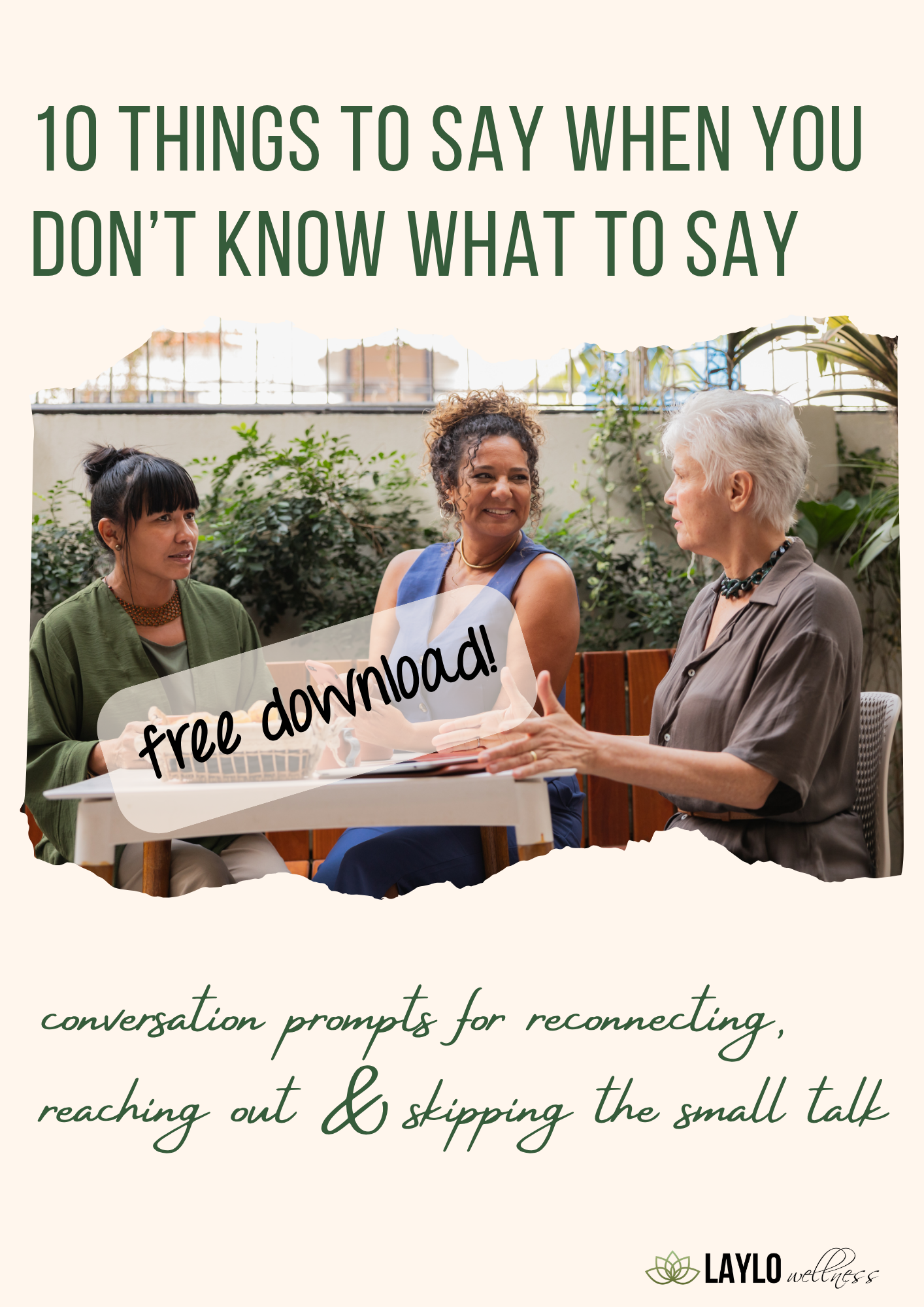
Wooden questions don’t foster warmth. That’s why we created the “10 Things to Say When You Don’t Know What to Say” cheat sheet. It’s a free guide packed with conversation starters designed for social smoothness—and built around research. A few highlights include:

  1. “What’s something that went right for you today—even if it was tiny?”
  2. “What’s been giving you a little spark lately?”
  3. “Has anything stretched you in a good way recently?”

Each of these Q’s is designed to go beyond the expected and get the A’s that get people talking. They’re short, yet powerful. And they can serve as catalysts for connection—shifting the tone from pleasant to purposeful.

How to Use Them Strategically


When meeting someone familiar—or introducing yourself to someone new—start with one of these questions. Listen fully, then respond empathetically. Follow-up is key:

  • When someone says, “I had a challenge at work,” reply, “That sounds tough—what part stretched you the most?”
  • If the response is, “I’m enjoying an art class,” ask, “What’s surprised you about exploring art at this stage?”

It’s this combination of thoughtful inquiry and engaged listening that transforms casual talk into moments of authentic exchange.

The Ripple Effect Over Time


Small questions yield big impact. Regularly engaging in deeper dialogue can cultivate friendships that withstand life’s seasons—from busy work periods to family transitions. One longitudinal study revealed that people over 40 who maintained three or more close friends experienced:

  • 50% fewer sleep disturbances
  • 35% lower rates of midlife depressive symptoms
  • 60% higher self-reported life satisfaction

In other words, richer conversations ignite friendships that support long-term wellness.

Transitioning Toward Community


A single question can ignite a friendship—but what happens next? Community-building is a natural next step. That’s why our Friendship After 40 course was designed to turn friendship sparks into lasting networks. And for those seeking immersive experience, The Soul Sanctuary Retreat offers 4 days of curated conversation, shared meals, and meaningful connection – plus a whole lot of fun and adventure!

But you don’t need to attend a retreat to begin. Grab “10 Things to Say When You Don’t Know What to Say” guide as your first step. Use the prompts in gatherings, group settings, or everyday chats. Notice how the tone shifts, how invitations open, how relationships deepen.

Putting It All Together


To recap how better questions lead to deeper connections:

  1. Purposeful prompts invite reflection beyond surface chatter.
  2. Empathic listening validates feelings and fosters reciprocity.
  3. Follow-ups show true interest and encourage further sharing.
  4. Continued use strengthens bonds and builds lasting emotional support.

By weaving these elements into daily interaction, you’ll shift small moments into meaningful progress. And for ongoing support, the Friendship After 40 program and The Soul Sanctuary Retreat offer structures to sustain and elevate your commitment to caring, mindful connection.

Final Invitation


Ready to pivot from polite greetings to purposeful conversation? Begin with the “10 Things to Say When You Don’t Know What to Say” freebie. Let those questions be your conversational compass—and watch how small conversations yield big shifts.

Your journey toward intentional social wellness begins with simple curiosity and thoughtful listening. And as each connection deepens, you enrich not only others—but your own sense of belonging and well-being.

Warmly, Laura

You don’t have to choose between success and well-being. Step away from the chaos, reset your mind and body, and realign with what truly matters. Our wellness retreats, online courses, free resources give you the space to breathe, reflect, and design a life that feels fulfilling—without guilt, without compromise.

Be the first to know about upcoming retreats—join the info list for dates and details.

Let’s stay connected! Follow us on InstagramFacebookYouTubeLinkedIn, and Pinterest, and join the LAYLO Shala for exclusive updates and insights.

5 EXPERT TIPS TO RECLAIM YOUR FITNESS AFTER 40

Reclaim Your Fitness!

reclaim your fitness after 40

Rebuilding physical health in midlife is more than just hitting the gym.

It’s about redefining strength to support a thriving social life and a renewed sense of personal agency.

For women in their 40s and 50s, particularly those navigating new chapters, physical fitness becomes a foundation for deeper connection and emotional well-being.

Research shows that physical activity positively correlates with improved mood, increased energy, and greater social engagement. Yet, a 2023 report by the National Center for Health Statistics revealed that nearly 45% of women between 45 and 64 do not meet recommended physical activity guidelines. That gap doesn’t just impact cardiovascular health or flexibility—it can subtly erode confidence and reduce motivation to connect with others.

Here are five evidence-based strategies to help reclaim your fitness and energize your midlife journey:

1. Prioritize Functional Strength


Rather than focusing solely on appearance, shift your attention to building functional strength. Exercises that mimic daily movements—like squats, lunges, and overhead presses—not only improve balance and coordination but also support everyday ease. Strength training twice a week can significantly improve bone density and muscle mass, which naturally decline after 40. According to the National Osteoporosis Foundation, women can lose up to 20% of their bone density in the five to seven years following menopause, making strength training a critical component of wellness.

Functional training also supports metabolic health. A study published in the Journal of Aging and Physical Activity found that older adults who engaged in strength training experienced better glucose regulation and metabolic profiles than their sedentary peers.

2. Make Movement Social


Physical activity doesn’t have to be a solo endeavor. Walking groups, dance classes, or weekend hikes with friends are excellent ways to integrate social connection with fitness. Research from the American Journal of Health Promotion found that group exercise participants report higher satisfaction and lower stress levels than those who exercise alone. Moreover, studies have shown that social exercise increases adherence to movement routines by up to 76%, reinforcing both consistency and connection.

Movement with others also creates shared memories and trust, essential elements for meaningful friendships. For those rebuilding or expanding their social circles, fitness becomes a safe and enjoyable gateway to connection.

3. Honor Recovery as a Ritual


Recovery is not optional in midlife—it’s essential. Muscles repair and grow during rest, not during exertion. Prioritize sleep, stay hydrated, and integrate practices like yoga, stretching, or foam rolling. These not only aid physical recovery but foster moments of reflection and calm, helping you stay present in your relationships and routines.

The Sleep Foundation reports that adults over 40 often struggle with consistent, restorative sleep. Regular physical activity has been shown to improve sleep quality, but only when paired with adequate recovery. A 2020 study in Frontiers in Psychology found that active recovery practices, such as yoga and breathwork, significantly reduce cortisol levels and improve emotional resilience.

4. Reframe Cardio as Exploration


Let go of the treadmill dread. Choose cardiovascular activities that feel like adventures: cycling new routes, swimming laps in open water, or brisk walks in nature. Cardiovascular health supports brain function, which in turn helps you stay sharp and socially engaged. The Alzheimer’s Association notes that regular aerobic activity can lower the risk of cognitive decline and improve memory.

Additionally, the Harvard T.H. Chan School of Public Health emphasizes that regular physical activity can reduce symptoms of anxiety and depression. Their research shows that people who engage in consistent aerobic exercise experience a 26% lower risk of developing depression. Physical movement, they assert, is one of the most effective natural ways to enhance mental health at any age.

5. Track Progress, Not Perfection

Celebrate the wins that matter. Maybe it’s carrying groceries with ease or climbing stairs without fatigue.

Tracking progress through a journal or app can provide clarity and encouragement.

The goal isn’t perfection—it’s forward movement that supports your social and emotional vitality.

Keeping a visual log of milestones—whether in the form of notes, charts, or photos—can increase motivation and foster a deeper connection to your personal goals. A 2021 study published in Health Psychology found that individuals who self-monitor their exercise were more than twice as likely to meet fitness goals over a six-month period compared to those who did not.

Bonus Tip: Train Your Balance


Balance training is an often-overlooked element of midlife fitness, yet it’s critical for maintaining independence and preventing injury. The risk of falling increases significantly with age. According to the Centers for Disease Control and Prevention (CDC), one in four adults over 65 falls each year, and falls are the leading cause of injury-related deaths in this age group. Even non-fatal falls can lead to serious consequences, such as fractures, long-term hospitalization, or reduced mobility.

Incorporating balance exercises—such as single-leg stands, heel-to-toe walking, or tai chi—into your routine can improve proprioception and lower-body strength. A 2020 meta-analysis in the British Journal of Sports Medicine found that balance training reduced fall risk by up to 37% among older adults. Early adoption of these exercises in your 40s and 50s can set the foundation for long-term safety and confidence.

Failing to engage in regular fitness during midlife doesn’t just impact physical health. A sedentary lifestyle is linked to increased risk of depression, decreased social engagement, and even cognitive decline. According to the Mayo Clinic, regular exercise helps release endorphins, promotes better sleep, and improves interpersonal responsiveness.

These tips offer more than a path to physical strength—they open the door to richer conversations, shared experiences, and deeper friendships. As you build strength, you reinforce your capacity for presence, connection, and vitality.

Explore tools like our 10 Things to Say When You Don’t Know What to Say to bring more intention to your social moments, or deepen your journey with Friendship After 40: The Blueprint to Finding Your People. Ready to take it even further? Our immersive Soul Sanctuary Retreat integrates wellness, movement, and authentic bonding for lasting transformation.

Strength supports connection. And connection, in midlife, is everything.

laylo wellness

You don’t have to choose between success and well-being. Step away from the chaos, reset your mind and body, and realign with what truly matters. Our wellness retreats, online courses, and free resources give you the space to breathe, reflect, and design a life that feels fulfilling—without guilt, without compromise.

Be the first to know about upcoming retreats—join the info list for dates and details.

Let’s stay connected! Follow us on InstagramFacebookYouTubeLinkedIn, and Pinterest, and join the LAYLO Shala for exclusive updates and insights.

HOW TO RECOGNIZE A TRUE FRIENDSHIP

Friendship, when authentic, serves as a powerful foundation for emotional wellbeing and connection.

But not all friendships nourish us equally. Some simply skim the surface, while others anchor us with deep trust and mutual care.

For women navigating life after 40, the ability to distinguish between these two types becomes even more essential.

At this stage in life, it’s common to reassess old bonds and question new ones. This moment of evaluation isn’t just natural; it’s vital. As social structures shift—children leave home, careers evolve, priorities realign—so too should the friendships that sustain us.

The Cost of Superficial Bonds

A growing body of research confirms what many intuitively know: friendships that lack depth can leave us emotionally depleted. According to a study published in Personal Relationships, adults who report low-quality friendships show higher levels of stress and lower satisfaction with life. Furthermore, data from the American Psychological Association links poor social support to increased risk of cardiovascular disease and cognitive decline.

One might recognize this in friendships that feel one-sided, where conversations rarely move beyond pleasantries, or where support is conditional. These connections, while perhaps consistent in presence, may not provide the emotional depth needed to thrive.

Superficial friendships often come with subtle signs—cancelled plans without follow-up, discomfort in expressing deeper emotions, or an unspoken sense of competition rather than camaraderie. Over time, these dynamics take a toll. Emotional labor increases without a matching return in connection, leaving one to wonder if the effort is worth the investment.

Markers of a True Friendship

True friendship is characterized by emotional availability, mutual respect, and reliability. These relationships often feature:

  • Unfiltered conversation: There is ease in discussing both joy and vulnerability.
  • Reciprocal support: Help and encouragement flow in both directions.
  • Personal growth: The friendship encourages and celebrates change.
  • Conflict resolution: Disagreements are handled with maturity, not avoidance.

In nourishing friendships, one feels seen, not simply included. Trust develops without pretense, and there is freedom to show up fully without performance. These relationships also grow with us. They adapt through life transitions, whether joyful or challenging, and offer a safe space to reflect and recalibrate.

Why It Matters More After 40

By midlife, emotional energy becomes a premium resource. The desire to invest in meaningful relationships grows stronger, but so does the discernment of where not to spend it. According to Harvard’s long-running Study of Adult Development, strong relationships are the most significant predictor of a satisfying and healthy later life. As we age, the quality—not the quantity—of our social ties matters most.

This means prioritizing connections that truly contribute to emotional resilience. It also means letting go of the cultural conditioning that equates longevity of a friendship with its health.

How to Assess Your Friendships

Begin with reflection. Ask:

  • Do I feel energized or drained after spending time with this person?
  • Is there space for mutual honesty?
  • Can I count on them in times of need?

The answers help reveal whether a connection is sustaining or superficial.

It’s also helpful to deepen conversations with those friendships that show potential. Here, a structured guide like the Connection Conversation Starters becomes invaluable. These tools provide thoughtful prompts that help bypass small talk and encourage more meaningful dialogue.

Creating Space for New Bonds

Recognizing a true friendship doesn’t just mean identifying what exists—it also involves creating space for what could be.

Sometimes, it’s necessary to outgrow certain relationships. This isn’t failure; it’s evolution.

Intentional connections, cultivated with care, are always within reach. Tools that invite depth and authenticity can serve as catalysts. For instance, using curated conversation prompts allows early insight into compatibility and shared emotional interests.

Forming new friendships in midlife requires different strategies than in earlier decades. Shared values and intentional engagement often take precedence over proximity or shared routines. Investing in community experiences, such as workshops or retreats, can open doors to new meaningful connections.

Closing the Gap Between Desire and Connection

True friendships don’t happen by chance. They are built through presence, vulnerability, and consistency. The journey toward deeper relationships begins with clarity about what matters and a willingness to pursue it with intentionality.

As a thought leader in social wellness, I believe that fostering genuine connection requires more than goodwill—it requires tools, reflection, and courage. With the Connection Conversation Starters, it’s possible to begin transforming acquaintances into allies, and casual chats into cornerstone conversations.

Because friendship should never just be familiar. It should be fulfilling.

laylo wellness

You don’t have to choose between success and well-being. Step away from the chaos, reset your mind and body, and realign with what truly matters. Our wellness retreats, online courses, and free resources give you the space to breathe, reflect, and design a life that feels fulfilling—without guilt, without compromise.

Be the first to know about upcoming retreats—join the info list for dates and details.

Let’s stay connected! Follow us on InstagramFacebookYouTubeLinkedIn, and Pinterest, and join the LAYLO Shala for exclusive updates and insights.