If your mood has felt heavier lately, pay attention.
This isn’t weakness. It isn’t laziness. And it’s not “just stress.”
It’s often biology meeting a sedentary life.
The research on exercise and depression has become impossible to ignore. Large reviews now show that structured exercise can significantly reduce depressive symptoms. In some analyses, the effects look similar to psychotherapy — and in limited head-to-head comparisons, even antidepressant medication.
That doesn’t mean you throw your prescription in the trash.
Medication decisions belong with your physician. Period.
What it does mean is this: movement deserves to be taken seriously as part of your mental health strategy.
For people juggling careers, families, aging parents, and their own expectations — that matters.
Because when your mood dips, your social life quietly shrinks. Plans get canceled. Texts go unanswered. You start telling yourself you’ll reach out when you “feel better,” but isolation lowers stimulation, reduces emotional buffering, and removes the very interactions that help regulate mood.
Over time, that withdrawal feeds the depression, and the depression feeds the withdrawal — a slow downward spiral that affects cognitive health, stress resilience, and even long-term physical outcomes.
Here are six exercise shifts that change that.
Stop Treating Exercise Like It’s About Your Jeans
This is not about fitting into old denim.
Exercise alters brain chemistry. It influences serotonin, dopamine, and norepinephrine. It reduces inflammatory markers linked to depressive symptoms. You’ll experience improved sleep architecture and stabilized energy.
That’s psychiatric support, not vanity.
Years ago, when my life felt unstable on multiple fronts, movement wasn’t about aesthetics. It was regulation. I found a measure of control when other things felt chaotic. It was proof that I could do something hard and come out stronger.
If your mood feels unpredictable, start looking at exercise as maintenance for your brain.
Discuss it with your clinician. Layer it into your care plan intelligently.
Lift Heavy. Not Cute. Heavy.
Resistance training consistently shows meaningful reductions in depressive symptoms across age groups.
More importantly, it changes how you carry yourself.
There’s something different about putting weight on a bar and standing up with it. Strength builds competence. Competence builds confidence. Confidence changes how you enter rooms.
Muscle mass declines after 40. Mood can decline right along with it if you’re not careful.
Strong women don’t disappear from their own lives as easily. They initiate plans and keep those commitments. They tolerate discomfort better.
Your friendships benefit from that stability.
Walk Like It’s Prescribed
Brisk walking shows up repeatedly in depression research as effective. Nothing fancy required.
Consistency beats intensity here.
Thirty minutes. Most days of the week. No drama.
Now add a layer most people skip.
Invite someone.
Meet at the same time every week. Take the same route. Let familiarity do the heavy lifting.
Friendship erodes when repetition disappears. Walking restores repetition without turning connection into an obligation.
Put Yourself in Rooms With Other People
Depression narrows your world. It convinces you staying home is safer.
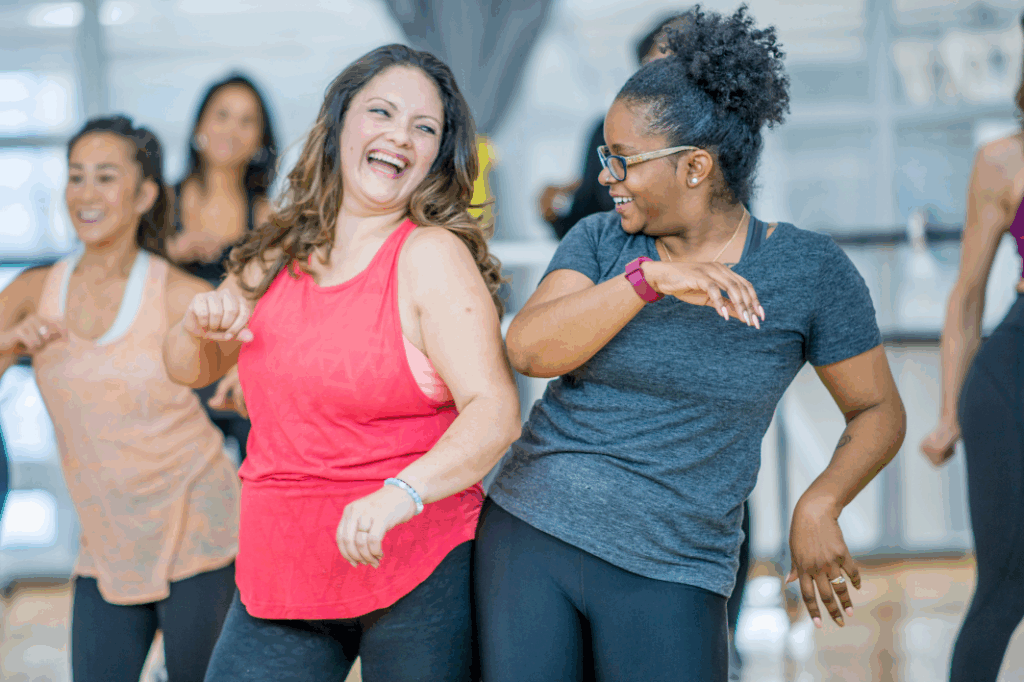
Group exercise pushes back without forcing vulnerability.
You show up, move, and leave. Over time, faces become familiar. Conversations grow organically.
Research suggests group-based exercise may amplify mood improvements, likely because social interaction is built in.
No awkward icebreakers. No small talk marathons. Just shared effort.
That’s enough.
Protect Consistency Like It’s Non-Negotiable
Motivation fluctuates when mood fluctuates. Waiting to “feel like it” is a losing strategy. Don’t be fooled into thinking the motivation fairy is going to show up to get you out the door.
Adherence predicts outcome in exercise research. Regular, moderate sessions outperform sporadic bursts of intensity.
Put workouts on your calendar like client meetings. Cancel something else before you cancel that.
Stable sleep improves emotional regulation. Stable energy reduces irritability. Regulated mood makes you more socially available.
Less canceling. Fewer withdrawals. Stronger bonds.
Pair Movement With Intentional Social Repetition
Adults over 50 report having fewer close friends than they did decades ago. Some report none. Social isolation increases mortality risk and is linked to higher dementia rates.
Those are not soft statistics.
Physical inactivity and social disconnection often travel together. Exercise can interrupt both.
Walking meetings. Weekly strength classes. Saturday hikes. A standing commitment that puts you in the same place at the same time with the same people.
If conversation feels rusty, that’s normal. You’ve spent years managing logistics, not nurturing new friendships. Social reps work like muscle reps. They return with practice. Not sure how to get started? Find support from experts who can show you the ropes.
A Clear Line in the Sand
Exercise can significantly reduce depressive symptoms.
It can complement therapy and medication.
It should never replace prescribed treatment without medical supervision.
Stopping antidepressants abruptly can cause withdrawal symptoms or relapse. Any treatment changes belong in a conversation with your healthcare provider.
Be smart. Be strategic.
Where This Lands
You want steadier mood.
You want more energy.
And you want friendships that don’t feel like effort.
Movement is one of the few interventions that touches all three at once.
A stronger body supports a steadier mind. A steadier mind supports better connection. Better connection supports long-term health.
That’s not hype.
That’s leverage.

LAYLO wellness centers social wellness—supported by mental clarity and movement—to help you live and work with more steadiness, connection, and longevity.
The LAYLO Editis where I share thoughtful, practical insight for real life.
Join for updates on upcoming experiences, including The LAYLO Collective, a small-group social wellness experience designed for real life, and Wellness Retreats.
Follow along on Instagram, Facebook, YouTube, LinkedIn, and Pinterest.