
How to Outgrow a Friendship Without Burning It Down

If I put you on a stage and handed you a microphone and asked, “Who here feels fully supported by all their friendships right now?” a lot of you would shift in your seats.

You have a full life. A good life. You’ve done the work. Career. Marriage. Kids. Parents. Health. You show up. You deliver.

But when it comes to friendships? It’s murkier.

Here’s what nobody says out loud: sometimes you outgrow people. And it doesn’t make you a bad person.

It makes you honest.

Friendship After 40 Hits Different

In your twenties, proximity did a lot of the heavy lifting. Coworkers, neighbors, playgroups, carpools. You didn’t have to think about alignment. You just showed up, and the friendship formed.

Now? Time is tighter. Energy is finite. Your tolerance for nonsense has dropped dramatically.

Research backs up what you’re feeling. Nearly half of adults report having three or fewer close friends. Social circles shrink as we age. At the same time, decades of data from the Harvard Study of Adult Development show that the quality of our relationships predicts how well and how long we live.

That’s not a small detail.

Connection affects blood pressure. It affects immune health. It affects cognitive decline. Social strain raises stress hormones and disrupts sleep. We obsess over strength training and protein intake, and we that’s not a bad thing. It’s just not the whole thing. Relational stress quietly chips away at longevity.

So yes, the conversation about friendship is also a conversation about health.

When a Friendship Starts to Feel Off

You know the feeling.

You leave lunch slightly irritated.
Maybe you brace before seeing her name pop up on your phone.
Or You edit yourself more than you used to.

Nothing dramatic happened. There was no explosion. Just a slow drift.

Maybe you’ve grown. Or she hasn’t. Maybe you both have, just in different directions.

For a woman who prides herself on loyalty, this feels uncomfortable. You don’t quit on people or create unnecessary conflict. You handle your life.

So you do what “responsible” women do: You get busy. Cancel more often. Keep it surface-level.

That works for a while.

But avoidance has a cost. Unspoken frustration sits in your body. It shows up as tension, low-grade resentment, fatigue after interactions that used to energize you.

Over time, that drains more than you realize.

Discernment Is Not Drama

Let’s get something straight. Outgrowing a friendship does not require a confrontation scene.

It does require clarity.

Ask yourself Do:

  • Our values still line up?
  • I feel respected?
  • I feel like I have to shrink around her?
  • Am I staying because of history rather than current connection?

Every friendship hits seasons. Stress happens. Life gets messy. That’s normal.

What’s different is chronic misalignment.

In my earlier life, I learned the hard way what conditional relationships look like. When connection depends on compliance, you lose yourself quickly. Rebuilding my life meant choosing friendships differently. Shared values. Mutual respect. Emotional safety. That changed everything.

You don’t need a dramatic exit. You need self-respect.

Three Ways to Handle It Like a Grown Woman

Adjust the frequency.
You don’t need a speech. Move from weekly to quarterly. Shift from one-on-one dinners to group settings. Let the cadence reflect reality.

Tell the truth when asked.
If she notices and asks what’s going on, keep it simple. “I’m focusing on a few priorities right now.” That’s enough. You don’t owe a dissertation.

Reinvest your energy wisely.
When you loosen one tie, tighten another. Reach out to someone you admire. Text the woman you keep meaning to know better. Initiate. Yes, it feels awkward. Do it anyway.

Most women over 40 are out of practice initiating friendships. We got used to reacting to what our kids needed, what work demanded, what family required. Starting a new connection can feel clumsy.

That’s exactly why language matters. When you know what to say, you move. When you move, connection follows.

Longevity Loves Aligned Relationships

A 2010 meta-analysis found that strong social relationships increase survival odds by about 50 percent. That’s on par with quitting smoking.

Read that again.

Quality friendships protect your brain, your heart, and your emotional steadiness. They buffer stress, keep you engaged, and challenge you to grow.

This stage of life calls for fewer but better.

Women who age well socially don’t cling to every relationship out of guilt. They refine. They choose. Find ways to nurture what fits and respectfully release what doesn’t.

That’s grit and grace.

The Goal Is Respect, Not Ruins

You can appreciate what a friendship was and still admit it no longer fits who you are now.

Reduce access without hostility.
You can protect your energy without announcing it to the room.
Grow without burning anything down.

And if you find yourself in a quieter social season, that’s not failure. It’s recalibration.

This is where intentional spaces matter. Real conversations. Practical scripts. Women who are also refining their circles. Whether that’s learning what to say when conversations stall, following a clear path to finding your people after 40, or stepping into a retreat where connection happens naturally, structure helps.

You’ve evolved. Your friendships are allowed to evolve too.

No drama required. Just maturity, discernment, and a long view on your health and your life.

Warmly, Laura

LAYLO wellness centers social wellness—supported by mental clarity and movement—to help you live and work with more steadiness, connection, and longevity.

The LAYLO Editis where I share thoughtful, practical insight for real life.
Join for updates on upcoming experiences, including The LAYLO Collective, a small-group social wellness experience designed for real life, and Wellness Retreats.

Follow along on Instagram, Facebook, YouTube, LinkedIn, and Pinterest.

6 Powerful Exercise Shifts That Boost Mood and Protect Your Social Life

If your mood has felt heavier lately, pay attention.

This isn’t weakness. It isn’t laziness. And it’s not “just stress.”

It’s often biology meeting a sedentary life.

The research on exercise and depression has become impossible to ignore. Large reviews now show that structured exercise can significantly reduce depressive symptoms. In some analyses, the effects look similar to psychotherapy — and in limited head-to-head comparisons, even antidepressant medication.

That doesn’t mean you throw your prescription in the trash.

Medication decisions belong with your physician. Period.

What it does mean is this: movement deserves to be taken seriously as part of your mental health strategy.

For people juggling careers, families, aging parents, and their own expectations — that matters.

Because when your mood dips, your social life quietly shrinks. Plans get canceled. Texts go unanswered. You start telling yourself you’ll reach out when you “feel better,” but isolation lowers stimulation, reduces emotional buffering, and removes the very interactions that help regulate mood.

Over time, that withdrawal feeds the depression, and the depression feeds the withdrawal — a slow downward spiral that affects cognitive health, stress resilience, and even long-term physical outcomes.

Here are six exercise shifts that change that.

Stop Treating Exercise Like It’s About Your Jeans

    This is not about fitting into old denim.

    Exercise alters brain chemistry. It influences serotonin, dopamine, and norepinephrine. It reduces inflammatory markers linked to depressive symptoms. You’ll experience improved sleep architecture and stabilized energy.

    That’s psychiatric support, not vanity.

    Years ago, when my life felt unstable on multiple fronts, movement wasn’t about aesthetics. It was regulation. I found a measure of control when other things felt chaotic. It was proof that I could do something hard and come out stronger.

    If your mood feels unpredictable, start looking at exercise as maintenance for your brain.

    Discuss it with your clinician. Layer it into your care plan intelligently.

    Lift Heavy. Not Cute. Heavy.

      Resistance training consistently shows meaningful reductions in depressive symptoms across age groups.

      More importantly, it changes how you carry yourself.

      There’s something different about putting weight on a bar and standing up with it. Strength builds competence. Competence builds confidence. Confidence changes how you enter rooms.

      Muscle mass declines after 40. Mood can decline right along with it if you’re not careful.

      Strong women don’t disappear from their own lives as easily. They initiate plans and keep those commitments. They tolerate discomfort better.

      Your friendships benefit from that stability.

      Walk Like It’s Prescribed

        Brisk walking shows up repeatedly in depression research as effective. Nothing fancy required.

        Consistency beats intensity here.

        Thirty minutes. Most days of the week. No drama.

        Now add a layer most people skip.

        Invite someone.

        Meet at the same time every week. Take the same route. Let familiarity do the heavy lifting.

        Friendship erodes when repetition disappears. Walking restores repetition without turning connection into an obligation.

        Put Yourself in Rooms With Other People

          Depression narrows your world. It convinces you staying home is safer.

          Group exercise pushes back without forcing vulnerability.

          You show up, move, and leave. Over time, faces become familiar. Conversations grow organically.

          Research suggests group-based exercise may amplify mood improvements, likely because social interaction is built in.

          No awkward icebreakers. No small talk marathons. Just shared effort.

          That’s enough.

          Protect Consistency Like It’s Non-Negotiable

            Motivation fluctuates when mood fluctuates. Waiting to “feel like it” is a losing strategy. Don’t be fooled into thinking the motivation fairy is going to show up to get you out the door.

            Adherence predicts outcome in exercise research. Regular, moderate sessions outperform sporadic bursts of intensity.

            Put workouts on your calendar like client meetings. Cancel something else before you cancel that.

            Stable sleep improves emotional regulation. Stable energy reduces irritability. Regulated mood makes you more socially available.

            Less canceling. Fewer withdrawals. Stronger bonds.

            Pair Movement With Intentional Social Repetition

              Adults over 50 report having fewer close friends than they did decades ago. Some report none. Social isolation increases mortality risk and is linked to higher dementia rates.

              Those are not soft statistics.

              Physical inactivity and social disconnection often travel together. Exercise can interrupt both.

              Walking meetings. Weekly strength classes. Saturday hikes. A standing commitment that puts you in the same place at the same time with the same people.

              If conversation feels rusty, that’s normal. You’ve spent years managing logistics, not nurturing new friendships. Social reps work like muscle reps. They return with practice. Not sure how to get started? Find support from experts who can show you the ropes.

              A Clear Line in the Sand

              Exercise can significantly reduce depressive symptoms.

              It can complement therapy and medication.

              It should never replace prescribed treatment without medical supervision.

              Stopping antidepressants abruptly can cause withdrawal symptoms or relapse. Any treatment changes belong in a conversation with your healthcare provider.

              Be smart. Be strategic.

              Where This Lands

              You want steadier mood.
              You want more energy.
              And you want friendships that don’t feel like effort.

              Movement is one of the few interventions that touches all three at once.

              A stronger body supports a steadier mind. A steadier mind supports better connection. Better connection supports long-term health.

              That’s not hype.

              That’s leverage.

              Warmly, Laura

              LAYLO wellness centers social wellness—supported by mental clarity and movement—to help you live and work with more steadiness, connection, and longevity.

              The LAYLO Editis where I share thoughtful, practical insight for real life.
              Join for updates on upcoming experiences, including The LAYLO Collective, a small-group social wellness experience designed for real life, and Wellness Retreats.

              Follow along on Instagram, Facebook, YouTube, LinkedIn, and Pinterest.

              Why Longevity Falls Flat If You Don’t Have This One Thing

              So, you made it to 50-something. Congratulations.

              You’re statistically likely to outlive your parents, spend a few decades post-menopause, and possibly still be paying off your kid’s college tuition while planning your retirement.

              We’ve done it — we’re the generation with the highest life expectancy in history.
              We’re also the generation that’s realizing, in real time, that no one warned us about what those extra years might actually feel like.

              Yes, we’re living longer.
              But are we living longer? Or just…stretching out the part where we carry all the weight without anyone checking if we’re okay?

              The Fine Print on Living Longer

              Here’s what they don’t mention when they celebrate life expectancy stats:

              Living longer is only good news if your body still works, your mind still feels sharp, and you’ve got someone you can text when you’re spiraling at 11:38 p.m.

              Otherwise, it’s just a longer stretch of pretending you’re fine while silently Googling “Why do I feel invisible?”

              Research from the World Health Organization shows that, on average, we spend the last 5–10 years of life with diminished health — physical or cognitive or both.
              Those years can start well before we’re ready if our support systems have quietly evaporated.

              “Strong Social Ties Add Years to Your Life” Sounds Like a Small Thing — Until You Realize You Don’t Have Any

              Social connection isn’t just a feel-good bonus. It’s a health factor. Strong relationships are proven to:

              • Lower your risk of heart disease, stroke, and cognitive decline
              • Improve immune function
              • Increase survival by up to 50%

              But that stat hits differently when you’re in your fifties, looking around, and realizing the people you used to call don’t call back anymore. Or they moved. Or you changed. Or they didn’t.

              You can have a full calendar and still feel unsupported.

              That’s what makes aging harder than anyone admits. It’s not just the joints and the noise sensitivity. It’s the silence. The slow erosion of people who knew you when.

              What Happens When You Live Long Enough to Outgrow Everyone?

              No one talks about this part.

              You grow. You heal. You finally figure some things out. But the people around you? Not all of them come with you.

              Then you’re the most emotionally intelligent version of yourself, with no one to call on a Wednesday afternoon when life hits sideways.

              The absence of real connection changes your health. It affects how your body recovers from stress, how fast your brain ages, and how vulnerable you are to chronic illness.

              Wellness after 45 has to include social health. Anything less is just managing symptoms.

              Here’s What No One Prepares You For

              You might make it to 88.
              You might still be working, traveling, staying active.
              But if you get there without people who see you and hear you and sit with you in the messy middle of things, you will feel every minute of those extra years.

              Most of us have already felt it.

              That moment when you look up from the endless to-do list and think, “When did my life get so quiet?”
              Not peaceful. Just absent of connection.

              That’s when longevity stops feeling like a win.

              You Can’t Schedule Meaningful Friendship, But You Can Choose to Rebuild It

              There’s no adult version of homeroom. No group text waiting with the perfect support system.

              If you want a connection, you have to initiate it.
              If you want support, you have to build it.
              If you want depth, you have to show up for it.

              That takes energy. But not doing it takes more.

              What Lasts is What YOU Build Today

              If this is hitting a little close to home, you’re not broken. You’re just early to the truth most people try to avoid.

              You don’t need 15 new friends.
              You need one or two people who feel safe, honest, and easy to be around — people who remind you that connection doesn’t have to be complicated.

              And if you don’t have that yet? Start where you are. You’re not behind. You’re ready.

              LAYLO Wellness is here for that.
              We are creating spaces where you can finally exhale, connect, and remember what feeling good actually feels like.

              That’s when living longer feels like a reward; it means living better.

              Warmly, Laura

              LAYLO wellness centers social wellness—supported by mental clarity and movement—to help you live and work with more steadiness, connection, and longevity.

              The LAYLO Editis where I share thoughtful, practical insight for real life.
              Join for updates on upcoming experiences, including The LAYLO Collective, a small-group social wellness experience designed for real life, and Wellness Retreats.

              Follow along on Instagram, Facebook, YouTube, LinkedIn, and Pinterest.

              How to Spot the People Who Aren’t Really in Your Corner

              We don’t lose connection because we stop caring. We lose it because life gets full.

              Doing all the things—work, caregiving, managing everyone else’s needs—leaves little time for checking in on who’s really there for us.

              People love to say, “You find out who your real friends are when things get hard.” But for high-functioning adults who keep showing up, who keep producing and doing, the issue isn’t crisis. It’s that no one checks on the person who never drops the ball.

              Support systems don’t disappear overnight. They wear down slowly. A canceled coffee here. A missed birthday there. One day you realize you’re surrounded by people you care about, but you’re not sure who actually knows you anymore.

              Life is busy for a reason. Work is nonstop. Parents need help. Relationships shift. Kids leave and then pop back in. Sleep goes sideways. Your bandwidth is shredded. And somehow, the only time you talk to people is to solve something.

              Let’s talk about that.

              Support vs. Familiarity

              Not everyone in your circle is a support system. Some are just familiar. They knew you when you tolerated more, asked for less, and made everything easier for everyone else. That version of you might be gone. And if the friendship now feels off? That’s not in your head.

              That mismatch is real. Maybe you’ve grown. Maybe you’re finally seeing things clearly. Either way, if you sense a shift, pay attention.

              And those so-called friends who talk about you more than they talk to you? You don’t owe them access. Letting go of mismatched friendships isn’t dramatic—it’s healthy.

              Why It Feels Harder Now

              This is the stretch of life where you’re juggling everything. Career, caretaking, house stuff, health stuff. The whole list.

              But here’s what gets overlooked: connection isn’t a luxury. It’s essential. Research in Perspectives on Psychological Science found that lacking close social ties can be as damaging to your health as smoking 15 cigarettes a day. That’s not a vibe, that’s a fact.

              And we’re not just talking physical health. Women in midlife who feel disconnected or undervalued in their friendships are more likely to experience depression and burnout. You’re not just alone—you’re feeling unsupported.

              You’re not imagining it. It takes more energy now. And it costs more when it’s missing.

              Outgrowing Your Circle

              You can love your history with someone and still know the friendship’s time is up. Maybe you’re done with snark. Maybe the conversations feel one-sided. Maybe you’re no longer here for passive-aggressive digs that get passed off as “jokes.”

              Wanting more depth, honesty, or reciprocity doesn’t make you needy. It makes you aware.

              And you’re allowed to say: I’m not doing this dynamic anymore.

              False Safety Nets

              Let’s call it what it is. Some people only show up when it’s easy. Or when it makes them look good. That’s not friendship. That’s PR.

              When I was leaving my marriage and everything imploded—family estranged, bank account wrecked, starting from scratch—the silence from some people was deafening.

              They weren’t bad people (well, some of them were). But they weren’t my people. And that realization sucked, but it also cleared space.

              Now? I’ll take a few solid ride-or-dies over a hundred followers and flaky acquaintances. Every time.

              Why We Need to Build Anew

              There is nothing like being surrounded by people who actually see you. The kind who say kind things about you when you’re not in the room. Who remember your weird schedule and text anyway. Who know when you need to vent, and when you need quiet.

              You know that feeling when someone laughs at your story before you even get to the punchline? Because they know you that well? That.

              That’s what we all want more of. And we deserve to have it.

              You don’t need a massive group. But having a few people who are in your corner—the real way, not the social media version—makes everything else easier to carry.

              Start by noticing who checks in. Who follows up. Who gets your humor. Who doesn’t flinch when you’re messy.

              Need help making those first moves? Grab “10 Things to Say When You Don’t Know What to Say.

              Looking for a deeper way to figure out what friendships still fit? “Friendship After 40: The Blueprint to Finding Your People” is where to start.

              And when you’re ready for something off the grid, something that feels like exhaling? The Soul Sanctuary Retreat was built for this.

              Because knowing who’s really in your corner isn’t a crisis test—it’s a clarity move.

              Warmly, Laura

              LAYLO wellness centers social wellness—supported by mental clarity and movement—to help you live and work with more steadiness, connection, and longevity.

              The LAYLO Editis where I share thoughtful, practical insight for real life.
              Join for updates on upcoming experiences, including The LAYLO Collective, a small-group social wellness experience designed for real life, and Wellness Retreats.

              Follow along on Instagram, Facebook, YouTube, LinkedIn, and Pinterest.
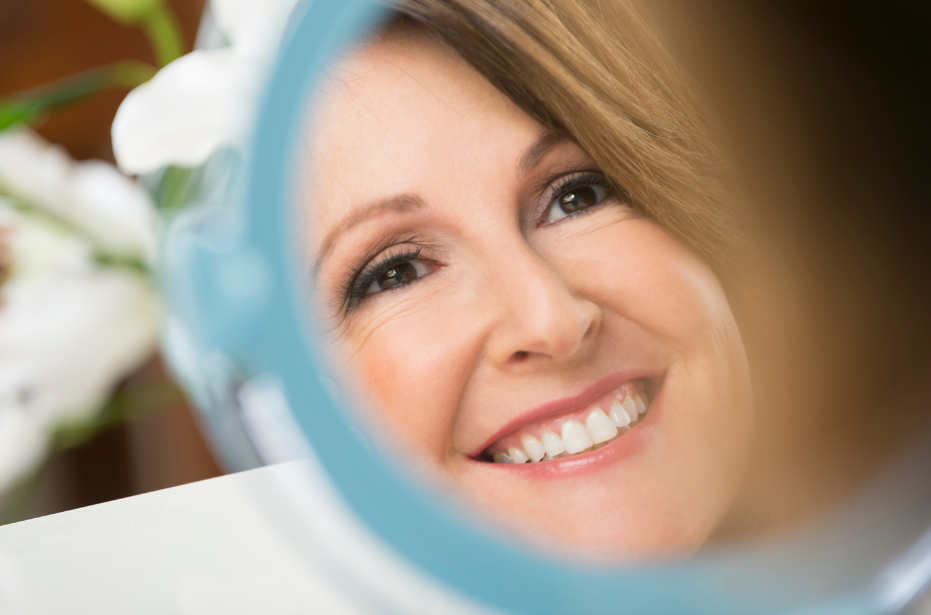
              The Fine Art of Being Yourself

              You don’t need a new you. You need the real you.

              Forget the reinvention. The rebrand. The polished version crafted to suit everyone else’s preferences.

              The real version—the one who got quietly sidelined to keep things running smoothly—is overdue for a comeback.

              Let’s be honest. Being yourself in today’s world is hard. Social pressure, family expectations, career roles—they all push you to mold and adapt. Especially for women over 45 who’ve spent decades managing other people’s needs, authenticity can feel like something you have to earn. And not without guilt.

              I heard a Mel Robbins podcast recently on this very topic and it stuck with me. Her take made me think about how many of us are waiting for permission to be who we already are. It got me thinking about what it looks like in real life.

              But here’s what actually happens: the longer you ignore your inner cues, the more depleted you feel. That inner friction? It’s your signal. Your nervous system knows something’s off. Your calendar doesn’t lie. Neither do your relationships.

              And while the outside world might reward performance, what sustains you is honesty.

              You Will Disappoint People

              Especially the ones who’ve gotten used to you being easy.

              Choosing yourself sometimes means saying no to what others expect just because they’re used to hearing yes. It means skipping the events, declining the tasks, and opting out of the roles that never quite fit.

              Some people won’t like that.

              Let them sit with it.

              Their disappointment isn’t proof you’re wrong. It’s proof that you’re no longer interested in maintaining a version of yourself that never worked in the first place.

              They will adapt. Or not. It is not your job to make yourself acceptable to them. It is your job to be yourself, and they can either recognize the importance of that or decide to opt out. Either way, you win because you are not longer putting energy towards things that don’t bring you joy.

              Which brings me to the next point…

              Look at What Drains You

              Start there. The commitments that feel like chores. The conversations that leave you flat. The rituals that don’t feel like yours.

              Redirect your energy to what aligns. Energy is a limited resource. If it’s being spent on obligation, it’s not available for truth.

              Once you reclaim that energy, your day-to-day life starts feeling more like yours.

              Confidence Comes Later

              Confidence isn’t step one. It shows up after you start living differently.

              You don’t have to wait to feel brave or certain. You just have to stop waiting.

              Confidence grows when you speak your actual opinion, make a decision that honors your needs, or leave a situation that drains you. It compounds. Eventually, it becomes part of who you are.

              Self-Respect Builds Better Relationships

              The more honest you become, the more you draw in people who can actually meet you there.

              You start noticing who values your time, who listens without needing you to shrink, and who doesn’t expect performance to maintain connection.

              Real friendship starts where people stop pretending. That includes you.

              Value What Sets You Apart

              The preferences you filter? The instincts you override? The traits you’ve tried to soften?

              Those are often the exact things that make you memorable.

              It’s easy to underestimate your originality when you’ve spent years being practical. But your edges matter more than your polish.

              Years ago, I didn’t celebrate Christmas. Sometimes, as a kid, I’ll admit that it made me feel out of step. Other kids felt sorry for me. But these days, I hear people say I’m lucky. Lucky not to deal with the forced hosting, gifting stress, or performative social calendars.

              The very thing that once made me feel left out? It became something others quietly wish they could opt out of, too. That’s the thing about living honestly—the benefits often show up later, but they show up.

              No One Else Lives Your Life

              Your opinion of your life is the only one that follows you home.

              Other people may offer commentary, judgment, or concern. They don’t live with the aftershocks. You do.

              So your internal compass matters more than external noise. And if it feels like you’re out of sync with your reality, it’s time to make a new one.

              You Can Have What Matters Most

              Not everything needs to be done, achieved, or maintained at once.

              Authenticity means making trade-offs that feel right. That kind of clarity isn’t failure—it’s relief.

              Sometimes career is topping the charts. Other times, it’s your personal interests and hobbies. Maybe you are in a “family first” phase. Every season of life has it’s own demands and you can have all of it. You just need to be honest with yourself that, right now, X is taking priority.

              If You’re Ready to Start Living Authentically:

              Warmly, Laura

              You don’t need another thing to keep up with. You need support that fits the life you’re already living.

              LAYLO wellness centers social wellness—supported by mental clarity and movement—to help you live and work with more steadiness, connection, and longevity.

              The LAYLO Edit is where I share thoughtful, practical insight for real life. Join for updates on upcoming experiences, including The LAYLO Collective, a small-group social wellness experience designed for real life, and Wellness Retreats.

              Follow along on Instagram, Facebook, YouTube, LinkedIn, and Pinterest.

              The One Word That Will Stick With You All Year

              Resolutions tend to come from a place of pressure. Fix yourself. Get it together. Lose weight. Declutter your house, your inbox, your emotions. Be more of this, less of that. It’s exhausting.

              Now take a breath. One word is a different kind of decision. Stop trying to “fix” yourself—instead, try focusing on what matters to you.

              One word that acts like a compass instead of a task list. Something you can come back to when the year inevitably goes sideways.

              Choosing Your Word: Less Hype, More You

              Start by asking the right questions:

              • What do I want to feel more of?
              • What’s been missing lately?
              • What am I craving under all the to-do lists?

              Then listen. Your word might not show up immediately with a spotlight and theme music. It might sneak in while you’re folding laundry or zoning out in traffic.

              Don’t force it. You’ll know when it feels right. It should feel like relief, not obligation.

              Need a jumpstart? Try words like: steady, bold, ease, connect, light, rise, enough.

              This year, mine is unbothered. Not because I plan to float through life ignoring everything, but because I’m over letting nonsense steal my peace. I want to care about what matters—and release the rest. It’s a gentle middle finger to performative busy and emotional hijacking.

              What Does Your Word Mean To You?

              Words are only useful if they’re personal.

              “Strong” for one person might mean lifting weights. For someone else, it might mean speaking up in a boardroom or finally asking for help. Don’t borrow someone else’s interpretation.

              Write your word down. Put it where you’ll see it. And define it—your way. What does this word actually look like in your life, on a Tuesday, when the carpool is late and your boss sends another 7 p.m. email?

              How to Use Your Word (Without Turning It Into Homework)

              This isn’t about making a vision board or tracking it in an app (unless you’re into that). The point isn’t to do more. It’s to remember what matters to you.

              Try this:

              • Ask yourself on Sunday nights: Did I live my word this week?
              • Use it to guide hard decisions: Does this support [your word]?
              • Let it shape how you respond, not just what you do.

              Growth is great. But so is satisfaction. And if you’ve been in fixer mode for the last decade, it might be time to ask: what do I actually want now?

              That’s not selfish. That’s honest. And it’s powerful.

              A Word Beats a Resolution Every Time

              We already know resolutions crash and burn—a UK study found that 80% of resolutions are abandoned by February. That’s not a lack of willpower. That’s a broken method. One word gives you flexibility without failure. It adapts. It follows you through shifts, changes, curveballs. You don’t need to be perfect. You just need to stay present.

              Want some support picking or living your word? The LAYLO Edit drops real-life ideas into your inbox every week. No blah, blah, blah, no guilt, just helpful nudges to stay in alignment with what matters to you.

              And if your word turns out to be peace, space, or reconnect… take to look at the upcoming Wags & Wellness Retreat.

              Resolutions may die. But the right word? That sticks.

              Warmly, Laura

              You don’t have to choose between success and well-being. Step away from the chaos, reset your mind and body, and realign with what truly matters. Our wellness retreats, online courses, free resources give you the space to breathe, reflect, and design a life that feels fulfilling—without guilt, without compromise.

              Be the first to know about upcoming retreats—join the LAYLO Edit for exclusive updates and insights, as well as wellness tips for real life. 

              Let’s stay connected! Follow us on InstagramFacebookYouTubeLinkedIn, and Pinterest.