7 Real Reasons You’re Always Tired—and How To Fix It

Let’s be honest. You’re not “a little tired.” You’re bone-deep exhausted—and still getting it all done.

You show up to the meetings. And remember the birthdays. You handle the fallout when your mom’s pharmacy screws up her meds—again. And somewhere in there, you’re supposed to “prioritize self-care” and “move your body.”

Here’s the problem: Everyone keeps tossing generic advice at women like you, assuming a face mask and bubble bath will fix a body that’s screaming for a timeout.

Let’s get into what’s really going on—and what actually helps.

1. Hormones Are Hijacking Your Energy


Estrogen and progesterone used to be your silent teammates. Now they’re throwing tantrums at 2 a.m. and ghosting you by 3 p.m. Cortisol’s also acting up, adding stress spikes when you’re just trying to reply to one email without rage. And here’s the kicker—many women are dismissed when they bring this up. You’re told to relax, to wait it out, or to try meditation. It’s exhausting in a whole different way.

What helps: Find a doctor who listens. Track your symptoms. Use that data to ask better questions—and get better care. This isn’t the moment to accept mediocre medical support. Hormonal chaos isn’t a footnote. It’s a major player.

2. You Think You Slept, But Your Brain’s Been in a Bar Fight


You “slept,” but woke up feeling like someone poured cement into your skull. Welcome to post-45 sleep, where you fall asleep fine and then bolt awake at 3:17 a.m. thinking about taxes and your kid’s weird cough. And no, melatonin isn’t the magic fix. Your sleep architecture has changed, and stress has moved in like an uninvited roommate.

What helps: Start winding down sooner. Screens off earlier than you want. Make your bedroom dark and cold. Stop scrolling like it’s a part-time job. Try magnesium glycinate if your doctor gives the okay. And if your mind won’t shut up? A notebook next to your bed to brain-dump those racing thoughts helps more than you’d think.

3. Everyone’s Pulling From Your Energy Account—And You’re Not Making Deposits


You’re the go-to. The fixer. The one who remembers your friend’s kid’s allergy appointment and brings extra sunscreen to the picnic. It’s generous—and draining. The constant mental load is like a slow leak in your fuel tank. And the worst part? You barely notice it because being tired has become your baseline.

What helps: Make an actual list of what drains you and what fills you up. Look at your week and see where the energy leaks are. If everything in your calendar is for other people, that’s not sustainable. Rebuild your day with one small deposit into your own energy—every day.

4. Your Workout Routine Is From a Decade Ago—and Your Body Knows It

If dragging yourself through a punishing boot camp leaves you more exhausted than energized, it’s not working. You’re not “losing your edge.” Your nervous system is screaming for a new approach. Bodies after 45 are different—and that’s not defeat. It’s reality.

What helps: Strength training. Walking. Pilates. Yoga. Pick something that doesn’t trash you for 48 hours afterward. You don’t need to prove your worth in sweat. The goal isn’t soreness—it’s stamina and recovery. You’re training for longevity now, not punishment.

5. You’re Eating Like You’re Still 32 and Sleeping Like You’re 82

Skipping breakfast. Slamming caffeine at 3 p.m. Grazing on snacks because you “forgot” to eat lunch. Your energy crashes aren’t a mystery—they’re a math problem. Your blood sugar is on a rollercoaster, and that affects everything from mood to motivation.

What helps: Start with protein in the morning. Eat every 4-5 hours. Add real fiber and hydration. Cut the afternoon caffeine—it messes with sleep, even if you swear it doesn’t. And if your energy tank feels permanently low, get your iron and B12 checked. Nutrient depletion isn’t a vibe; it’s a health red flag.

6. You Don’t Ask Yourself What You Want Anymore


You’re used to putting out fires and making things run. But somewhere in there, you stopped checking in with your own preferences. You make decisions based on logistics, guilt, and who needs what. When someone asks, “What do you want to do?” the pause is long—and telling.

What helps: Practice wanting again. Start tiny. Say yes to Thai food even if your partner wants pizza. Say no to the event that drains you, without explaining. Desire is clarity, not chaos. When you know what you want, your energy has direction again.

7. You’ve Been in Survival Mode So Long It Feels Like Normal


The “you’ve got this” face is polished. But underneath? You’re fried. You’ve been running so long on performance and responsibility that you’ve forgotten what grounded even feels like. You’re not broken—you’re spent.

What helps: Cancel something this week. Say you’re off-duty. Let dinner be eggs and toast. Let silence be enough. The best energy recovery isn’t flashy—it’s slow, steady recalibration. One walk. One “no.” One early night. Small moves matter.

When I hit my own wall, it wasn’t dramatic. I wasn’t crying in the bathroom or quitting my job; I was just done. I canceled two meetings, ignored texts, and walked to the end of the block and back. It was quiet, boring, and wildly effective. That night, I slept through. And in the morning, I didn’t dread the day. That was the start.

You don’t need a five-year plan. You need a better week. One where your needs get a voice—not just a leftover scrap of time.

If you’re ready for smart, doable wellness without the noise, the LAYLO Edit was built for you. It’s not hype. No sugar coating here. It’s real-life support for real-life exhaustion. Don’t bother “bouncing back.” You get to rebuild forward—in a way that actually fits.

Warmly, Laura

You don’t have to choose between success and well-being. Step away from the chaos, reset your mind and body, and realign with what truly matters. Our wellness retreats, online courses, free resources give you the space to breathe, reflect, and design a life that feels fulfilling—without guilt, without compromise.

Be the first to know about upcoming retreats—join the info list for dates and details.

Let’s stay connected! Follow us on InstagramFacebookYouTubeLinkedIn, and Pinterest, and join the LAYLO Shala for exclusive updates and insights.

The One Powerful Habit That Restores Lost Friendships Fast

You know the moment. You scroll through old messages and freeze on a name you haven’t seen in a while. It’s not that something went wrong. There was no fallout. No drama. Just…life.

Careers shifted. Parents needed help. Calendars filled. You blinked, and suddenly someone you used to talk to every day became a stranger in your phone.

It happens more often than most admit. But it doesn’t have to stay that way.

Friendships don’t usually end—they just drift. And most of us don’t know how to turn that drift around. Especially now, when initiating anything social feels like a full-time job.

What you need is something simple. Something fast. Something that works.

And you don’t need a weekend getaway or group dinner to make it happen.

You need one habit.

One Habit. Once a Week. One Message.

That’s the entire reset.

Send one message to one person once a week. That’s it.

Not a catch-up call. Not a calendar commitment. You don’t even need a coffee invitation.

Just a single, thoughtful text, voice note, or email. Short. Personal. Real.

“I heard a song we used to play on repeat and instantly thought of you.”
“I miss our ridiculous inside jokes—just had one pop into my head.”
“Was flipping through photos and saw one of our trip to Sonoma. Still one of my favorites.”

Don’t ask for anything or try to over-explain the silence. Don’t try to get it “right.”

You’re just reaching. That alone is enough.

Why This Works (Especially Now)

This habit works because it cuts through hesitation without adding pressure.

Women today are stretched. Time feels like a luxury. Energy is spent by 6 p.m. The idea of coordinating schedules, sitting through two hours of catching up, and pretending you’re not exhausted? No thanks.

But a quick message? That’s doable.

And here’s what’s surprising: consistency beats intensity. Studies from Carnegie Mellon show that regular, low-effort social contact builds emotional closeness faster than sporadic meetups—even among previously distant friends.

That’s good news. Because if you’ve been waiting for “when life slows down,” you already know how that ends.

This habit puts reconnection on your terms—without waiting for perfect conditions.

One Small Message Changed Everything

I know this firsthand. After my divorce, I moved hundreds of miles away with my son, two suitcases, and a rented room from someone I met online. Everything was new. Most of my old friends had faded. And I wasn’t sure if anyone remembered me outside of what I had survived.

But one day, I sent a short message to a woman I’d met at the gym— a kind, observant friend who once helped me through a brutal migraine on a trip. That message led to a continued connection, despite the miles between. That connection led to real talk. She became one of my first real friendships in my new life. The kind you can trust. The kind that sticks. And has continued to stick, some 20+ years later.

This habit works even when you’re starting from nothing. Especially then.

Real-Life Proof It Works

A former client, newly retired, sent a message every Sunday for one month to four different people: two friends from college, one former colleague, and her old neighbor. At first, she felt awkward. Nobody responded the first week. By week three, she had two coffee dates scheduled and a long call with the college roommate she hadn’t seen in a decade.

Another woman texted her friend every Monday morning with nothing but a meme and a “thinking of you.” After four weeks, her friend texted back: “These make my whole day. Let’s talk soon.”

That one message became a ritual. They’ve now booked a weekend away together—something they hadn’t done since their 30s.

Don’t Let Silence Mean Rejection

Not everyone will respond. And that’s okay.

Sometimes people are deep in their own mess. Maybe they don’t know what to say. They may even feel guilt for not reaching out first—and go quiet instead of vulnerable.

Don’t make it mean more than it does. You’re not chasing people. You’re opening a door.

Even when the door doesn’t swing wide, it usually doesn’t slam shut either. You’re reminding them that someone still thinks of them—and that reminder sticks.

This Isn’t About Having More Friends. It’s About Having Real Ones.

You don’t need a packed calendar. You need people who see you now—not just who you were at 25.

The right friendships feel steady, not heavy. And they don’t have to be daily to be real.

This habit isn’t about going backwards. It’s about creating forward motion with people you miss—on terms that feel like relief, not effort.

And no, it’s not “too late.”
Not for the friend from your gym days.
Or for the one who was your go-to until divorce or work or distance got in the way.
Not even for the one you’re sure has “moved on.”

People crave reconnection more than they let on.

A recent study in The Journal of Social and Personal Relationships found that people consistently underestimate how much others value being reached out to—especially when the message comes unexpectedly. The simple act of being remembered can dramatically shift how someone sees the relationship.

So if you’re wondering whether your message will matter? It will.

What If You’re Starting from Scratch?

Sometimes, there’s no one to reach back to.

Maybe your circle wasn’t built on who you are now. Maybe you’ve evolved, and your past relationships just don’t fit anymore.

You still need this habit.

text message

Only now, it’s for reaching forward—not just back.

Start the same way: message one woman you admire or feel a connection to. Send her a genuine compliment, share a relatable moment, or say you’d like to stay in touch.

You don’t need to start with depth. You start with contact.

Friendship doesn’t bloom from grand beginnings—it grows from repeated exposure and mutual care.

And no, it’s not too late to create that, either. If you want a little more guidance, try the “7-day Friendship Challenge“. It’s a quick reset. One action a day. No pressure. No big commitments. Follow these practical steps that help you reach out, talk like you mean it, and build momentum with people you care about. You’ll get a clean workbook, daily prompts, conversation starters, and a tracker that keeps things moving.

What You Can Do Today

Scroll your phone. Find the person you keep meaning to reach out to.

Don’t write a paragraph. Don’t pre-apologize for time passed.

Just send one sentence that sounds like you.

Then do it again next week—with the same person or someone new.

And if you’re ready to go beyond the text thread—to be in a room where meaningful friendships take shape in real time—consider something that fits your now.

The Friendship After 40 Blueprint is built exactly for this season: short on time, long on depth.
And the Soul Sanctuary Retreat gives you the space to connect with other women who also crave real friendship without all the pressure.

But whether you’re ready for that or not, you can start with one message.

Today.

That’s the habit. The spark. That’s the way back.

Warmly, Laura

You don’t have to choose between success and well-being. Step away from the chaos, reset your mind and body, and realign with what truly matters. Our wellness retreats, online courses, free resources give you the space to breathe, reflect, and design a life that feels fulfilling—without guilt, without compromise.

Be the first to know about upcoming retreats—join the info list for dates and details.

Let’s stay connected! Follow us on InstagramFacebookYouTubeLinkedIn, and Pinterest, and join the LAYLO Shala for exclusive updates and insights.

How to End the Year With Mental Grace: 5 Reflective Rituals for Emotional Clarity

December can feel like a pressure cooker—year-end everything, inbox chaos, holiday expectations, and that nagging feeling you should already have next year mapped out.

And yet, somewhere between your 57th group text and one more “urgent” work email, your brain starts begging for a break.

Take it. No explanations required.

Catch your breath. Regroup. Shake off the fog. Zero in on what actually mattered this year and how you want to show up for the next one.

Here are five rituals that help you carve out a little space, see what you’re holding, and leave the unnecessary behind.

1. The Unsent Letter: Say It, Then Let It Go

Maybe some goals didn’t happen. Some conversations were awkward or avoided. Some months were just…meh. You’re not broken. You’re human.

Set a timer for 15 minutes. Write a letter to the version of you who kicked off the year full of energy and plans. Tell her the truth. Give her credit. Let her off the hook. Then delete it, burn it, shred it—whatever feels right.

According to a 2023 APA study, naming what didn’t go well (instead of stuffing it down) actually boosts mental clarity and decision-making. So yeah, this isn’t just feel-good advice—it works.

2. The Circle Up: Talk It Out With People Who Get It

You’ve probably been holding a lot in. Schedule a low-key chat with a couple of people who know the real you. Add snacks. Maybe wine. Keep the questions simple:

  • What did I handle better than I thought I would?
  • What wore me out?
  • What do I want more of next year?

No need for big breakthroughs. Just real talk. And maybe a few “same here” moments. Research backs this too: Shared reflection helps regulate emotions and boosts perspective. Translation: you’ll leave feeling lighter.

This is the vibe inside “Friendship After 40: The Blueprint to Finding Your People.” No performance. Just real connection.

3. The 3-Pile Sort: Mental Clutter Edition

If your brain feels like 27 tabs are open and 3 are playing music, it’s time for a brain dump.

Take a piece of paper. Make three columns:

  • KEEP: This is working.
  • RELEASE: This is draining the life out of me.
  • TRANSFORM: This needs a tune-up or better boundary.

Don’t overthink it. Just scribble. You’ll be surprised how much headspace you free up when your to-think list isn’t swirling in your mind 24/7.

This quick sort is a sneak peek into the LAYLO wellness Retreats, where mental load meets fresh perspective.

4. The Check-In: Fix It or Forget It?

Not every ghosted friendship or weird falling-out needs a revival tour. But if there’s one connection that still has a pulse, maybe it’s worth a nudge.

Shoot a message. Something simple: “You crossed my mind. Hope you’re good.” That’s it.

Psychiatrist Dr. Luana Marques says leaving important disconnections unaddressed creates more stress than we realize—especially for people who are used to being fine all the time.

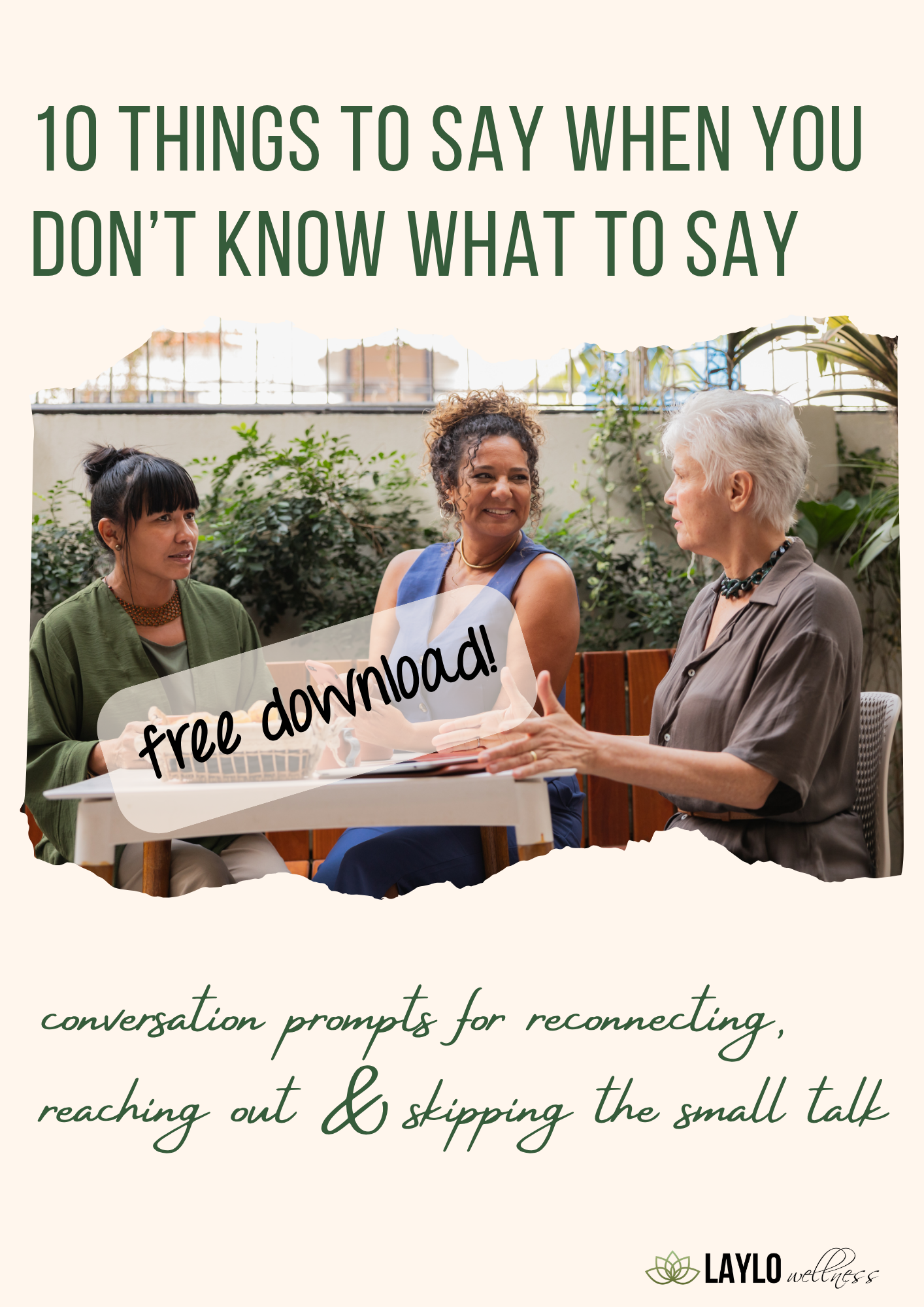
And if you’re stuck on words? “10 Things to Say When You Don’t Know What to Say” helps take the edge off.

5. The Empty Chair Trick: Meet Next-Year You

Put a chair in front of you. Sit across from it. Picture the you of next December. She’s not a fantasy version of you with six-pack abs and color-coded goals. She’s you, just a little clearer. Still sharp. Still real.

Ask her: What are you glad I dropped? What do you wish I’d faced head-on? What needs my attention now?

This might sound strange, but research shows visualizing your future self makes you more likely to follow through on the stuff that matters.

Forget About New Year, New You

The current you is pretty awesome. No reinvention required. All you really need is a bit of breathing room to think clearly and move into the next season with your brain and heart a little lighter.

Grace doesn’t always look polished. Sometimes it looks like cleaning out the emotional junk drawer, sending that awkward text, or saying no for once.

When you’re ready for something deeper, LAYLO wellness is here. Bring your contradictions, your questions, and your real self.

Warmly, Laura

You don’t have to choose between success and well-being. Step away from the chaos, reset your mind and body, and realign with what truly matters. Our wellness retreats, online courses, free resources give you the space to breathe, reflect, and design a life that feels fulfilling—without guilt, without compromise.

Be the first to know about upcoming retreats—join the info list for dates and details.

Let’s stay connected! Follow us on InstagramFacebookYouTubeLinkedIn, and Pinterest, and join the LAYLO Shala for exclusive updates and insights.

How To Safeguard Your Relationships This Holiday Season

The Holiday Friendship Plan

As the year winds down, the holidays tend to bring more than festive décor and full calendars.

They arrive with a pressure that many feel but few name: the quiet expectation to maintain picture-perfect relationships amidst emotional exhaustion.

If you are already managing careers, caregiving, and countless responsibilities, this season can stretch emotional capacity to its brink. And too often, the relationships that matter most go unprotected.

Safeguarding your connections before the holiday stress sets in isn’t just wise—it’s essential. With a clear plan, you can reinforce your most important relationships, sidestep avoidable tension, and preserve the energy you need to truly enjoy the season.

Why Relationships Need Protection Now

By the time most women reach their 50s, friendships have shifted dramatically. According to a 2021 study from the Survey Center on American Life, 40% of adults over 45 report having three or fewer close friends, and 12% say they have none. The number of confidants has declined over the past three decades, even as the need for emotional support remains high.

More importantly, research from the National Institute on Aging confirms that low-quality or strained relationships in midlife are strong predictors of chronic health conditions, cognitive decline, and decreased immune function. These aren’t simply emotional inconveniences. They’re wellness disruptors.

The holiday season amplifies relational dynamics. Unspoken expectations, family history, and time constraints all converge, often placing undue stress on already fragile connections. That’s why safeguarding your relationships now is a form of preventive care.

The Cost of Avoiding Protection

When connection is left to chance during high-stress times, old wounds resurface and boundaries blur. Women who don’t proactively reinforce their social wellness often report feeling emotionally drained and relationally disconnected by January. They enter the new year not rested, but recovering.

Without a protection strategy, small misunderstandings escalate. Invitations feel obligatory instead of joyful. Emotional capacity wanes, and the season designed for closeness leaves many feeling distanced.

Your Relationship Protection Plan

Relational wellness doesn’t happen by default—it happens by design.

Here’s how to create a safeguard strategy that carries you through the season with clarity, compassion, and calm.

  1. Define Your Emotional Boundaries
    Know how much energy you can realistically give. Not every event requires attendance. Protect your peace by choosing with intention.
  2. Secure Nourishing Interactions Early
    Schedule meaningful conversations or gatherings now with those who replenish you. Advance planning protects your calendar from overflow.
  3. Use Tools That Open Safe Dialogue
    Avoid surface-level interactions by using resources like 10 Things to Say When You Don’t Know What to Say. They create space for meaningful, low-pressure conversations.
  4. Communicate Expectations Clearly
    If you need emotional support, help with planning, or quiet time, say so. Naming your needs protects against resentment and misalignment.
  5. Reinforce New Connections Intentionally
    If your circle feels thin, don’t wait for the new year to take action. Friendship After 40: The Blueprint to Finding Your People offers a grounded path to build strong, genuine bonds.
  6. Plan Your Post-Holiday Reset
    Safeguard your emotional recovery time. The Soul Sanctuary Retreat or a Wags and Wellness experience can offer replenishment after a full season.

Protecting Connection Is Protecting Your Health

Treating your relationships as something worth guarding is not indulgent—it’s smart wellness. When you protect your connections, you also protect your emotional and physical well-being.

This season, aim for relationships that feel like refuge, not responsibility. Safeguarding them now ensures that what matters most stays intact, no matter how hectic the holidays become.

Don’t wait for stress to test your relationships. Shield them now, and let the season unfold with more ease and authenticity.

Warmly, Laura

You don’t have to choose between success and well-being. Step away from the chaos, reset your mind and body, and realign with what truly matters. Our wellness retreats, online courses, free resources give you the space to breathe, reflect, and design a life that feels fulfilling—without guilt, without compromise.

Be the first to know about upcoming retreats—join the info list for dates and details.

Let’s stay connected! Follow us on InstagramFacebookYouTubeLinkedIn, and Pinterest, and join the LAYLO Shala for exclusive updates and insights.

7 Winter Wellness Rituals That Actually Fit Into a Full Life

As the temperature drops and daylight shortens, so does the natural inclination to withdraw.

Cold seasons often invite us to retreat indoors and hibernate, but this can quietly chip away at both our physical fitness and sense of connection.

For many, the winter months can also amplify an already subtle ache for deeper friendships and sustained energy. This season holds a unique opportunity: to reclaim both movement and connection in ways that ground and energize.

Why Cold-Season Rituals Matter More Than Ever

Winter has a measurable effect on both body and mind. Research from the CDC notes that physical activity in adults significantly declines during colder months, and this drop is more pronounced in women over 45. What starts as skipping a walk due to cold can quickly become a pattern of decreased mobility, lower mood, and diminished connection.

At the same time, studies from the National Institute on Aging show that people with fewer meaningful social interactions face increased risks of cognitive decline, heart disease, and even shortened lifespans. Movement and social engagement are not seasonal luxuries. They are non-negotiable pillars of midlife wellness.

7 Rituals to Reclaim Energy and Connection This Winter

These winter wellness rituals are designed to be sustainable, nourishing, and genuinely effective. Choose one or two to start, and let them anchor your season.

1. The 15-Minute Morning Movement
Begin the day with gentle motion: yoga stretches, a short walk, or resistance band work. Keep it simple and consistent. This ritual awakens your body and signals the start of a day centered on care rather than urgency.

2. The Connection Walk
Bundle up and walk while leaving a voice message for someone you miss. Or schedule a walk-and-talk with a friend. Movement paired with connection builds momentum in both areas.

3. The Window Stretch Reset
In the afternoon slump, stand by a window for five minutes and move gently: neck rolls, hamstring stretches, shoulder openers. Let natural light reset your internal rhythms.

4. The Two-Way Check-In
Every week, choose two people to reach out to: one to check in on, and one to open up with. Use a prompt from 10 Things to Say When You Don’t Know What to Say if conversation feels rusty.

5. The Cozy Gathering
Plan one simple in-person event for the month: a soup swap, book circle, or tea hour. Keep the vibe low-prep and authentic. These grounded rituals lay the foundation for lasting connection.

6. The Movement Buddy Ritual
Commit to a weekly movement session with someone else—even virtually. Shared accountability makes movement more enjoyable and more likely to happen.

7. The Restorative Review
Each Sunday evening, take 10 minutes to review what felt good that week. Was it the walk? The text exchange? The stretch? Let what worked guide the week ahead.

Why These Rituals Work

Each of these seven rituals blends movement and social nourishment in small, doable ways.

Research from Brigham Young University shows that strong social ties increase survival rates by over 50%. Meanwhile, studies on behavior change confirm that pairing movement with existing routines makes it more likely to stick.

More importantly, these rituals remind you that wellness doesn’t require an overhaul. Just intention, consistency, and a willingness to show up for yourself in small ways.

Let Winter Teach You How to Reconnect

Winter invites inwardness—not isolation, but inner recalibration. It’s a season that can strengthen your inner circle and your physical body, if you let it. The key is not to fight the season, but to work with it. To create rituals that invite movement and connection in small, sustaining ways.

Start with just one change. One friend. One movement ritual. Then let it grow.

What You Can Do Today

  1. Text one person and invite them for a short walk this weekend.
  2. Try a new movement class online that feels fun and approachable.
  3. Use a prompt from 10 Things to Say When You Don’t Know What to Say to restart a paused conversation.
  4. Explore the Blueprint if your social landscape feels like it’s shifted and you’re unsure where to begin.
  5. Consider a Soul Sanctuary Retreat to immerse yourself in deep rest, movement, and connection without pressure.

Make This Season Work For You

You don’t have to wait for spring to feel better. Winter can be a season of clarity, connection, and strength—if you claim it. The routines you choose now can shape how you feel not just in the cold months, but long after. This isn’t about doing more. It’s about choosing what truly sustains you.

Warmly, Laura

You don’t have to choose between success and well-being. Step away from the chaos, reset your mind and body, and realign with what truly matters. Our wellness retreats, online courses, free resources give you the space to breathe, reflect, and design a life that feels fulfilling—without guilt, without compromise.

Be the first to know about upcoming retreats—join the info list for dates and details.

Let’s stay connected! Follow us on InstagramFacebookYouTubeLinkedIn, and Pinterest, and join the LAYLO Shala for exclusive updates and insights.

5 Ways to Rebuild a Friendship That Drifted Apart

It happens quietly. One day you’re texting daily, and the next, it’s been six months. Not because something went wrong, but because life accelerated and your friendship faded into the background.

Reconnection after this kind of drift feels vulnerable. What if it’s awkward? What if the timing is off? But what if it works?

Many midlife professionals carry the invisible weight of relationships left in limbo. As responsibilities grow, so does the tendency to withdraw. Yet social wellness isn’t a bonus in our 40s and 50s—it’s a cornerstone of health.

A growing body of research links strong adult friendships with improved longevity, emotional regulation, and even cognitive sharpness. Without these connections, the risks compound: a 2023 meta-analysis found that adults with weak social ties face a 29% higher risk of heart disease and a 32% increased likelihood of stroke.

The desire to reconnect isn’t just sentimental. It’s strategic.

Understanding a Friendship Drift

Midlife drift isn’t dramatic. It’s usually a slow fade. Careers evolve. Family obligations shift. Health, aging parents, and geographic changes all interfere. The result? Once-close friends become occasional “likes” on social media. For high-functioning women who excel at managing crises and multitasking, maintaining connection often falls to the bottom of the list.

Ignoring the drift doesn’t erase the longing for connection. It just masks it behind a busier calendar.

Sometimes, this disconnection also comes from unspoken assumptions. We assume they’ve moved on. We convince ourselves they’re too busy or wouldn’t want to hear from us. But often, the silence is mutual. They’re waiting, too. They’re juggling their own responsibilities, wrestling with their own quiet longing for reconnection. Someone just has to go first.

Why Reconnection Matters

Reconnecting is about reclaiming the parts of ourselves that only certain people bring out. Specific friendships hold mirrors to our truest selves—who we were, yes, but also who we still are underneath the layers of responsibility. When those mirrors are gone, self-awareness dims.

Friendship in this life stage focuses on resonance. Research from AARP shows that adults over 45 report significantly higher well-being when they maintain at least one emotionally supportive relationship. It’s more than just being social; it’s about being seen.

Quality connections buffer the stress of caregiving, career shifts, and even hormonal changes. Emotional closeness provides a type of regulation that no productivity hack can replace. This is why reconnection isn’t a luxury—it’s part of a broader commitment to wellbeing.

Approaching with Courage and Clarity

So how do you reach out after time has passed?

Clarity first. Get honest about why you want to reconnect. Is it guilt? Curiosity? Genuine affection? Nostalgia? Anchor in sincerity. The strongest reentries into friendship come from a place of grounded truth, not obligation.

Next, lead with courage. You don’t need a perfect script. A simple message can open the door:

“You’ve been on my mind. I’d love to catch up, if you’re open to it. No pressure—just wanted to reach out.”

This kind of message invites reconnection without demanding it. It leaves room for the other person to say yes, no, or not right now—and all of that is okay.

If that feels too direct, consider sending a small gesture: a thoughtful article, a shared memory, or even a compliment. These micro-signals can lower the stakes while still signaling care.

Navigating the Uncomfortable Middle

There might be some awkwardness. That’s natural. Give the conversation space to unfold. Don’t rush to fill silence. Avoid overexplaining the time gap. Instead, focus on the present:

What’s different in your life now?

What do you need in a friendship today?

What do you admire about how they show up in the world?

Meaningful reconnection happens when both people feel safe enough to be honest, even if that honesty includes uncertainty.

And remember: you’re not just resuming an old rhythm, you’re creating a new one. Your capacity, your needs, your rhythm—they’re all different now. Let the friendship evolve with you.

When It Doesn’t Rekindle

Not every attempt leads to renewal. Sometimes you reach out and realize the connection has shifted permanently. That doesn’t mean the effort was wasted. It means you honored your inner tug for wholeness. You practiced presence. You gave that chapter a conscious close.

In fact, clarity—even if it confirms distance—is still a form of connection. It frees you to invest in friendships that align with who you are now, not just who you were then.

Letting go with love is just as important as holding on with intention. And that kind of discernment builds the emotional maturity that deep, sustainable friendships require.

The Bigger Picture: Social Wellness as Strategy

Reconnection is more than relational. It’s restorative. When you reclaim meaningful ties, you reinforce your identity. You increase emotional bandwidth. You create micro-moments of joy and resonance that buffer against burnout.

One conversation can ripple into an entire season of change. When it feels right, consider spaces that support deeper community: small group dinners, a trusted women’s circle, or even a retreat designed for renewal. These aren’t indulgences. They’re infrastructure for a life that sustains you.

Some women find their way back to connection through structured support—like prompts that help open dialogue, a guided friendship blueprint, or immersive experiences that break the ice. These tools aren’t crutches. They’re bridges.

Reconnection after drift asks for courage. But the reward is clarity, community, and the quiet strength that comes from knowing you’re not alone.

Warmly, Laura

You don’t have to choose between success and well-being. Step away from the chaos, reset your mind and body, and realign with what truly matters. Our wellness retreats, online courses, free resources give you the space to breathe, reflect, and design a life that feels fulfilling—without guilt, without compromise.

Be the first to know about upcoming retreats—join the info list for dates and details.

Let’s stay connected! Follow us on InstagramFacebookYouTubeLinkedIn, and Pinterest, and join the LAYLO Shala for exclusive updates and insights.