The One Word That Will Stick With You All Year

Resolutions tend to come from a place of pressure. Fix yourself. Get it together. Lose weight. Declutter your house, your inbox, your emotions. Be more of this, less of that. It’s exhausting.

Now take a breath. One word is a different kind of decision. Stop trying to “fix” yourself—instead, try focusing on what matters to you.

One word that acts like a compass instead of a task list. Something you can come back to when the year inevitably goes sideways.

Choosing Your Word: Less Hype, More You

Start by asking the right questions:

  • What do I want to feel more of?
  • What’s been missing lately?
  • What am I craving under all the to-do lists?

Then listen. Your word might not show up immediately with a spotlight and theme music. It might sneak in while you’re folding laundry or zoning out in traffic.

Don’t force it. You’ll know when it feels right. It should feel like relief, not obligation.

Need a jumpstart? Try words like: steady, bold, ease, connect, light, rise, enough.

This year, mine is unbothered. Not because I plan to float through life ignoring everything, but because I’m over letting nonsense steal my peace. I want to care about what matters—and release the rest. It’s a gentle middle finger to performative busy and emotional hijacking.

What Does Your Word Mean To You?

Words are only useful if they’re personal.

“Strong” for one person might mean lifting weights. For someone else, it might mean speaking up in a boardroom or finally asking for help. Don’t borrow someone else’s interpretation.

Write your word down. Put it where you’ll see it. And define it—your way. What does this word actually look like in your life, on a Tuesday, when the carpool is late and your boss sends another 7 p.m. email?

How to Use Your Word (Without Turning It Into Homework)

This isn’t about making a vision board or tracking it in an app (unless you’re into that). The point isn’t to do more. It’s to remember what matters to you.

Try this:

  • Ask yourself on Sunday nights: Did I live my word this week?
  • Use it to guide hard decisions: Does this support [your word]?
  • Let it shape how you respond, not just what you do.

Growth is great. But so is satisfaction. And if you’ve been in fixer mode for the last decade, it might be time to ask: what do I actually want now?

That’s not selfish. That’s honest. And it’s powerful.

A Word Beats a Resolution Every Time

We already know resolutions crash and burn—a UK study found that 80% of resolutions are abandoned by February. That’s not a lack of willpower. That’s a broken method. One word gives you flexibility without failure. It adapts. It follows you through shifts, changes, curveballs. You don’t need to be perfect. You just need to stay present.

Want some support picking or living your word? The LAYLO Edit drops real-life ideas into your inbox every week. No blah, blah, blah, no guilt, just helpful nudges to stay in alignment with what matters to you.

And if your word turns out to be peace, space, or reconnect… take to look at the upcoming Wags & Wellness Retreat.

Resolutions may die. But the right word? That sticks.

Warmly, Laura

You don’t have to choose between success and well-being. Step away from the chaos, reset your mind and body, and realign with what truly matters. Our wellness retreats, online courses, free resources give you the space to breathe, reflect, and design a life that feels fulfilling—without guilt, without compromise.

Be the first to know about upcoming retreats—join the LAYLO Edit for exclusive updates and insights, as well as wellness tips for real life. 

Let’s stay connected! Follow us on InstagramFacebookYouTubeLinkedIn, and Pinterest.

Healthy Aging Tips Women Over 45 Need Now

Aging isn’t something to resist or romanticize. It’s just what happens—if we’re lucky.

The question isn’t how to stop aging. It’s how to stay upright, sharp, and genuinely well while it happens. That’s where healthy aging comes in.

Women over 45 often find themselves inundated with advice: collagen powders, intermittent fasting, 90-minute morning routines, cryo chambers. And sure, some of that stuff is interesting. But most of it? Expensive, unsustainable, and ultimately irrelevant when real life includes a full-time job, caregiving, and a metabolism that refuses to negotiate.

Here’s what actually helps—backed by longevity science, not influencer trends.

Muscle Isn’t Optional. Strength Training Is Non-Negotiable.

Muscle mass declines up to 8% per decade after 40. After 50, the rate doubles. Loss of strength increases your risk of falls, fractures, insulin resistance, and general “why does everything hurt when I wake up” syndrome. Lifting weights just twice a week helps maintain bone density, improve metabolic function, and protect your joints.

You don’t need a fancy gym membership or to deadlift your body weight. You do need to consistently challenge your muscles with resistance—dumbbells, resistance bands, even bodyweight workouts. Muscle is metabolism. It improves mobility. Muscle equals freedom.

Your Brain Needs Sleep, Stress Management, and Something New to Learn.

Cognitive decline isn’t inevitable, but it is opportunistic. It creeps in when sleep becomes optional, when everything feels urgent, and when your brain runs the same loop on repeat.

Protecting cognitive health after 45 looks like prioritizing sleep (7-9 hours, not negotiable), actively reducing chronic stress (your nervous system isn’t a punching bag), and learning something new—a language, a skill, even a new podcast habit that doesn’t revolve around murder mysteries.

Chronic stress shrinks the brain. Sleep debt impairs memory and executive function. Novelty builds neural resilience. And you can’t outsource this. No supplement replaces sleep. No app replaces boredom-fighting learning.

Meaning Improves Lifespan. No, Really.

In long-term studies on longevity, having a sense of meaning—something to wake up for—outperformed clean eating, fitness, and even not smoking. People with a reason to get up each day live longer, fuller lives.

That doesn’t mean you need a five-year plan or a spiritual awakening. It means doing something regularly that feels personally valuable. Volunteering. Creating. Mentoring. Anything that feels like it still matters, especially when no one else is watching.

The Habit Personality Factor

Your best friend thrives on fitness challenges. You prefer structured classes. Someone else needs 1:1 accountability. Great. The trick is not copying someone else’s rhythm but finding yours. If you’re the spreadsheet type, track your workouts. If you’re the rebel type, gamify your progress with small rewards.

There’s no universal habit formula. But there is a universal truth: consistency beats intensity every time.

What Actually Stuck After 40? Slow Mornings.

One shift I made in my 40s that quietly changed everything: slow mornings. Not the kind where you meditate for an hour or write in five journals. Just 30 minutes to sit. Drink coffee. Breathe. Think. Not scroll.

Yes, it was easier when my son was a teenager and didn’t need help getting dressed or fed. But I still worked full-time. I still had the same pressure. And I carved out that time anyway. It was the first thing that taught me that how I start my day matters more than when I start it.

You Don’t Need a New Life. You Need Better Inputs.

Most women I work with don’t want a radical reinvention. They want energy that doesn’t crash at 3pm. A body that doesn’t feel like a stranger. A brain that doesn’t forget the thing they just walked into a room for. That starts with what you put in: movement, rest, connection, meaning.

Wellness isn’t a lifestyle brand. It’s how you live your actual life.

The LAYLO Edit offers real-world, research-backed wellness ideas for women who want their time and energy to matter. It’s not a program. It’s your sanity file. If you’re ready to stop chasing trends and start feeling better long-term, this is where you start.

Warmly, Laura

You don’t have to choose between success and well-being. Step away from the chaos, reset your mind and body, and realign with what truly matters. Our wellness retreats, online courses, free resources give you the space to breathe, reflect, and design a life that feels fulfilling—without guilt, without compromise.

Be the first to know about upcoming retreats—join the LAYLO Edit for exclusive updates and insights, as well as wellness tips for real life. 

Let’s stay connected! Follow us on InstagramFacebookYouTubeLinkedIn, and Pinterest.

5 Simple Ways to Stay Social When Life Gets Crazy

You already know connection matters. Not in the abstract “someday I’ll make time” kind of way—but in the very real, measurable, mind-and-body kind of way.

It boosts mood, supports memory, reduces stress, and lowers your risk of everything from heart disease to cognitive decline.

And yet, when your calendar looks like a disaster drill and your energy’s scraping bottom, connection is usually the first thing to get cut.

But let’s be honest: when we keep cutting out our people, we start to feel it. We miss the laughter, the grounding, the “thank God someone else gets it” moments that only real friendships offer.

Here’s what you need to hear: staying socially well doesn’t require dinner parties or an open calendar. You don’t need more energy—you need smarter, lighter ways to weave connection into your real life.

These five moves are simple. Not easy every time, but absolutely doable. Especially for women who are high-functioning, stretched thin, and emotionally tired—but not done. Not by a long shot.

1. Use Micro-Connections Like Vitamins


Think of these as the social wellness version of taking your daily supplements. Small but powerful. Five-minute calls while you wait for carpool. A quick voice memo on a walk. A meme shared with the caption “you popped into my head.”

When your brain says, “I don’t have time to catch up,” remind yourself: it’s not about an hour-long heart-to-heart. These little reach-outs keep the line warm. They let people know they matter to you. And for women juggling multiple roles, that reminder is worth its weight in gold.

Studies have shown that even brief social interactions can improve mood and reduce feelings of stress. Think of it this way: you’re not just texting a friend. You’re buffering your nervous system.

2. Stack Connection Into What You Already Do


Multitasking gets a bad rap, but when it comes to friendship, it can be a lifesaver. Walking the dog? Call a friend while you’re at it. Headed to the grocery store? Invite someone to come along. Making dinner? Put someone on speakerphone while you chop.

Stacking connection into routines means it doesn’t compete with your schedule—it piggybacks. You’re already moving through the day. Let your friendships ride shotgun.

And let’s be honest: errands are way less soul-sucking when someone you like is along for the ride.

3. Make Your Calendar Do the Work


Your calendar already runs your life. It dictates your work calls, dental cleanings, and Pilates class. Why not let it work for your friendships too?

Schedule standing plans: a monthly hike, a quarterly dinner, a 20-minute Friday check-in. Put it in there like it’s any other non-negotiable. Because if you’re waiting for “when things settle down,” you’ll be waiting forever.

Research shows that social rhythms—like weekly or monthly get-togethers—create emotional stability. They provide something to look forward to and reduce the mental load of decision fatigue. If it’s on the calendar, you don’t have to think about it. You just go.

4. Know Your Style and Play to It


Not all social energy looks the same. Stop trying to fit into a connection mold that doesn’t work for you.

If you’re introverted, aim for depth, not frequency. One-on-one coffee dates, voice messages, shared walks. Small groups or intimate rituals are where you thrive. (And yes, texting counts when it’s thoughtful.)

Ambivert? You’ll probably benefit from a blend—some solo downtime balanced with occasional group fun. Be flexible, but notice what actually refuels you.

Extrovert? You likely need more frequent interaction, but don’t overbook to the point of burnout. Keep it casual: walking groups, book clubs, dinner parties where takeout is totally fine. Remember: the goal isn’t hosting, it’s connecting.

Knowing your style helps you create sustainable, nourishing connection—without pretending to be someone you’re not.

5. Keep the Promise to Show Up (Even When You Don’t Feel Like It)


Let’s not sugarcoat it: There will be days you want to cancel. You’re tired. You’re over it. You’d rather stay in your pajamas and scroll your phone under a blanket.

But here’s the thing—when you made those plans, you did it for a reason. You wanted connection. And unless you’re actually sick or slammed, following through is almost always worth it.

I’m an introvert, so trust me on this: the lead-up always makes me want to bail. But once I’m there? I laugh, and I talk. I remember who I am outside of my roles. And I walk away thinking, “I’m so glad I went.”

It’s not about social perfection. It’s about showing up for the life you actually want. And connection is a big part of that.

Bonus: When You’re Ready for More Than Micro


Sometimes, you need more than a text chain or a walk around the block. You need space. Laughter. Nourishment. Other women who are real, kind, and just as tired of pretending as you are.

That’s why we host things like our Wags & Wellness Mini Retreat—a relaxed day designed for women who want casual connection, good food, and the freedom to bring their dogs. It’s social wellness that doesn’t feel like a networking event or a self-help seminar. It’s real life, made better with people who get it.

Think of it as a reminder: this kind of connection is possible. And you don’t have to wait for your life to slow down before you make space for it.

The Bottom Line?
Your friendships deserve more than leftovers. Your wellness isn’t complete without real connection. And even when life gets crazy, these five simple moves can keep you in the game.

Start small. Stay consistent. And remember: you’re not too busy to care about your social wellness. You’re just ready to do it smarter.

Warmly, Laura

You don’t have to choose between success and well-being. Step away from the chaos, reset your mind and body, and realign with what truly matters. Our wellness retreats, online courses, free resources give you the space to breathe, reflect, and design a life that feels fulfilling—without guilt, without compromise.

Be the first to know about upcoming retreats—join the info list for dates and details.

Let’s stay connected! Follow us on InstagramFacebookYouTubeLinkedIn, and Pinterest, and join the LAYLO Shala for exclusive updates and insights.

How to End the Year With Mental Grace: 5 Reflective Rituals for Emotional Clarity

December can feel like a pressure cooker—year-end everything, inbox chaos, holiday expectations, and that nagging feeling you should already have next year mapped out.

And yet, somewhere between your 57th group text and one more “urgent” work email, your brain starts begging for a break.

Take it. No explanations required.

Catch your breath. Regroup. Shake off the fog. Zero in on what actually mattered this year and how you want to show up for the next one.

Here are five rituals that help you carve out a little space, see what you’re holding, and leave the unnecessary behind.

1. The Unsent Letter: Say It, Then Let It Go

Maybe some goals didn’t happen. Some conversations were awkward or avoided. Some months were just…meh. You’re not broken. You’re human.

Set a timer for 15 minutes. Write a letter to the version of you who kicked off the year full of energy and plans. Tell her the truth. Give her credit. Let her off the hook. Then delete it, burn it, shred it—whatever feels right.

According to a 2023 APA study, naming what didn’t go well (instead of stuffing it down) actually boosts mental clarity and decision-making. So yeah, this isn’t just feel-good advice—it works.

2. The Circle Up: Talk It Out With People Who Get It

You’ve probably been holding a lot in. Schedule a low-key chat with a couple of people who know the real you. Add snacks. Maybe wine. Keep the questions simple:

  • What did I handle better than I thought I would?
  • What wore me out?
  • What do I want more of next year?

No need for big breakthroughs. Just real talk. And maybe a few “same here” moments. Research backs this too: Shared reflection helps regulate emotions and boosts perspective. Translation: you’ll leave feeling lighter.

This is the vibe inside “Friendship After 40: The Blueprint to Finding Your People.” No performance. Just real connection.

3. The 3-Pile Sort: Mental Clutter Edition

If your brain feels like 27 tabs are open and 3 are playing music, it’s time for a brain dump.

Take a piece of paper. Make three columns:

  • KEEP: This is working.
  • RELEASE: This is draining the life out of me.
  • TRANSFORM: This needs a tune-up or better boundary.

Don’t overthink it. Just scribble. You’ll be surprised how much headspace you free up when your to-think list isn’t swirling in your mind 24/7.

This quick sort is a sneak peek into the LAYLO wellness Retreats, where mental load meets fresh perspective.

4. The Check-In: Fix It or Forget It?

Not every ghosted friendship or weird falling-out needs a revival tour. But if there’s one connection that still has a pulse, maybe it’s worth a nudge.

Shoot a message. Something simple: “You crossed my mind. Hope you’re good.” That’s it.

Psychiatrist Dr. Luana Marques says leaving important disconnections unaddressed creates more stress than we realize—especially for people who are used to being fine all the time.

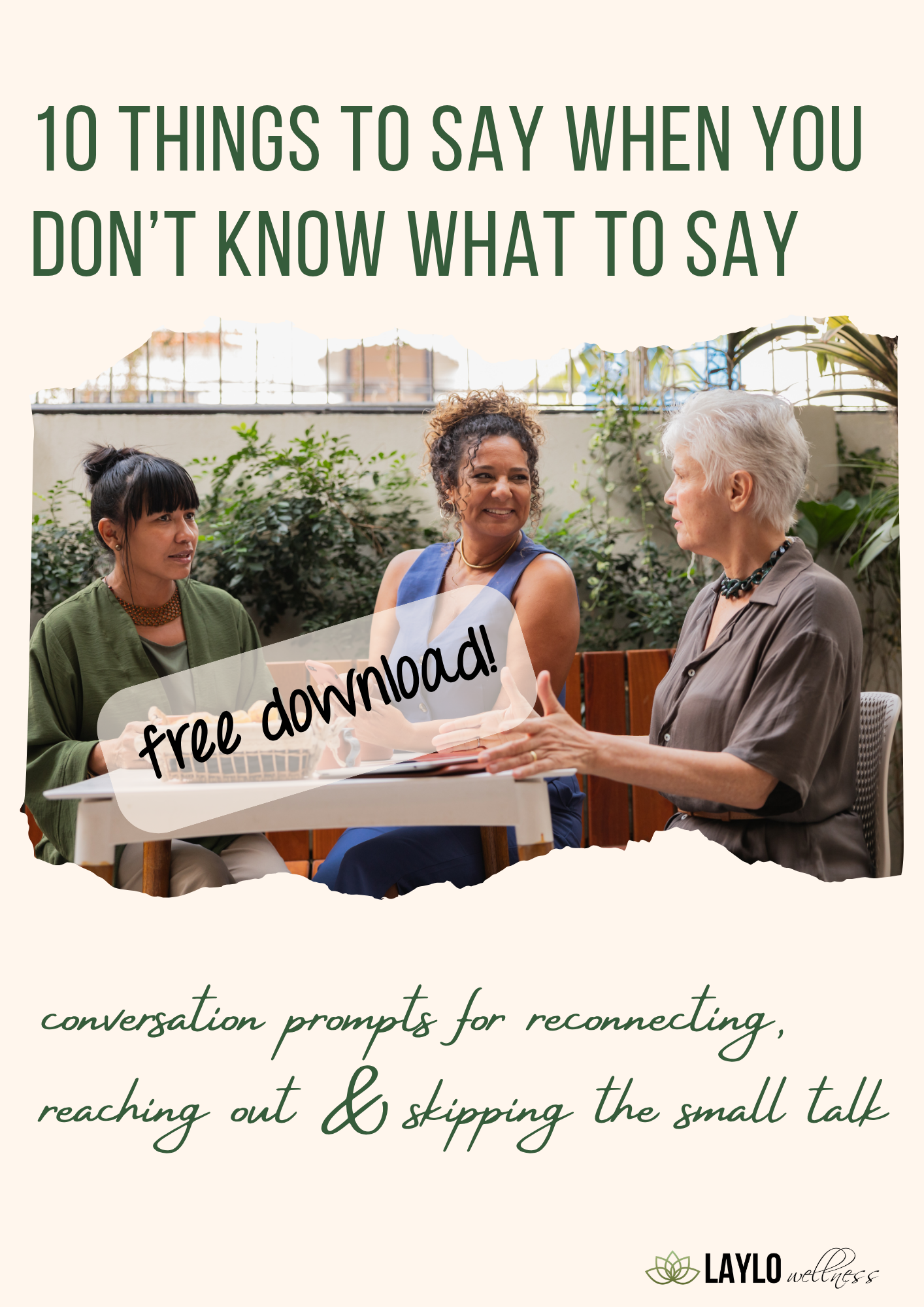
And if you’re stuck on words? “10 Things to Say When You Don’t Know What to Say” helps take the edge off.

5. The Empty Chair Trick: Meet Next-Year You

Put a chair in front of you. Sit across from it. Picture the you of next December. She’s not a fantasy version of you with six-pack abs and color-coded goals. She’s you, just a little clearer. Still sharp. Still real.

Ask her: What are you glad I dropped? What do you wish I’d faced head-on? What needs my attention now?

This might sound strange, but research shows visualizing your future self makes you more likely to follow through on the stuff that matters.

Forget About New Year, New You

The current you is pretty awesome. No reinvention required. All you really need is a bit of breathing room to think clearly and move into the next season with your brain and heart a little lighter.

Grace doesn’t always look polished. Sometimes it looks like cleaning out the emotional junk drawer, sending that awkward text, or saying no for once.

When you’re ready for something deeper, LAYLO wellness is here. Bring your contradictions, your questions, and your real self.

Warmly, Laura

You don’t have to choose between success and well-being. Step away from the chaos, reset your mind and body, and realign with what truly matters. Our wellness retreats, online courses, free resources give you the space to breathe, reflect, and design a life that feels fulfilling—without guilt, without compromise.

Be the first to know about upcoming retreats—join the info list for dates and details.

Let’s stay connected! Follow us on InstagramFacebookYouTubeLinkedIn, and Pinterest, and join the LAYLO Shala for exclusive updates and insights.

The Hidden Health Hack That Extends Longevity

For years, we’ve been told that the pillars of wellness are exercise, clean eating, sleep, and stress management.

While those matter, there’s a critical piece most women overlook—especially in midlife. It’s not a supplement, not a fitness app, not a detox plan. It’s friendship.

Real Connection is Non-Negotiable for Your Longevity

Not the casual wave-at-the-neighbor kind. Real, nourishing, life-expanding friendship.

Social wellness isn’t soft. It’s science-backed, measurable, and essential for everything from immune function to longevity. The data is staggering: meaningful connection increases survival rates by over 50%, lowers the risk of heart disease, strengthens cognitive health, and dramatically improves emotional regulation.

It’s not optional. It’s urgent.

The Wellness Gap No One Warned You About

Somewhere between supporting aging parents, guiding grown kids, showing up for a demanding career, and trying to keep a home running—connection faded. Not because it didn’t matter, but because it didn’t scream as loudly as everything else.

But here’s what isn’t said often enough: friendship is protective – against burnout, cognitive decline, and even the quiet drift into isolation that begins not with a crisis, but with busyness.

The Research Is Clear: Connection Extends Life

You don’t need 50 friends. But you do need a few who know the real you, witness your reality, and stay.

One comprehensive meta-analysis of 148 studies found that people with strong social ties had a 50% greater chance of survival, regardless of age or health condition. That’s the same risk reduction you’d get from quitting smoking or exercising regularly.

The Harvard Study of Adult Development—the longest study on human well-being ever conducted—identified one key determinant of long-term health and happiness: close relationships. It’s not accolades. Not income. It’s not even clean living. Relationships.

What’s Making Connection So Hard (Even for Capable Women)

If you’ve ever thought, “I know I need to connect, but I don’t have the energy,” you’re not alone—and you’re not wrong. Midlife introduces very real barriers:

1. Time Scarcity
You’re overscheduled and overcommitted. Friendship becomes another thing to manage, not something that restores you.

2. Emotional Exhaustion
You’re carrying the weight of others—parents, kids, teams—and when the day ends, you’re out of bandwidth.

3. Shifting Social Circles
People move. Kids grow. Roles change. Proximity fades, and effort feels one-sided.

4. Trust Hesitation
You’ve been hurt. Betrayed. Ghosted. Or just exhausted by friendships that take more than they give. So you opt out rather than risk more strain.

These aren’t character flaws. They’re survival strategies in a world that never taught adults how to build and maintain meaningful friendships.

Quality Connection: The Hidden Multivitamin

Let’s talk benefits. Not vague inspiration—real, measurable, physiological impact. Friendship:

Regulates Stress
Consistent, emotionally safe relationships reduce cortisol, lower inflammation, and protect cardiovascular health.

Boosts Immunity
Studies show socially connected individuals recover faster from illness and show stronger immune responses to viral exposure.

Enhances Mental Health
Consistent connection helps regulate mood, reduce anxiety, and buffer emotional burnout.

Preserves Cognitive Function
Adults with regular, stimulating social contact experience slower cognitive decline and lower risk of dementia.

Increases Lifespan
Lack of connection has the same mortality risk as smoking 15 cigarettes a day. Connection, on the other hand, supports regulated nervous systems, stabilized immunity, and longer life expectancy.

What Real Friendship Looks Like (And What It Doesn’t)

You don’t need to have a massive network. In fact, smaller circles are more impactful when built with intention. A healthy friendship includes:

  • Emotional safety: You can speak honestly and be heard.
  • Consistency: It doesn’t require daily check-ins—just ongoing investment.
  • Positive regard: You believe in each other. You don’t keep score.

What it doesn’t include: one-sided effort, emotional dumping, gossip-as-bonding, ghosting, or performative loyalty.

If Friendship Is a Skill—Here’s How to Rebuild It

No one taught us how to navigate adult friendship. But that doesn’t mean you’re stuck. These micro-strategies shift your connection landscape fast.

1. Micro-engagement matters.
Quick voice note. Funny article. Two-sentence text. Small moments build big trust.

2. Extend one invitation a week.
No pressure for perfection. Coffee. Walk. Call. Something low-lift that brings you together.

3. Use your real life.
Run errands together. Meal prep together. Go to a workout class. Friendship doesn’t require extra time—it fits into life as it is.

4. Speak up early.
Say: “I value communication. If something feels off between us, I’d rather check in than avoid it.”

5. Build a diversified circle.
No one person can be everything. Aim for variety: the growth friend, the fun friend, the grounding friend.

6. Plan shared experiences.
Retreats. Hikes. Dinner parties. Shared moments build deeper emotional memory.

Treat Friendship Like Preventive Care

Most women wait until everything feels off to realize they need more connection. But social wellness works best when you build it before you need it.

Consider this your invitation to prioritize it.

You’re allowed to want more—and to build a life that includes people who see you fully.

It’s Time To Create Something Better Now

Something that fits your life, honors your growth, and actually supports your health.

When you invest in connection, everything else stabilizes—your nervous system, your immune function, your emotional bandwidth.

It’s not too late. It never was.

Connection isn’t luck.
It’s a daily choice.
And it starts with one real moment.

Warmly, Laura

You don’t have to choose between success and well-being. Step away from the chaos, reset your mind and body, and realign with what truly matters. Our wellness retreats, online courses, free resources give you the space to breathe, reflect, and design a life that feels fulfilling—without guilt, without compromise.

Be the first to know about upcoming retreats—join the info list for dates and details.

Let’s stay connected! Follow us on InstagramFacebookYouTubeLinkedIn, and Pinterest, and join the LAYLO Shala for exclusive updates and insights.

7 Subtle Signals That Reveal Your Emotional Energy Patterns

Emotional energy shapes how we engage with the world. It’s not just about what we do, but how we feel before, during, and after those experiences.

Midlife, with its shifting priorities and layered responsibilities, invites a closer look at what drains us and what sustains us.

Let’s dive into the seven subtle but telling signs that reveal whether something is depleting your emotional reserves or building them back up.

These signs are backed by research and are designed to help you reflect—so you can begin making small, intentional shifts toward emotional sustainability. Because energy is finite, and how we spend it determines far more than we often realize.

1. Emotional Dissonance

If you consistently feel required to present a different emotion than what you’re actually experiencing, that mismatch can quietly tax your energy. This is called emotional dissonance, and it’s been linked to long-term fatigue and burnout in studies on workplace psychology. Whether at work or in relationships, this repeated suppression of your real emotional state is draining—even if you’re skilled at hiding it.

2. Drop in Post-Interaction Clarity

After certain interactions, do you feel foggy, agitated, or uncertain? That lingering mental haze is a signal. Energizing interactions tend to bring clarity or peace. Draining ones leave residue—mental clutter that slows your ability to think clearly afterward. This is especially important in conversations where expectations were unclear or emotional labor was high.

3. Subtle Avoidance Behaviors

You start rescheduling, responding slowly, or feeling tension before certain meetings or calls. These micro-avoidances are protective instincts—your body recognizing a source of drain before your mind fully names it. Over time, these small patterns can reveal which connections or obligations no longer align with your current emotional bandwidth.

4. Inconsistent Energy for Similar Tasks

You’re energized by leading a project one month, and depleted by a nearly identical one the next. This isn’t inconsistency—it’s context. Emotional capacity is dynamic. It shifts based on sleep, stress, hormones, and invisible internal loads. Recognizing that change helps you stop pathologizing your dips—and instead honor them.

5. High Need for Decompression

After certain interactions or events, you require more decompression than usual. Whether it’s extra silence, a walk, or extended rest, that need is a cue. It’s not a flaw—it’s feedback. High-quality relationships and tasks may leave you pleasantly tired but rarely require emotional repair.

6. Repeating the Same Internal Scripts

After emotionally costly experiences, do you replay what you should have said, question your role, or seek validation post-event? These mental loops are often signs of unresolved energy expenditure. They indicate situations that overrode your internal signals—or where your emotional boundaries were tested.

7. Shifting Emotional Payoff

Something that once energized you now leaves you depleted. This could be a social group, volunteer role, or even a tradition. It’s not failure; it’s change. Emotional payoffs aren’t fixed. What once fed you may not match your current values or needs. That shift deserves attention, not guilt.

What to Do With This Awareness

Once you spot these signs, the next step is subtle course correction. Keep a log of what patterns emerge. Which people, roles, or routines give more than they take? Which reverse that balance?

You don’t need to overhaul your life. Begin with boundaries. Add recovery time. Reframe how you engage with draining patterns—or step away when needed.

Friendships, in particular, require energy. But when chosen wisely, they repay it many times over. Midlife offers a chance to invest in connections that don’t just occupy your calendar—but restore your capacity.

Here are several ways to act on this awareness:

1. Create a Weekly Energy Audit

Take 10 minutes at the end of each week to jot down interactions, events, or tasks that left you feeling nourished vs. depleted. Look for patterns—not just the content of what you did, but how it felt before and after.

How to do it: Use a two-column format (Energized / Depleted). Keep it simple. Even a short list will offer insights over time.

2. Build in Recovery Windows

Recognize that after emotionally demanding activities, you may need intentional recovery. This isn’t indulgence—it’s maintenance.

How to do it: Schedule a 15-minute buffer between meetings, a walk after social events, or a quiet night after a full day. Treat it as essential, not optional.

3. Communicate Emotional Limits

It’s possible to stay connected while still expressing where your limits are.

How to do it: Say, “I’d love to connect, but I only have about 20 minutes today,” or “Can we talk tomorrow instead? I want to be more present.” These boundaries protect both your capacity and your relationships.

4. Reduce Overexposure to High-Cost Interactions

Not every connection needs to be preserved at the same intensity. You can step back without stepping out entirely.

How to do it: Shift from weekly to monthly check-ins, opt for voice notes instead of long calls, or engage in shared activities that reduce conversational demand.

5. Nourish What Replenishes

Once you identify the people and practices that restore you, make space for them proactively—not just when you’re already depleted.

How to do it: Schedule regular time with people who make you feel grounded. Protect low-stimulation activities (reading, creating, walking) that restore internal calm.

These shifts, while simple, compound over time. Awareness becomes action. Action becomes habit. And habits, when built intentionally, shape a more sustainable emotional life.

Preserve your energy. Spend it on what sustains you.

Warmly, Laura

You don’t have to choose between success and well-being. Step away from the chaos, reset your mind and body, and realign with what truly matters. Our wellness retreats, online courses, free resources give you the space to breathe, reflect, and design a life that feels fulfilling—without guilt, without compromise.

Be the first to know about upcoming retreats—join the info list for dates and details.

Let’s stay connected! Follow us on InstagramFacebookYouTubeLinkedIn, and Pinterest, and join the LAYLO Shala for exclusive updates and insights.