Is This Friendship Costing You More Than It Gives?

You already know the friend I mean. She calls when something in her life falls apart and goes silent when yours does. Every visit runs on her clock, her crisis, her running commentary about the sister who wronged her again.

You leave those conversations wrung out and a little annoyed at yourself for feeling that way, because you love her, or you used to, or you can’t tell anymore.

At this point in life, the hours are not abstract. Between aging parents, adult kids who still text at midnight, and a job that has opinions about your evenings, spare capacity is the scarcest thing you own. A friendship that runs in one direction spends that capacity for you. The question worth asking is whether it gives anything back.

The tally you keep avoiding

We audit almost everything else. Bank statements, calendars, the strange noise the car started making last week. Friendship gets a pass, mostly because examining it feels disloyal. The imbalance then runs for years, unmeasured, while you tell yourself she’s going through a hard stretch.

Sometimes she is. That’s the part that makes this hard. A real friend in a genuinely bad year will lean on you more than usual, and that is the whole point of having people. What you’re testing for is the pattern that sits underneath a single lopsided month.

Try the plainest version of the question. Over the last year, when you needed something, did she show up? Not perfectly, not on command. But did she just notice, ask, follow up? If you scroll back through your own memory and keep landing on the times you carried her while your own hard weeks passed without a single check-in, you have your answer. That’s a pattern.

What a draining friendship does to your body

Here is where it stops being a matter of etiquette. Researchers have started measuring what chronic, stressful relationships do at a cellular level, and the findings are sobering.

A 2026 study published in PNAS examined what researchers call “hasslers,” the people in your life who generate steady conflict and stress. Frequent contact with them was associated with faster biological aging, higher inflammation, and worse health across several body systems. Separate longitudinal work from Vangelov and colleagues in 2025 found that strained friendships were associated with a shorter lifespan, and that poor friendship quality predicted worse health outcomes than poor family relationships did.

The draining friend registers in your body the same way a bad job does. Sustained low-grade stress from the people closest to you shows up in the same inflammatory markers tied to heart disease and cognitive decline. Pruning a relationship that wears you down protects the same systems your cardiologist cares about.

A hard stretch looks different up close

Before you decide anything, get honest about which one you’re looking at.

A friend in a hard year is usually aware of the imbalance. She names it. She says some version of “I know I’ve been a black hole lately, thank you for putting up with me.” She asks about your life even when she can barely manage her own, because the instinct to reciprocate outlasts the bandwidth to act on it. The imbalance has a rough end date, and you can feel her reaching back toward you.

A pattern feels different. There is no acknowledgment, because in her version of the friendship nothing is off. Your role was always to absorb. Bring up your own week and the conversation curves back to hers inside a sentence. The imbalance has no end date and no apology, because to her the arrangement is working the way it always has.

What to try before you walk

Ending a long friendship is a real loss, so it earns one honest attempt first.

State a plain need and watch what happens. Not a speech. Something small and specific: “I’ve had a brutal couple of weeks, can I talk it through with you?” A friend in a hard stretch will rise to that, maybe clumsily, and you will feel the direction of the conversation change. Someone locked into a one-way pattern will let the question sit for a beat and then return to her own material. You will know inside one conversation. People show you the shape of the thing when you ask them to hold up their end of it.

Deciding on purpose

Most of these friendships fade rather than rupture. They end the day you stop refilling them and notice she never once reaches for the phone. You can let that happen by accident, or you can make the call deliberately and free the capacity for the people who show up when it is your turn to need them.

Run the audit once a year. Skip the spreadsheet and the scorekeeping. An honest look at who gives, who takes, and who has been doing both for a decade while you weren’t paying attention.

If a structured way to work through your own circle would help, that is the reason The Friend Edit exists. You’ll find it, along with more on rebuilding a support system on purpose, at laylowellness.com.

LAYLO wellness centers social wellness—supported by mental clarity and movement—to help you live and work with more steadiness, connection, and longevity.

The LAYLO Editis where I share thoughtful, practical insight for real life.
Join for updates on upcoming experiences, including The LAYLO Collective, a small-group social wellness experience designed for real life, and Wellness Retreats.

Follow along on Instagram, Facebook, YouTube, LinkedIn, and Pinterest.

Are You Too Good For Your Own Good?

Have you ever noticed that the more capable you are, the more people seem to rely on you to solve things they could probably handle themselves?

Nobody announces this arrangement. It doesn’t arrive as a formal agreement. The shift happens quietly over time. You step in once because you’re helpful. You take responsibility another time because it seems efficient. Before long, you’re the unofficial solution department for half the people in your orbit.

At first it feels flattering. Being dependable earns respect. People trust you. Managers rely on you. Friends call when things fall apart. For someone raised to be responsible and capable, that role can feel natural.

Eventually a different realization creeps in.

You’re exhausted, slightly irritated, and wondering how everyone else managed to outsource so much of their responsibility to you.

That’s the moment when the phrase “no good deed goes unpunished” starts sounding less like sarcasm and more like a life strategy you accidentally adopted.

Helping once becomes helping always. Taking on a task becomes permanent ownership. Nobody holds a meeting to assign this role to you, yet everyone adjusts to it remarkably quickly.

I know this pattern well because I spent years living inside it.

Where the Habit Begins

For many capable adults, the instinct to accommodate others didn’t start at work. It started much earlier.

Some of us learned young that life ran smoother when we behaved, complied, and kept things calm. Questioning expectations created tension. Meeting them kept the peace. Becoming the responsible one felt like the smartest move in the room.

Growing up in a tightly controlled religious environment reinforced that lesson for me in a very direct way. Obedience carried real consequences, and pushing against expectations risked losing connection with people you loved. When belonging depends on compliance, most people become very skilled at meeting expectations.

That environment creates adults who are extremely capable.

It also creates adults who become experts at accommodating everyone else.

The habit doesn’t disappear when you grow up. It simply changes settings. Instead of keeping peace in a family structure, you begin smoothing situations at work, organizing social plans, fixing problems for friends, and stepping in whenever something feels inefficient or unresolved.

At the time it seems responsible.

Looking back, it also explains why so many capable adults quietly end up doing far more than their fair share.

When Being the Reliable One Follows You Into Your Career

Workplaces reward competence, which meant this habit slid neatly into my professional life.

Give me the complicated project nobody wants. Ask me to step into the messy situation that needs organizing. Tight deadline? Let’s make it happen.

Being capable helped me advance. It opened opportunities and allowed me to build a career I genuinely valued.

Yet there was a downside I didn’t fully understand for years.

People benefit enormously from the presence of someone reliable. Life becomes easier when there’s a person willing to step in and fix things quickly. Over time, appreciation can quietly morph into expectation without anyone intentionally deciding that’s what’s happening.

Managers route complicated work your way because you deliver results. Colleagues know you’ll handle details. Friends assume you’ll coordinate plans because you’re “so good at that.”

And if you’ve built your identity around being dependable, pushing back can feel like you’re betraying your own character.

So you keep saying yes.

You solve more problems. You accept more responsibility. You keep things moving.

The uncomfortable truth arrives later.

Many of the people benefiting from your effort aren’t particularly appreciative. They simply prefer the arrangement because it works well for them.

The Appreciation Myth

There’s a quiet belief many responsible adults carry.

“If I keep showing up for people, they’ll recognize it.”

Sometimes they do.

Often they do not.

In many situations, the response is surprisingly simple. People adapt to whatever system makes their life easier.

If someone consistently solves problems, others naturally stop solving those problems themselves.

A workplace study published in the Journal of Applied Psychology found that employees who frequently accept additional responsibilities outside their role are significantly more likely to receive even more unassigned tasks in the future.

That doesn’t happen because colleagues are malicious.

It happens because people adapt to patterns.

Once you become the person who handles everything, the system quietly reorganizes around that assumption.

The Identity Trap

Here’s the tricky part.

Walking away from this pattern feels strange because reliability often becomes part of how we define ourselves.

You’re the organized one. The capable one. The person who follows through when others don’t.

There’s pride in that identity.

There’s also pressure.

Research from the American Association of Retired Persons shows that nearly half of adults over forty feel responsible for maintaining most of the effort inside their friendships. Planning gatherings, checking in, smoothing tension, keeping the connection alive.

When one person carries that level of responsibility long enough, relationships begin to feel more like management than connection.

And that eventually wears people down.

What Resetting the Pattern Looks Like at Work

Most people know they need limits.

What they don’t know is how to express them without damaging professional relationships.

Blunt refusal rarely works in a workplace environment. A smarter approach shifts the conversation toward priorities.

If a new task lands on your desk, try this:

“I’m glad to help with this. Can we look at my current priorities together and decide which project should move so I can focus on this properly?”

That statement does two things at once. It shows cooperation while making the workload visible.

Another useful response:

“Happy to take this on. Which existing project would you like me to pause while I focus here?”

Now the responsibility for prioritization moves back to leadership where it belongs.

A third option works well when tasks drift toward the most capable person in the room:

“Who currently owns that area?”

Sometimes responsibility lands with you simply because nobody questioned the assignment.

That single question can redirect the conversation immediately.

How to Adjust Personal Relationships Without Creating Drama

Personal life requires a slightly different approach.

Reliable people often step in too quickly when someone mentions a problem. The instinct to help activates before the other person has even decided what they plan to do.

A simple pause can change that dynamic.

Let the silence sit for a moment.

Instead of solving the problem, try asking:

“What do you think you’ll do about it?”

That response keeps the conversation supportive while allowing the other person to handle their own responsibility.

You remain caring.

You simply stop taking over everyone else’s responsibilities.

A Question Worth Asking Yourself

This conversation also works in reverse.

Think about your friendships or family.

Is there someone who organizes the plans, remembers the details, checks in regularly, and smooths over problems when things get tense?

If someone comes to mind, it’s worth asking a couple of honest questions.

  • Have I come to expect that person will handle things because they always have?
  • When was the last time I stepped forward before they did?

Healthy friendships grow stronger when effort flows both directions.

The Bigger Picture

Connection matters more than most people realize.

The Harvard Study of Adult Development has tracked participants for more than eighty years and consistently finds that strong relationships are one of the most powerful contributors to long-term health and life satisfaction.

Balanced relationships create that benefit.

When one person constantly accommodates everyone else, connection eventually starts to feel one-sided.

That dynamic doesn’t serve anyone well.

The Good News

If you’ve spent years being too good for your own good, the solution isn’t to become a different person.

Reliability is still a strength.

The shift comes from choosing where that strength goes rather than offering it automatically to every request that appears.

Protect your time. Let other people handle their own responsibilities. Give your energy to relationships that return the same effort.

Life gets a lot more interesting when the capable person in the room stops volunteering for everything.

And when that change happens, friendships often become stronger because everyone finally shows up.

Not just the reliable one.

Warmly, Laura

LAYLO wellness centers social wellness—supported by mental clarity and movement—to help you live and work with more steadiness, connection, and longevity.

The LAYLO Editis where I share thoughtful, practical insight for real life.
Join for updates on upcoming experiences, including The LAYLO Collective, a small-group social wellness experience designed for real life, and Wellness Retreats.

Follow along on Instagram, Facebook, YouTube, LinkedIn, and Pinterest.

“NO” IS A SUPERPOWER

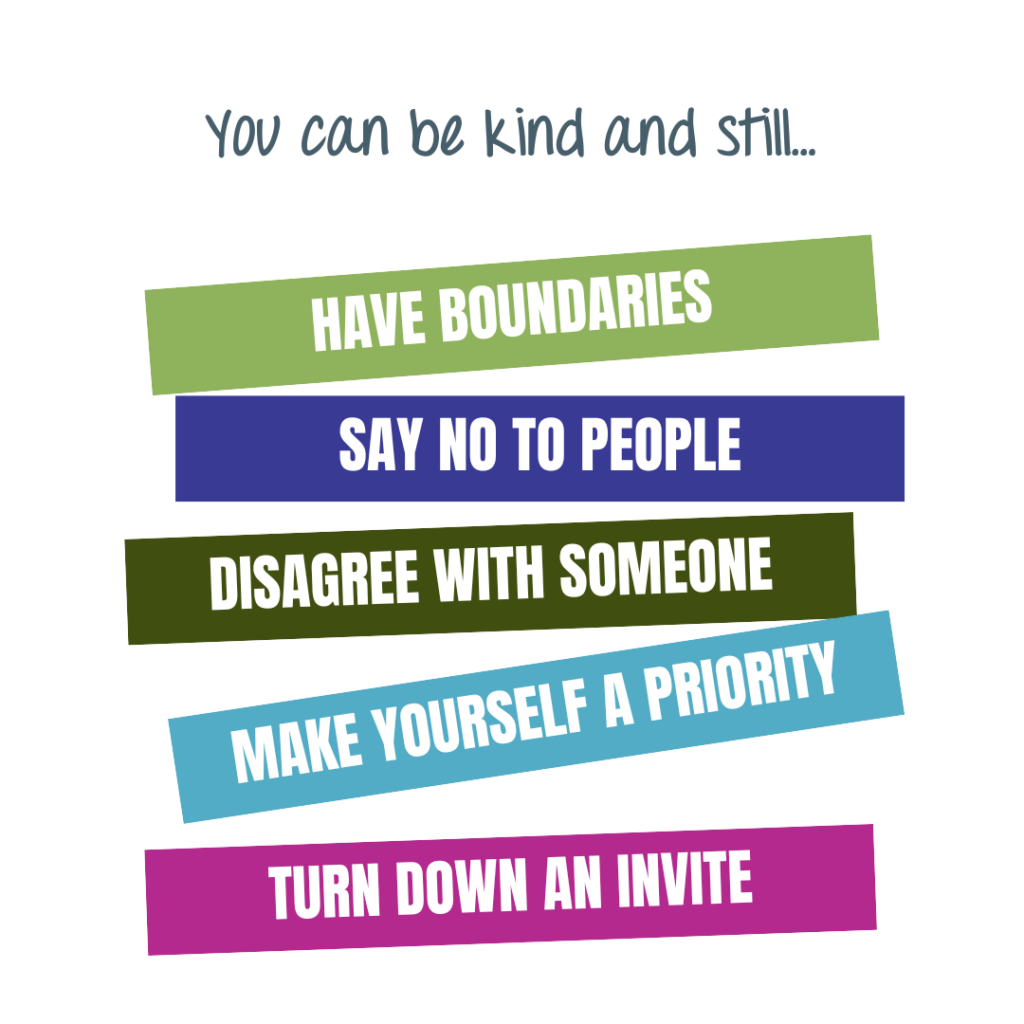
no is a boundary

You may have heard that “no” is a complete sentence.

Honestly, though, it is more than that: it is a superpower!

NO is all about boundaries

Yep, those little lines we draw to keep ourselves sane amidst the chaos. Whether you’re juggling career, family, aging parents, or all of the above, setting boundaries is like slapping a “Do Not Disturb” sign on your door so you can actually catch a breath.

Picture this: You’re knee-deep in work, trying to meet deadlines and climb that career ladder. But then your phone pings with messages from your kiddos needing help with college issues/grandkids/money troubles, and your mom’s calling about dad’s doctor’s appointment. Sound familiar? Welcome to the life of the modern-day Wonder Woman, where multitasking isn’t just a skill, it’s a way of life.

But here’s the thing – without boundaries, we’re like rubber bands stretched to the breaking point. Sure, we might bend and flex to meet everyone’s needs, but eventually, something’s gotta give. That’s where setting boundaries comes in.

Think of boundaries as your personal force field. They’re not about shutting people out; they’re about protecting your own well-being so you can show up as the best version of yourself. It’s like stabilizing your own footing before helping others climb; you gotta take care of yourself first.

Your boundaries are also not a prison wall – keeping everyone and everything out while sequestering you inside. Healthy boundaries allow for extenuating circumstances, temporary situations, and allowances when needed. The trick is knowing when to allow that flexibility.

One of the biggest challenges we face is the constant tug-of-war between work, family, and everything else life throws our way. We’re the ultimate multitaskers, juggling a million things at once while trying to keep our heads above water. Your secret to staying sane is boundaries. They are the key to finding balance in the chaos.

Let’s break it down:

First off, saying “no” isn’t a bad word

It’s a superpower. Seriously, learning to say no – whether it’s to extra work projects, social obligations, or anything else that doesn’t align with your priorities – is like reclaiming control over your own time and energy.

No doesn’t always mean never, either. It may just mean no for now, until some of your bandwidth opens up.

And trust me, you’ll thank yourself for it later.

Now get assertive

That means speaking up for yourself and setting clear expectations with those around you. Whether it’s letting your boss know you won’t be available after hours or telling your family you need some alone time to recharge, assertive communication is key to establishing healthy boundaries.

And let’s not forget about self-care

I know, I know – it sounds like a buzzword these days, but it’s seriously important. Whether it’s carving out time for a bubble bath, hitting the gym, or simply curling up with a good book, prioritizing self-care is like hitting the reset button on your sanity.

Enter yoga

Since yoga is an exploration of self – your physical and mental limits – it is the perfect support system when exploring boundary setting.

You start with setting boundaries for yourself. What kind of energy will you allow in your space, coming from outside of you or from within? What will you allow in? How will you hold strong?

Yoga gives you a vehicle to practice healthy boundaries while building your mental muscles to deal with external noise. What might that look like?

Let’s say you are in a class and your teacher tells to you to hold a position in a way that doesn’t feel right for your body. Will you force yourself into it? What might happen if you do? Will you honor your body and take another option? How will you determine if that position is truly out of alignment with your body or is just challenging because you have never done it before? When will you say no to it and when will you stretch your comfort zone and give something tough a try?

As you begin to leverage what you learn on the mat into your practice, you gain strength to integrate those learnings into your life off the mat.

Lastly, don’t be afraid to ask for help when you need it

We’re all in this together, and there’s no shame in leaning on your support network when things get tough. Whether it’s delegating tasks to your partner, hiring a house cleaner for a much-needed break, or reaching out to friends for emotional support, remember that you don’t have to do it all alone.

So there you have it – boundaries are the secret sauce to finding balance in a hectic world. By learning to say no, communicating assertively, prioritizing self-care, and asking for help when you need it, you can reclaim control over your own life and show up as the badass Wonder Woman you were always meant to be.

laylo yoga and wellness

You don’t have to choose between success and well-being. Step away from the chaos, reset your mind and body, and realign with what truly matters. Our wellness retreats, online courses, and free resources give you the space to breathe, reflect, and design a life that feels fulfilling—without guilt, without compromise.

Be the first to know about upcoming retreats—join the info list for dates and details.

Let’s stay connected! Follow us on Instagram, Facebook, YouTube, LinkedIn, and Pinterest, and join the LAYLO Shala for exclusive updates and insights.